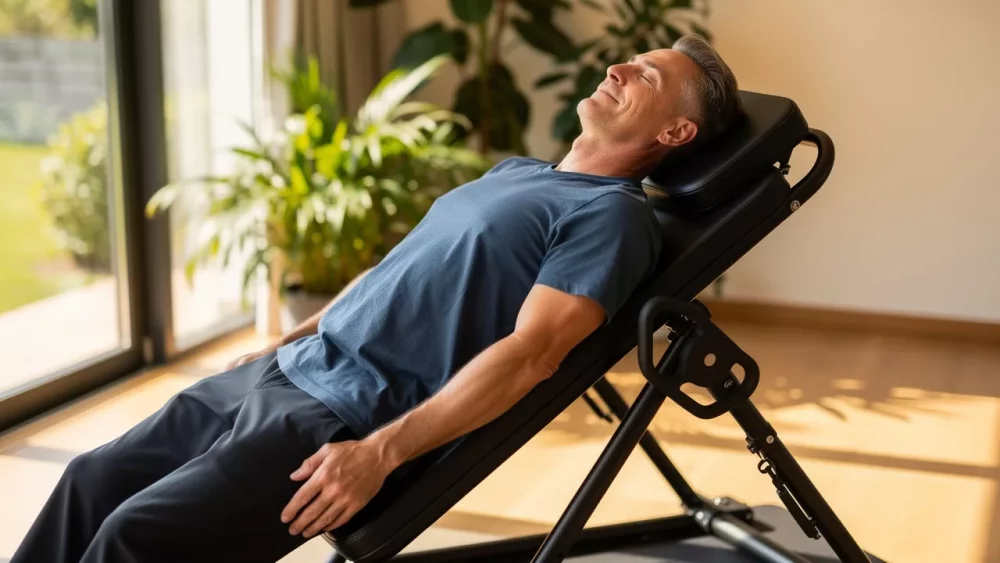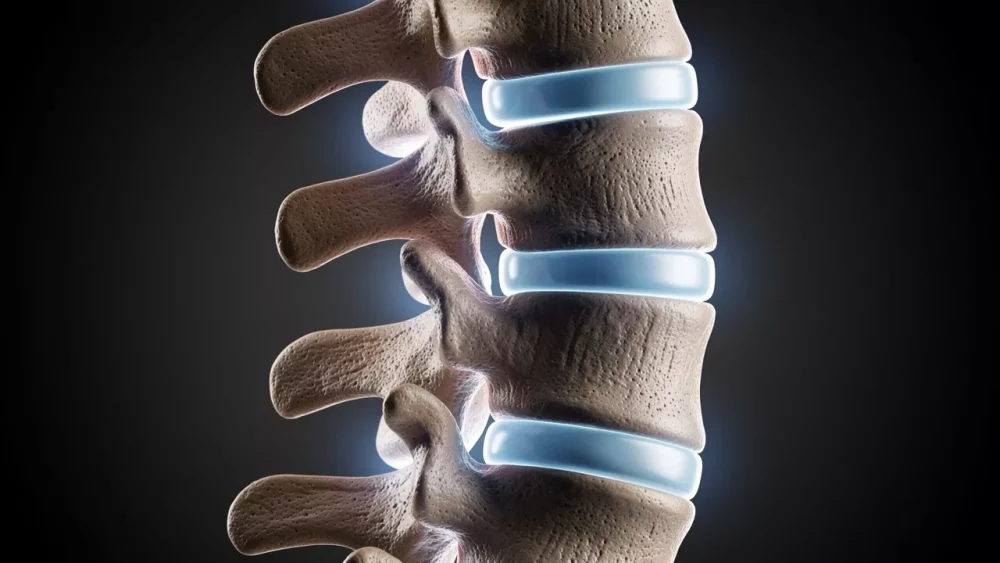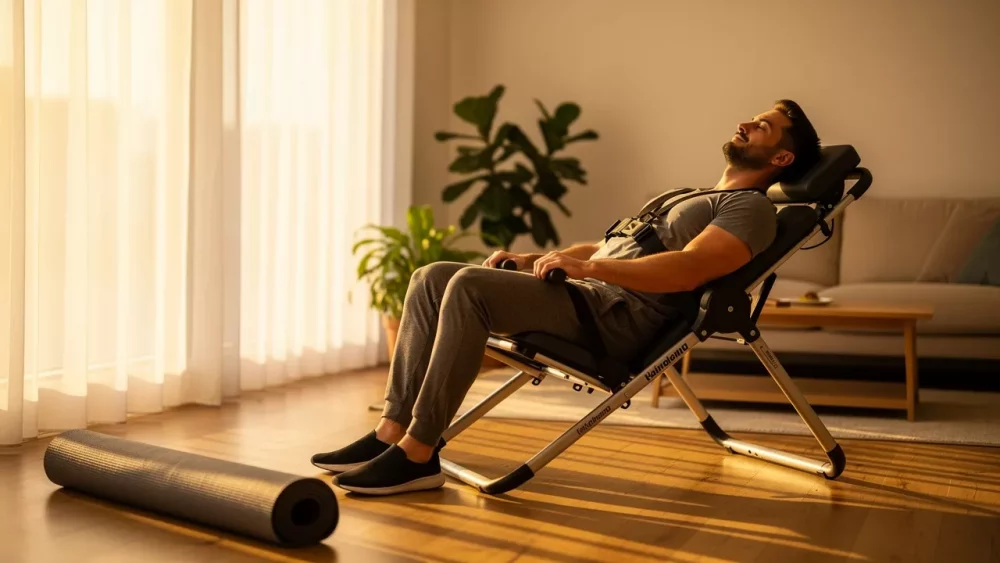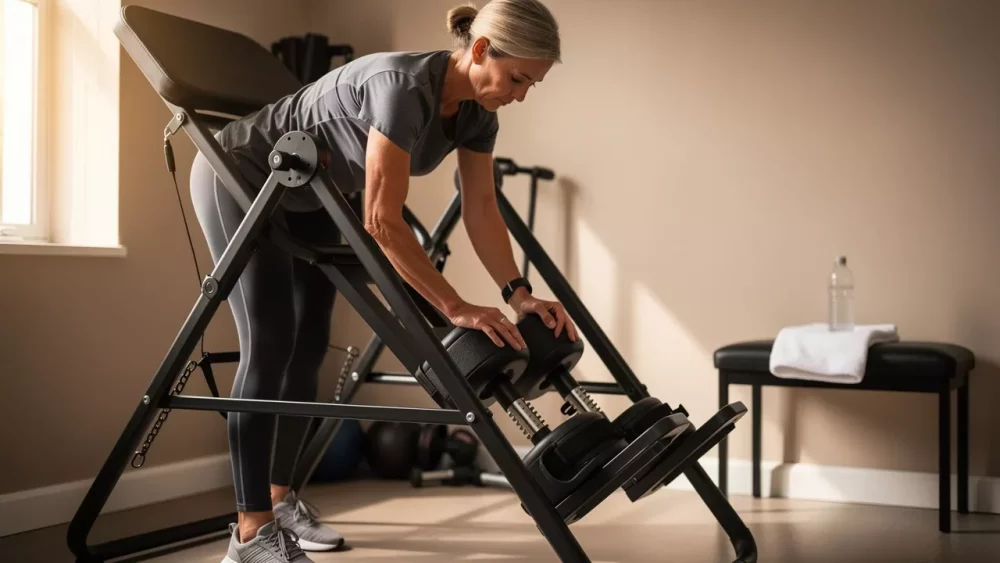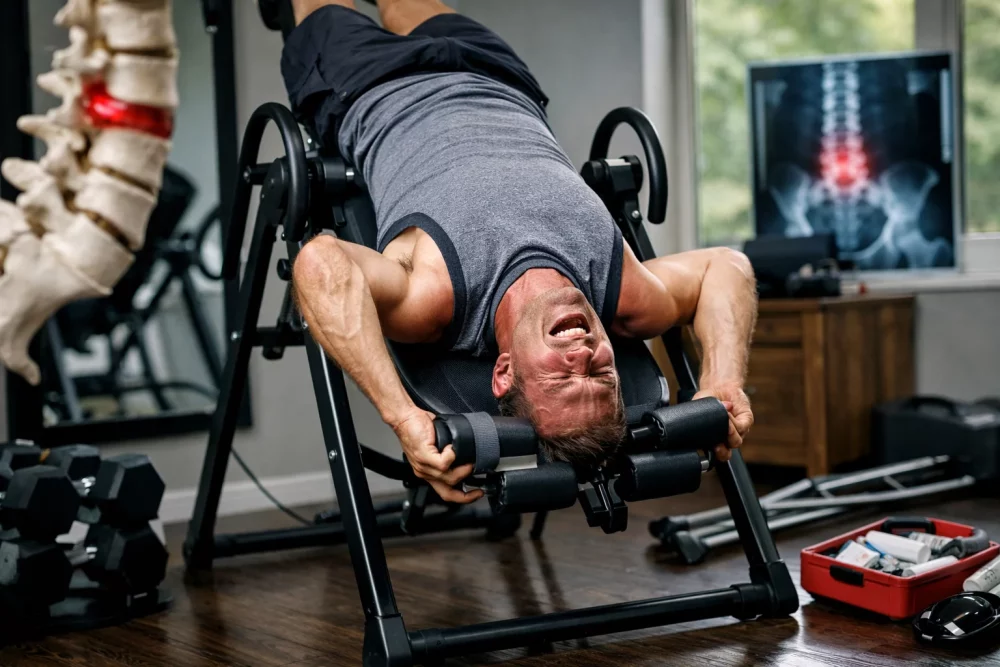
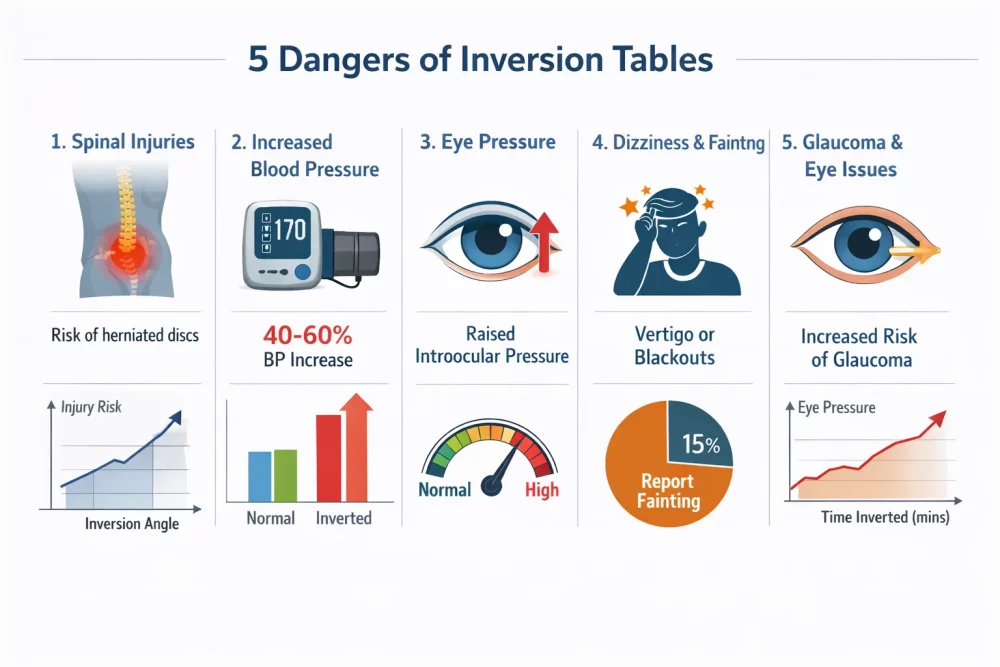
Inversion tables pose five serious dangers: they dramatically increase blood pressure and strain the cardiovascular system, cause dangerous pressure buildup in the brain and eyes, can trigger fainting episodes, worsen existing hernias, and place unnatural stress on joints and ligaments. Men over 50 with pre-existing health conditions face the highest risk of complications, including stroke, heart problems, and severe injury.
Key Takeaways
- Blood pressure spikes significantly during inversion, making these devices dangerous for anyone with hypertension or heart disease
- Intracranial pressure increases when hanging upside down, potentially causing brain hemorrhage, stroke, or blood vessel rupture
- Eye pressure rises dramatically, posing severe risks for individuals with glaucoma or other eye conditions
- Hernias can worsen due to increased abdominal pressure during inversion therapy sessions
- Joint and ligament injuries commonly occur in ankles, knees, and the spine from unnatural weight-bearing positions
- Fainting risk increases for those with a history of syncope or cardiovascular issues
- Medical consultation is essential before using inversion tables, especially for men over 50
- Safer alternatives exist for back pain relief, including physical therapy and targeted exercises
What Makes Inversion Tables Dangerous for Your Heart and Blood Pressure?
Inversion tables force your cardiovascular system to work against gravity in an unnatural way, causing blood pressure to rise significantly while simultaneously slowing your heart rate. This combination creates serious risks for anyone with existing heart conditions or hypertension.
When you hang upside down on an inversion table, blood rushes to your upper body and head. Your heart must work harder to maintain proper circulation, and the sudden pressure changes can overwhelm your cardiovascular system. Research shows that even brief periods of inversion cause measurable increases in both systolic and diastolic blood pressure.[1][2]
Who faces the highest risk:
- Men over 50 with diagnosed hypertension
- Anyone taking blood pressure medication
- Individuals with a history of heart disease
- Those with irregular heartbeat or arrhythmia
- People with congestive heart failure
The danger intensifies because these pressure changes happen quickly. Within seconds of inverting, your body experiences cardiovascular stress that can lead to:
- Heart failure episodes
- Cardiac arrhythmia
- Chest pain or angina
- Fainting or loss of consciousness
- In severe cases, cardiac arrest
Common mistake: Many people assume that starting with gentle angles (15-20 degrees) eliminates cardiovascular risk. While gradual inversion may reduce immediate symptoms, it doesn’t eliminate the fundamental pressure changes that make these devices dangerous for those with heart conditions.[3]
If you have any cardiovascular concerns, consult a cardiologist before considering inversion therapy. The temporary relief from back pain isn’t worth risking a heart attack or stroke.
How Do Inversion Tables Increase Dangerous Pressure in Your Brain?
Inverting your body places your head below your heart, causing blood to pool in your brain and dramatically increasing intracranial pressure. This pressure buildup can rupture blood vessels, leading to brain hemorrhage, stroke, coma, or death.
Your brain normally relies on gravity to help regulate blood flow. When you flip upside down, this natural system works in reverse. Blood vessels in your brain become engorged, and the delicate structures that protect your brain tissue come under extreme stress.[2][4]
The progression of risk:
- Immediate effect (0-30 seconds): Blood rushes to the head, causing facial flushing and pressure sensation
- Short-term exposure (30 seconds – 2 minutes): Intracranial pressure rises significantly, blood vessels dilate
- Extended inversion (2+ minutes): Risk of vessel rupture increases, potential for hemorrhagic stroke
Warning signs during inversion:
- Severe headache or pressure sensation
- Vision changes or seeing spots
- Ringing in the ears (tinnitus)
- Confusion or disorientation
- Nausea or dizziness
Men over 50 face additional risk because blood vessels become less elastic with age. This reduced flexibility means vessels are more likely to rupture under increased pressure. If you’ve ever experienced migraines, have a history of aneurysm, or take blood thinners, the risk multiplies.[2]
Critical consideration: Even if you feel fine during inversion, damage can occur without immediate symptoms. Microbleeds in the brain may not cause noticeable effects initially but can lead to cognitive problems over time.
Choose safer alternatives for back pain relief. The potential for catastrophic brain injury far outweighs any temporary benefit from spinal decompression. For more guidance on maintaining overall health as you age, explore our fitness resources.
Why Are Inversion Tables Particularly Risky for Your Eyes?
Inversion therapy increases intraocular pressure (pressure inside your eyes) significantly, which can damage the optic nerve and worsen existing eye conditions like glaucoma. This pressure spike occurs immediately when you tilt upside down and persists throughout the inversion session.
Your eyes maintain a delicate balance of fluid pressure to function properly. When you invert, blood and fluid accumulate in your head, including behind your eyes. This increased pressure can:
- Damage the optic nerve permanently
- Accelerate glaucoma progression
- Cause retinal detachment
- Trigger acute angle-closure glaucoma attacks
- Lead to vision loss that cannot be reversed[1][2][3]
High-risk eye conditions:
- Glaucoma (any type): Inversion can cause irreversible optic nerve damage
- Retinal disorders: Increased risk of detachment or tears
- Macular degeneration: Pressure changes may worsen the condition
- Recent eye surgery: Healing tissues are vulnerable to pressure damage
- Conjunctivitis or eye infections: Inflammation worsens with increased pressure
Age-related considerations for men over 50:
After age 50, your risk of glaucoma increases significantly. Many men have early-stage glaucoma without knowing it because the condition often develops without symptoms. Using an inversion table before getting a comprehensive eye exam could cause permanent damage to vision you didn’t know was at risk.
Edge case: Even if you have healthy eyes now, repeated inversion sessions may cause cumulative damage over time. The eye’s drainage system can become compromised with repeated pressure spikes, potentially leading to glaucoma development in previously healthy individuals.
If you wear glasses or contacts, have a family history of eye disease, or are over 50, schedule an eye exam before considering inversion therapy. An ophthalmologist can measure your baseline intraocular pressure and assess whether inversion poses unacceptable risk.
For those managing multiple health concerns, understanding how daily habits affect your wellbeing is crucial. Learn more about protecting your health through better daily routines.
Can Inversion Tables Worsen Hernias and Cause Fainting?
Yes, inversion tables increase abdominal pressure substantially, which can worsen both hiatal and inguinal hernias, while also triggering fainting episodes in individuals prone to syncope. These two dangers often occur together because both result from the body’s struggle to adapt to inverted positioning.
Hernia complications:
When you invert, your abdominal organs shift toward your chest cavity. This movement increases pressure on any existing hernia, potentially causing:
- Hernia enlargement or worsening
- Strangulation (blood supply cut off to herniated tissue)
- Severe pain and emergency surgery requirement
- Acid reflux and esophageal damage (hiatal hernia)
- Intestinal obstruction (inguinal hernia)[2][3]
Fainting risk factors:
Inversion affects blood flow regulation, making fainting more likely if you have:
- History of fainting (vasovagal syncope)
- Low blood pressure (hypotension)
- Dehydration or electrolyte imbalance
- Inner ear problems affecting balance
- Autonomic nervous system disorders[1]
The dangerous combination:
Men over 50 often have both hernias and cardiovascular issues that increase fainting risk. When these conditions combine with inversion therapy, the results can be catastrophic. Fainting while inverted means you cannot right yourself, leading to:
- Extended time upside down (increasing all other risks)
- Falls and impact injuries when the table releases
- Potential asphyxiation if airways become blocked
- Panic and injury from struggling to escape
Decision rule: If you have any type of hernia or have fainted even once in your adult life (regardless of cause), do not use an inversion table. The risk of serious injury or medical emergency is too high.
Common mistake: Some users believe that partial inversion (30-45 degrees) avoids hernia complications. However, any inversion angle increases abdominal pressure and fainting risk. There is no “safe” angle if you have these conditions.
Alternative treatments for back pain, such as physical therapy or targeted stretching, don’t carry these risks. Consult with a healthcare provider about evidence-based options that won’t endanger your health.
What Joint and Spine Injuries Do Inversion Tables Cause?
Inversion tables place unnatural stress on your ankles, knees, and spine, commonly causing ligament strains, disc injuries, and joint instability. The process of mounting and dismounting the table creates additional injury risk through awkward twisting movements.
Ankle and knee ligament damage:
Your ankle and knee joints evolved to support your body weight in an upright position. When inverted, these joints must bear your full weight in reverse, stretching ligaments beyond their normal range. This causes:
- Ankle ligament sprains and tears
- Chronic ankle instability
- Knee ligament strain (ACL, MCL, PCL)
- Joint pain that persists long after use
- Increased arthritis risk in affected joints[2]
Lumbar disc injuries:
Getting on and off an inversion table requires twisting your torso while your ankles are secured. This twisting motion under load can:
- Tear or stretch lumbar disc fibers
- Cause disc bulges or herniations
- Allow disc fluid to leak (nucleus pulposus)
- Create nerve compression and sciatica
- Worsen existing disc degeneration[2]
High-risk conditions that make injury more likely:
- Osteoporosis: Weakened bones can fracture under inversion stress
- Herniated discs: Existing disc problems worsen with twisting
- Spinal stenosis: Nerve compression increases
- Spondylolisthesis: Vertebral slippage can worsen
- Knee or hip arthritis: Joint degeneration accelerates
- Previous fractures: Old injuries are vulnerable to re-injury[5][6]
Age-related vulnerability for men over 50:
Bone density decreases with age, ligaments lose elasticity, and joints show wear from decades of use. These natural aging processes make inversion therapy particularly dangerous after 50. What might cause minor discomfort in a younger person can result in serious injury requiring surgery or long-term treatment.
Real-world scenario: A 55-year-old man with mild knee arthritis uses an inversion table for back pain. While inverting, the unnatural weight distribution tears his medial collateral ligament (MCL). He now needs knee surgery and months of rehabilitation—all while his original back pain remains unresolved.
Equipment-related injuries:
Beyond the inherent risks of inversion, the equipment itself causes injuries:
- Falls when ankle clamps release unexpectedly
- Muscle strains from struggling to control the table
- Head and neck injuries from improper positioning
- Bruising and soft tissue damage from restraints[3][4]
Safety measures that don’t eliminate risk:
Using a spotter, starting at gentle angles, and limiting session duration reduce but don’t eliminate injury risk. The fundamental problem remains: your body isn’t designed to hang upside down by your ankles.
For men over 50 dealing with back pain, evidence-based alternatives include physical therapy, core strengthening exercises, proper ergonomics, and targeted stretching. These approaches address the root causes of pain without risking serious injury. Consider exploring stress management techniques that can also help reduce tension-related back pain.
Who Should Never Use Inversion Tables Under Any Circumstances?
Certain medical conditions make inversion tables absolutely contraindicated, meaning the risk of serious harm or death is unacceptably high. If you have any of the following conditions, do not use an inversion table regardless of angle or duration.
Absolute contraindications:
- Pregnancy: Cardiovascular changes and pressure on the fetus make inversion extremely dangerous[3][6]
- Uncontrolled high blood pressure: Risk of stroke or heart attack is immediate
- Heart disease: Including previous heart attack, angina, or heart failure
- Glaucoma or retinal problems: Permanent vision loss can occur
- Cerebral sclerosis: Brain tissue damage risk increases
- Recent stroke or TIA: Re-injury risk is extremely high
- Spinal cord injuries: Further damage to neural tissue possible
- Severe osteoporosis: Fracture risk is unacceptable
- Active infections: Including ear infections, conjunctivitis, or systemic infections[5]
Medication considerations:
If you take any of these medications, inversion therapy poses additional risks:
- Blood thinners (warfarin, aspirin, clopidogrel): Increased bleeding risk
- Blood pressure medications: Unpredictable pressure changes
- Anti-anxiety medications: Increased fall and injury risk
- Pain medications: Impaired judgment and balance
Age and fitness level:
While age alone isn’t a contraindication, men over 50 typically have multiple risk factors that accumulate. The combination of:
- Reduced bone density
- Decreased cardiovascular fitness
- Existing joint problems
- Multiple medications
- Undiagnosed conditions (like early-stage glaucoma)
…creates a risk profile that makes inversion therapy inadvisable for most men in this age group.
When to seek medical clearance:
Before using an inversion table, get explicit approval from your doctor if you have:
- Any cardiovascular condition
- Any eye condition or family history of glaucoma
- Any spine or joint disorder
- History of fainting or dizziness
- Any hernia
- High or low blood pressure
- Balance or inner ear problems
Better alternatives for back pain:
Instead of risking serious injury with inversion tables, consider these evidence-based approaches:
- Physical therapy: Targeted exercises address root causes
- Core strengthening: Builds natural spinal support
- Proper ergonomics: Prevents pain from recurring
- Stretching routines: Improves flexibility safely
- Weight management: Reduces spinal load
- Anti-inflammatory approaches: Address pain without risk
For comprehensive wellness strategies that support healthy aging, explore our guide on improving memory through everyday habits.
Frequently Asked Questions About Inversion Table Dangers
Are inversion tables safe for occasional use if I’m healthy?
Even healthy individuals face risks from inversion tables, including temporary blood pressure spikes, eye pressure increases, and potential joint strain. While occasional use may not cause immediate problems, cumulative effects over time can damage blood vessels and joints. Safer alternatives exist for back pain relief that don’t carry these risks.
How long can I safely hang upside down on an inversion table?
No duration is completely safe if you have any contraindicated conditions. For those without risk factors, limiting sessions to 1-2 minutes at shallow angles (20-30 degrees) reduces but doesn’t eliminate risk. However, even brief inversion causes measurable increases in blood and eye pressure that can be dangerous.
Can inversion tables help with sciatica without causing harm?
Inversion tables may temporarily relieve sciatica symptoms by decompressing the spine, but the risks often outweigh benefits. The twisting motion required to mount and dismount the table can worsen disc problems that cause sciatica. Physical therapy and targeted stretching provide similar relief without the cardiovascular and joint injury risks.
What’s the difference between inversion tables and hanging upside down from a bar?
Both activities increase blood pressure, intracranial pressure, and eye pressure similarly. Hanging from a bar adds grip strength requirements and fall risk when you can no longer hold on. Neither method is safe for individuals with cardiovascular, eye, or joint conditions. The risks are comparable regardless of the equipment used.[4]
Do inversion boots have the same dangers as inversion tables?
Yes, inversion boots carry all the same cardiovascular, neurological, and eye pressure risks as inversion tables. They add additional dangers including higher fall risk, more stress on ankle joints, and greater difficulty in righting yourself if you experience problems while inverted. The method of inversion doesn’t change the fundamental physiological dangers.
Can I use an inversion table if I take blood pressure medication?
No, taking blood pressure medication indicates you have hypertension, which is a contraindication for inversion therapy. The medication controls your blood pressure in normal positions but cannot prevent the dangerous spikes that occur during inversion. Using an inversion table while on blood pressure medication significantly increases your risk of stroke or heart attack.[1][2]
Will starting at a gentle angle prevent inversion table injuries?
Starting at gentle angles (15-30 degrees) reduces the intensity of pressure changes but doesn’t eliminate them. Blood still pools in your head, pressure still increases in your eyes and brain, and your joints still bear weight unnaturally. Gradual progression may help you tolerate the sensation better, but it doesn’t make the activity safe if you have contraindicated conditions.
Are there any safe alternatives to inversion tables for back pain?
Yes, many evidence-based alternatives provide back pain relief without inversion risks. Physical therapy, core strengthening exercises, yoga, swimming, proper ergonomics, massage therapy, and targeted stretching all address back pain effectively. These approaches treat the underlying causes rather than temporarily masking symptoms.
What should I do if I feel dizzy or see spots while using an inversion table?
Immediately return to an upright position by slowly raising the table. Dizziness and visual disturbances indicate dangerous pressure changes in your brain and eyes. Do not continue using the inversion table, and consult a doctor before attempting inversion therapy again. These symptoms suggest you’re at high risk for serious complications.
Can inversion tables cause permanent damage even if I feel fine during use?
Yes, damage can occur without immediate symptoms. Microbleeds in the brain, optic nerve damage from increased eye pressure, and ligament stretching may not cause noticeable effects initially but lead to long-term problems. The absence of pain or discomfort during inversion doesn’t mean the activity is safe for your body.
How do I know if I have undiagnosed conditions that make inversion dangerous?
Many dangerous conditions develop without symptoms, especially glaucoma, early-stage heart disease, and high blood pressure. Men over 50 should get comprehensive health screenings including eye exams, cardiovascular assessment, and blood pressure monitoring before considering inversion therapy. Never assume you’re healthy enough for inversion without medical confirmation.
What injuries are most common from inversion table accidents?
The most common injuries include ankle and knee ligament strains, muscle pulls, disc herniations from twisting during mounting/dismounting, and falls causing head trauma or fractures. Serious complications like stroke, heart attack, and retinal damage occur less frequently but have devastating consequences. Equipment failures and user error contribute to many accidents.[3][4]
Conclusion
Inversion tables pose five serious dangers that make them unsuitable for most men over 50: cardiovascular stress from blood pressure spikes, dangerous intracranial pressure buildup, increased eye pressure that can damage vision, hernia worsening and fainting risk, and joint and spine injuries from unnatural positioning. These risks multiply when you have pre-existing health conditions common in this age group, including hypertension, heart disease, glaucoma, hernias, or joint problems.
The temporary relief from back pain that inversion tables might provide doesn’t justify the risk of stroke, heart attack, permanent vision loss, or serious injury. Safer, evidence-based alternatives exist that address the root causes of back pain without endangering your health.
Take these action steps now:
- Schedule a comprehensive health screening if you’re considering inversion therapy—include cardiovascular assessment, eye exam, and bone density testing
- Consult your doctor about your specific risk factors and get explicit medical clearance before using an inversion table
- Explore safer alternatives like physical therapy, core strengthening, and proper ergonomics that provide lasting relief
- If you currently use an inversion table, stop immediately if you have any contraindicated conditions and discuss alternatives with your healthcare provider
- Educate yourself about evidence-based back pain treatments that work with your body’s natural mechanics rather than against them
Your long-term health and quality of life depend on making informed decisions about pain management. The five minutes you might spend inverted aren’t worth risking your cardiovascular health, vision, or mobility. Choose treatments that heal rather than harm, and prioritize your overall wellbeing over quick fixes that carry serious risks.
For more guidance on maintaining health and wellness as you age, explore our resources on improving sleep quality and managing stress effectively.
References
[1] Watch – https://www.youtube.com/watch?v=1ev1J1Gir9g
[2] 6 Reasons Why You Should Not Use An Inversion Table To Relieve Your Back Pain – https://www.chiropractor-plus.com/blog/6-reasons-why-you-should-not-use-an-inversion-table-to-relieve-your-back-pain.html
[3] What Are Inversion Tables – https://www.webmd.com/back-pain/what-are-inversion-tables
[4] Hanging Upside Down – https://www.medicalnewstoday.com/articles/hanging-upside-down
[5] Inversion Therapy – https://www.healthline.com/health/inversion-therapy
[6] Benefits Risks Inversion Therapy Lower Back Pain – https://www.activeptsolutions.com/article-item/benefits-risks-inversion-therapy-lower-back-pain/