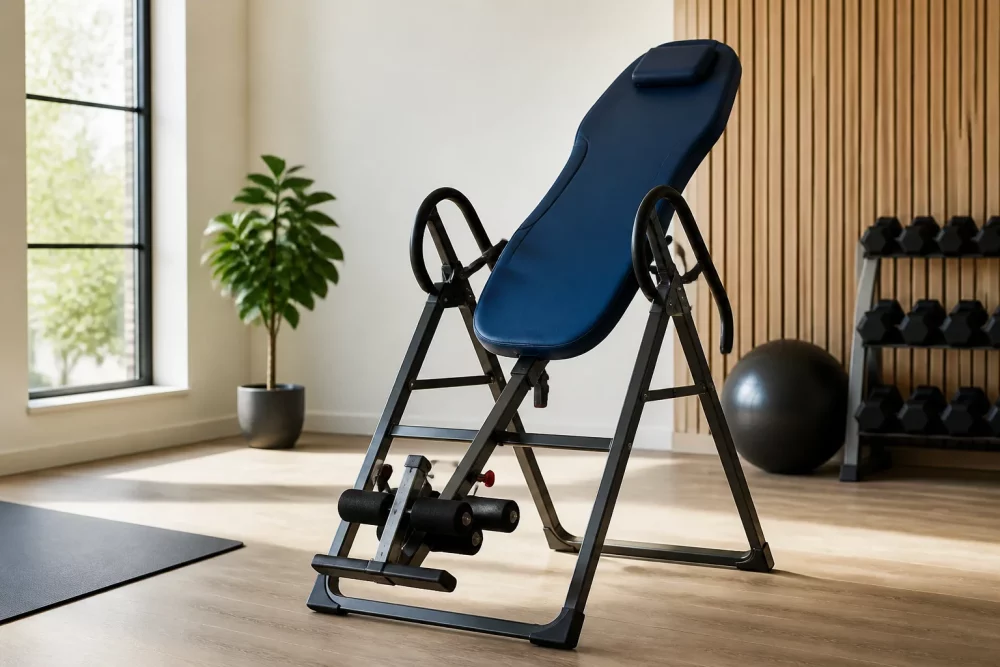
An inversion table is a padded table that rotates to allow you to hang upside down at various angles, using gravity to decompress your spine and potentially relieve back pain. Choosing the right one requires matching the weight capacity to your body weight (with at least 50 lbs of buffer), ensuring the height range fits your frame, checking for quality ankle support systems, and verifying the frame uses heat-treated steel construction. Budget models start around $100-150, while premium tables with better padding and stability range from $300-500.
Key Takeaways
Weight capacity matters most: Standard tables support 220-300 lbs, but choose one rated at least 50 lbs above your current weight for safety and longevity
Height adjustment is non-negotiable: Most tables accommodate users between 4’8″ and 6’6″, but verify your height falls comfortably within the range
Ankle support quality varies dramatically: Look for adjustable, padded ankle locks that secure without pinching or causing discomfort
Frame construction determines lifespan: Heat-treated steel hinges should handle four times your maximum weight and withstand 30,000+ rotations
Base stability prevents tipping: Tables with wider bases (averaging 20% greater base-to-height ratios) offer safer, more controlled inversions
Certification adds credibility: FDA registration and third-party safety testing indicate higher manufacturing standards
Start with partial inversion: Begin at 20-30 degrees and gradually increase angle as your body adapts
Budget wisely: Spending $250-400 typically delivers the best balance of safety features and durability
What Is an Inversion Table and How Does It Work?
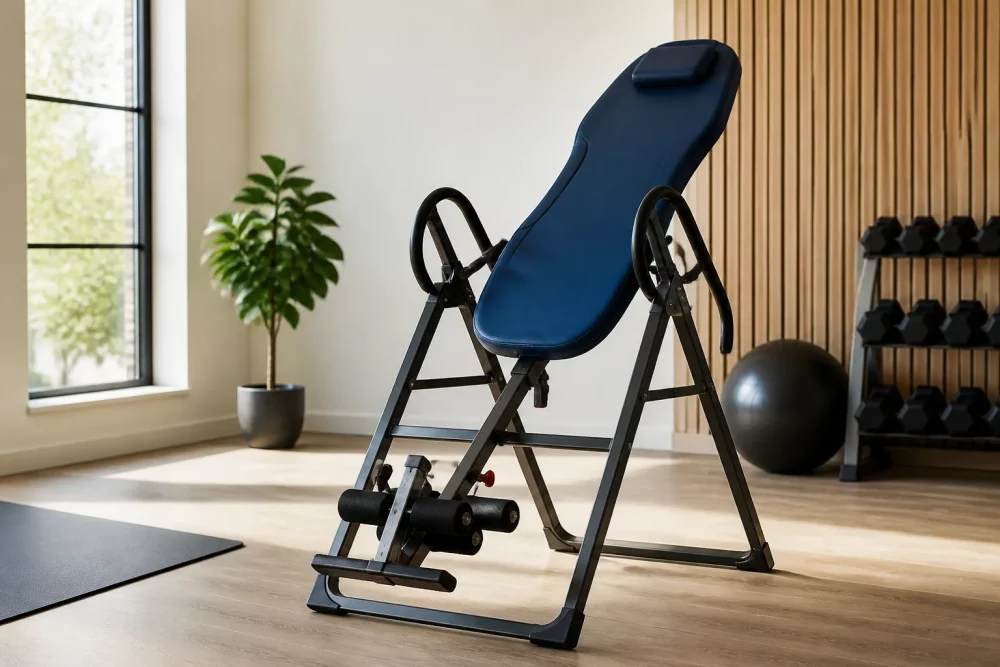
An inversion table is a therapeutic device that allows you to hang upside down or at an inverted angle while secured at the ankles. The table rotates on a pivot system, using your body weight and gravity to create spinal decompression.
When you invert, gravity pulls your body weight away from your spine rather than compressing it. This creates space between vertebrae, potentially reducing pressure on discs and nerves. The angle of inversion determines the intensity—a 20-degree tilt provides gentle decompression, while a full 90-degree inversion delivers maximum gravitational pull.
How the mechanics work:
You secure your ankles in padded supports at one end
The table pivots on a central hinge point
Raising your arms above your head shifts your center of gravity backward
The table rotates smoothly, allowing controlled inversion
Safety straps or angle adjusters limit how far you can tilt
Most people use inversion tables for 1-5 minutes per session, starting with shallow angles and brief durations. The goal is gradual spinal decompression, not extended hanging.
Who Should (and Shouldn’t) Use an Inversion Table?
Inversion tables work best for people with chronic lower back pain, sciatica, or muscle tension who have clearance from their healthcare provider. They’re particularly useful if you spend long hours sitting or have compression-related discomfort.
Good candidates include:
Adults with mechanical back pain (not caused by infection or fracture)
People with minor disc bulges or herniation (with medical approval)
Those experiencing muscle spasms or tension in the back
Individuals seeking non-pharmaceutical pain management options
Athletes looking for recovery and flexibility tools
Avoid inversion tables if you have:
High blood pressure or heart disease
Glaucoma or other eye pressure conditions
Ear infections or inner ear problems
Osteoporosis or bone fragility
Pregnancy
Hernias or recent abdominal surgery
Cerebral sclerosis or similar conditions
Common mistake: Starting with aggressive angles or long sessions. Begin with 20-30 degrees for 1-2 minutes, even if you feel fine. Rushing the adaptation period causes dizziness, headaches, or increased discomfort.
What Are the Essential Features of a Quality Inversion Table?
A quality inversion table combines sturdy construction, comfortable padding, secure ankle support, and smooth rotation mechanics. These features directly impact both safety and effectiveness.
Critical components to evaluate:
Frame and construction:
Heat-treated steel tubing (1.5-2 inch diameter minimum)
Welded joints rather than bolted connections at stress points
Powder-coated finish to prevent rust and wear
Weight capacity rated at least 50 lbs above your body weight
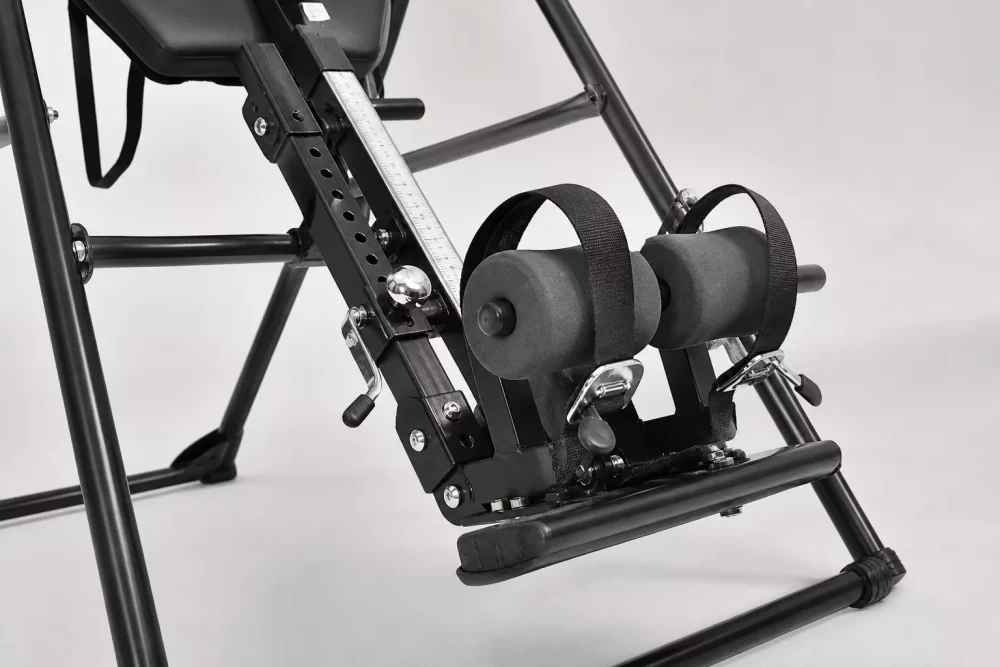
Ankle support system:
Padded ankle cups with memory foam or thick cushioning
Tool-free adjustment mechanism you can operate while lying down
Secure locking system that doesn’t pinch or slide
Quick-release feature for easy exit
Backrest and padding:
2-3 inches of high-density foam minimum
Removable, washable covers
Contoured design that supports natural spine curvature
Heat-resistant materials if you live in warm climates
Stability features:
Base width at least 40-50% of the table’s height
Non-slip rubber feet or stabilizer pads
Balanced weight distribution when fully inverted
Minimal wobble during rotation
Choose a table with adjustable angle limits if you’re new to inversion. This safety feature prevents over-rotation while you’re learning proper technique.
How Do You Choose the Right Inversion Table Size and Capacity?
Match the table’s specifications to your body dimensions and weight, then add safety margins. Most manufacturers provide height and weight ranges, but the fit quality varies between brands.
Weight capacity guidelines:
Standard tables support 220-300 lbs, but this maximum rating doesn’t account for the dynamic forces during rotation. Add at least 50 lbs of buffer—if you weigh 200 lbs, choose a table rated for 250+ lbs minimum.
High-quality hinges should safely handle four times your maximum weight and withstand 30,000 full rotations without degradation. Ask manufacturers about their hinge testing protocols if this information isn’t readily available.
Height adjustment considerations:
Most tables accommodate 4’8″ to 6’6″ users
Verify the adjustment mechanism is easy to operate
Check that the ankle supports align properly at your height setting
Taller users (over 6’2″) should specifically look for extended-height models
Decision rule: If you’re at the extreme end of either height or weight ranges, choose a table specifically designed for your dimensions rather than settling for a standard model. The comfort and safety difference is substantial.
Edge case: If multiple household members will use the table, base your choice on the tallest and heaviest user’s specifications. Quick height adjustment becomes essential in multi-user scenarios.
What’s the Difference Between Budget and Premium Inversion Tables?
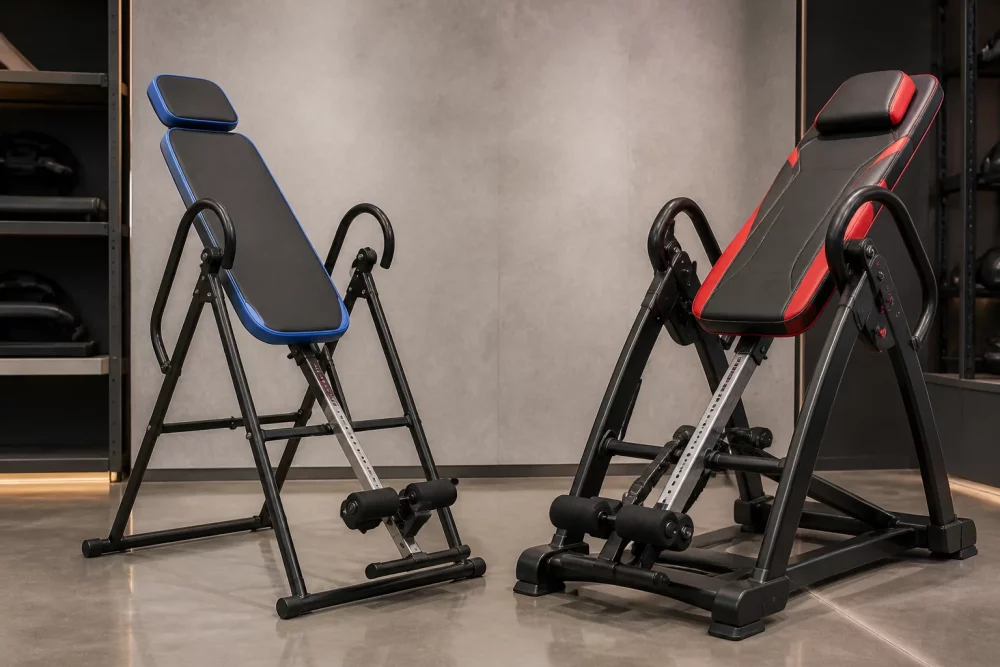
Budget tables ($100-200) provide basic functionality with simpler construction, while premium models ($300-500+) offer superior materials, better padding, smoother operation, and longer warranties. The price difference reflects both component quality and manufacturing standards.
Budget model characteristics:
Thinner padding (1-1.5 inches)
Basic ankle support with manual adjustment
Lighter-gauge steel frames
90-day to 1-year warranties
Basic pivot systems with more friction
Narrower bases with less stability
Premium model advantages:
Memory foam padding (2-3+ inches)
Tool-free, ergonomic ankle adjustment systems
Heat-treated, reinforced steel construction
5-year to lifetime warranties on frames
Precision bearings for smooth, controlled rotation
Wider bases with enhanced stability ratios
FDA registration and third-party safety certification
Mid-range sweet spot ($250-400):
This price range typically delivers the best value—quality construction that will last years, comfortable padding for regular use, and safety features that matter. You avoid the durability issues of budget models without paying for premium brand markup.
Choose budget if: You’re testing whether inversion therapy works for you, use it infrequently, or have strict budget constraints.
Choose premium if: You plan daily use, have specific medical needs requiring maximum comfort, weigh over 250 lbs, or want the longest possible lifespan.
How Do You Safely Use an Inversion Table for the First Time?
Start with minimal angles, short durations, and a spotter nearby. First-time users often feel disoriented or experience head pressure, even at shallow angles.
Step-by-step first session:
Set up in open space: Clear at least 3 feet around all sides of the table
Adjust height setting: Match the table to your height before securing ankles
Secure ankle supports: Lock them snugly but not painfully tight—you should be able to flex your feet
Start at 15-20 degrees: Use the angle limiter or have a spotter control your rotation
Invert for 30-60 seconds only: Focus on breathing and relaxing
Return slowly: Take 5-10 seconds to come back upright
Rest 2-3 minutes: Sit or lie flat before standing
Progression schedule:
Week 1: 20 degrees, 1-2 minutes, once daily
Week 2: 30 degrees, 2-3 minutes, once daily
Week 3: 40-50 degrees, 3-5 minutes, 1-2 times daily
Week 4+: Gradually increase to 60-90 degrees based on comfort
Common mistakes to avoid:
Inverting immediately after eating (wait 1-2 hours)
Rotating too quickly, causing dizziness
Staying inverted too long, leading to sinus pressure or headaches
Forgetting to secure the ankle locks properly
Attempting full inversion without gradual adaptation
Safety tip: Keep your phone nearby but not in your pocket (it will fall out). Have a way to call for help if you experience severe dizziness or can’t return to upright position.
What Maintenance Does an Inversion Table Require?
Inversion tables need minimal maintenance, but regular checks prevent safety issues and extend lifespan. Most problems arise from loose bolts or worn padding rather than mechanical failure.
Monthly maintenance checklist:
Inspect all bolts and connection points for tightness
Check ankle support padding for wear or compression
Examine hinge points for smooth operation
Wipe down frame and padding with mild cleaner
Test the rotation mechanism for unusual sounds or resistance
Verify safety strap or angle limiter functions properly
Every 6 months:
Apply silicone lubricant to pivot points (avoid oil-based products)
Check for frame rust or coating damage
Inspect ankle adjustment mechanisms for wear
Replace padding if compressed or torn
Storage considerations:
Most tables fold for storage, but frequent folding and unfolding stresses the frame. If you use your table daily, keep it assembled in a dedicated space. Store in climate-controlled areas to prevent rust and padding degradation.
Lifespan expectations: Budget tables typically last 2-3 years with regular use, while premium models can function for 10+ years with proper maintenance. The hinges and frame usually outlast the padding, which you can replace separately.
FAQ
How long should you stay inverted on an inversion table?
Beginners should start with 1-2 minutes and gradually work up to 5-10 minutes per session. Most people find 3-5 minutes at their target angle provides sufficient decompression without causing discomfort. Never exceed 15 minutes in a single session.
Can inversion tables make back pain worse?
Yes, if used incorrectly or if you have conditions that contraindicate inversion therapy. Starting with aggressive angles, staying inverted too long, or using a table despite medical contraindications can increase pain. Always consult a healthcare provider before beginning inversion therapy.
What angle is best for inversion therapy?
Most therapeutic benefits occur between 20-60 degrees. Full 90-degree inversion isn’t necessary for spinal decompression and increases risks for some users. Start at 20-30 degrees and find the angle that provides relief without causing pressure or discomfort.
Do inversion tables help with height?
Inversion temporarily decompresses your spine, which can add 1/4 to 1/2 inch of height immediately after use. This effect reverses within hours as gravity recompresses your spine during normal activities. Inversion doesn’t permanently increase height.
How often should you use an inversion table?
Most people benefit from once or twice daily sessions. Some use inversion tables only when experiencing acute pain, while others incorporate them into daily routines. Listen to your body—if you feel pressure, headaches, or increased pain, reduce frequency or duration.
Are inversion tables safe for seniors?
Seniors can safely use inversion tables if they don’t have contraindicated conditions like high blood pressure, glaucoma, or osteoporosis. However, seniors should start with very shallow angles (15-20 degrees), have assistance nearby, and get medical clearance before beginning. Age alone doesn’t disqualify someone from inversion therapy.
What’s the difference between inversion tables and gravity boots?
Inversion tables secure you at the ankles while supporting your back on a padded surface, allowing controlled partial or full inversion. Gravity boots hang you completely upside down from a bar with no back support, requiring more core strength and balance. Tables are safer and more accessible for most users.
Can you use an inversion table if you’re overweight?
Yes, but choose a table with appropriate weight capacity—at least 50 lbs above your current weight. Some manufacturers make heavy-duty models supporting 350-400+ lbs. Overweight users should start with very shallow angles and shorter durations, gradually increasing as comfort allows.
Do inversion tables require assembly?
Most inversion tables require 30-60 minutes of assembly using basic tools (usually included). Instructions typically involve attaching the legs, backrest, and ankle support system. Some premium models offer partial pre-assembly or professional setup services.
Will insurance cover an inversion table?
Some insurance plans or HSA/FSA accounts cover inversion tables with a doctor’s prescription or letter of medical necessity. Coverage varies widely by provider and plan. Contact your insurance company before purchasing to verify coverage and required documentation.
How much space does an inversion table need?
Plan for a footprint of approximately 5 feet long by 2.5 feet wide when set up, plus clearance space. You need at least 2-3 feet of open space around all sides for safe operation. Folding models reduce storage footprint to about 2 feet by 2 feet when collapsed.
Can inversion tables help with sciatica?
Inversion therapy may relieve sciatica symptoms caused by disc compression or muscle tension by creating space between vertebrae and reducing nerve pressure. However, sciatica has multiple causes, and inversion doesn’t help all types. Consult a healthcare provider to determine if your specific sciatica condition would benefit from inversion therapy.
Conclusion
Choosing the right inversion table comes down to matching specifications to your body, prioritizing safety features, and investing in quality construction that will last. Focus on weight capacity with adequate buffer, height adjustment that fits your frame, comfortable ankle support you can operate easily, and stable construction with heat-treated steel components.
Start your search by determining your budget—the $250-400 range typically offers the best balance of quality and value. Verify the table accommodates your height and weight with room to spare, then compare ankle support systems and padding quality. Read user reviews focusing on long-term durability and comfort rather than initial impressions.
Before purchasing, get medical clearance if you have any health conditions, especially cardiovascular or eye pressure issues. Once you have your table, commit to the gradual progression protocol—starting with shallow angles and brief sessions prevents the discomfort that causes many people to abandon inversion therapy prematurely.
Next steps: Measure your height and weight, add safety margins, and create a shortlist of 3-4 tables that meet your specifications. Compare warranties, return policies, and user reviews for those specific models. Schedule a consultation with your healthcare provider to discuss whether inversion therapy suits your particular back pain or health situation. Once cleared, start with conservative angles and durations, tracking how your body responds over the first month.
The right inversion table, used consistently and safely, can become a valuable tool for managing back pain and improving spinal health. Take the time to choose wisely, and your investment will serve you for years.