Inversion Table Safety: The Complete Medical Contraindications Checklist

Approximately 31 million Americans experience back pain at any given time, yet many who turn to inversion tables never complete a proper medical screening first. This oversight transforms a therapeutic device into a potential health hazard. Understanding Inversion Table Safety: The Complete Medical Contraindications Checklist protects users from serious complications ranging from stroke to retinal …

Read more

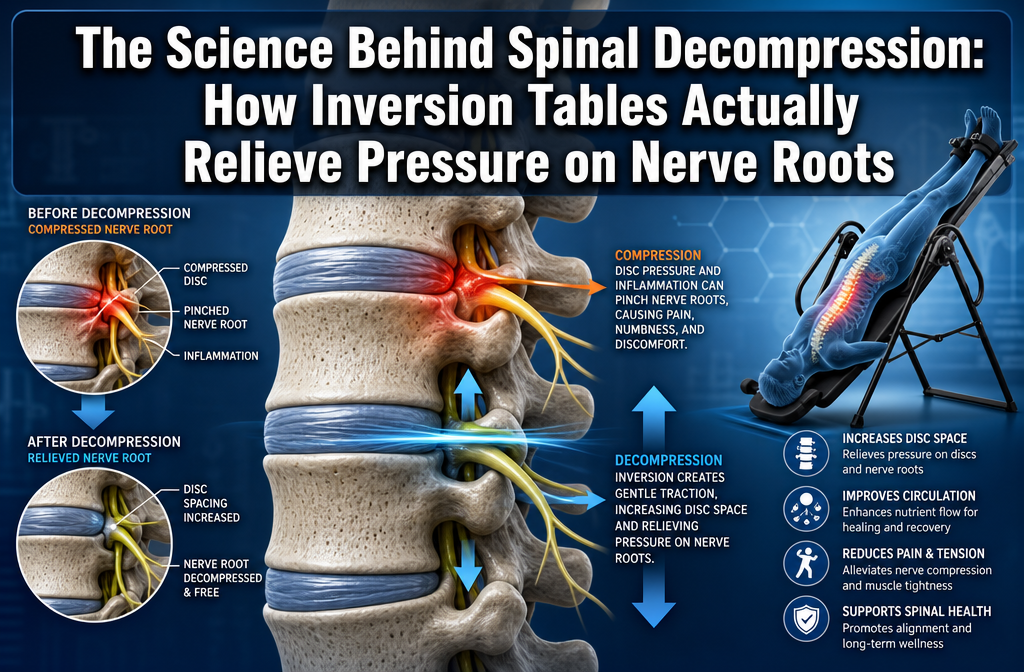
The Science Behind Spinal Decompression: How Inversion Tables Actually Relieve Pressure on Nerve Roots

The Science Behind Spinal Decompression: How Inversion Tables Actually Relieve Pressure on Nerve Roots

Approximately 21% of patients using inversion therapy required surgery within two years, compared to 43% at four years in matched control groups—a striking difference that demands explanation. The science behind spinal decompression through inversion tables centers on gravity-assisted traction that temporarily increases disc space and reduces mechanical compression on nerve roots. Understanding the biomechanics reveals …

Read more

Does losing weight help back pain?

Does losing weight help back pain?

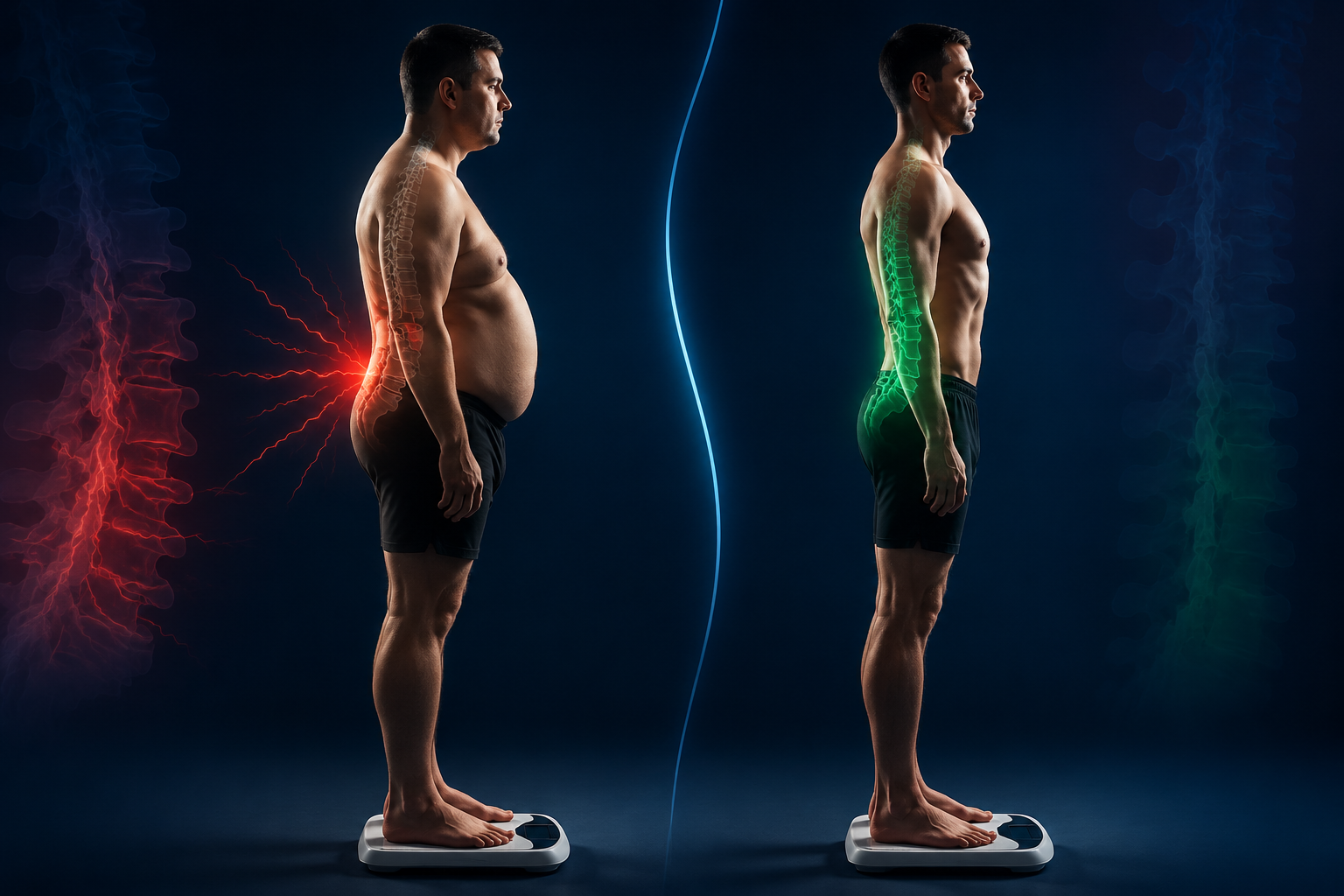
Yes, losing weight helps back pain significantly. Every pound lost removes up to four pounds of pressure from your lower back, reducing stress on spinal discs and joints. Studies show that people who lose just 5% of their body weight experience measurable pain relief and improved mobility, with greater weight loss producing even stronger results. …

Read more

The 30-Day Inversion Table Progression Guide for Beginners

The 30-Day Inversion Table Progression Guide for Beginners

Starting inversion therapy requires a structured 30-day progression that begins with just 1-2 minutes at a shallow 20-30 degree angle and gradually builds to 3-5 minutes at 45-60 degrees. This slow progression allows your body to adapt safely while minimizing risks like dizziness or blood pressure spikes. Most beginners see noticeable benefits after committing to …

Read more

What common myths about inversion tables should patients know are false?

Blood pressure monitoring equipment in clinical setting

Most people believe inversion tables provide permanent back pain relief and work safely for everyone, but these claims are false. Inversion tables offer only temporary decompression that disappears when you stand upright, and they pose serious risks for people with high blood pressure, glaucoma, heart conditions, and other common health issues. The devices apply uncontrolled …

Read more

YOLEO Gravity Table Review

Yoleo inversion table for spinal decompression and pain relief

The YOLEO Gravity Heavy Duty Inversion Table (W1-Blue) is a well-constructed inversion therapy device designed for home use, featuring a 300-pound weight capacity, adjustable height settings up to 6’6″, and comprehensive padding throughout the backrest, headrest, and ankle supports. Built with a heavy-duty steel frame and multiple safety features including a ratchet locking system, this …

Read more

How to Use an Inversion Table Safely & Effectively

How to Use an Inversion Table Safely & Effectively

Using an inversion table safely requires starting at shallow angles (15-20 degrees) for short sessions (1-2 minutes), ensuring your equipment meets FDA registration and UL certification standards, and stopping immediately if you experience headaches, dizziness, or vision changes. Proper setup, gradual progression, and awareness of contraindications are essential for safe inversion therapy. Key Takeaways What …

Read more