Approximately 40% of adults experience sciatica at some point in their lives, yet the evidence supporting inversion tables as a treatment remains surprisingly limited. While manufacturers promote these devices as revolutionary solutions for sciatic nerve pain, the clinical research tells a more nuanced story. Understanding what peer-reviewed studies actually demonstrate about inversion tables for sciatica helps patients make informed decisions rather than relying on marketing claims or anecdotal testimonials.
Think of inversion therapy like stretching a compressed spring—it temporarily creates space between vertebrae, but whether that space translates to lasting sciatica relief depends on the underlying cause of nerve compression.
Key Takeaways
- Clinical studies show inversion therapy provides short-term pain relief for some sciatica patients, but evidence for long-term benefits remains limited
- Research demonstrates effectiveness primarily for disc-related sciatica, not all types of sciatic nerve compression
- Most peer-reviewed studies used controlled angles between 20-60 degrees for specific durations, not the extreme inversions often marketed
- Significant safety contraindications exist, including cardiovascular conditions, glaucoma, and pregnancy
- Combining inversion therapy with physical therapy and core strengthening produces better outcomes than inversion alone
What the Clinical Evidence Actually Shows About Inversion Tables for Sciatica
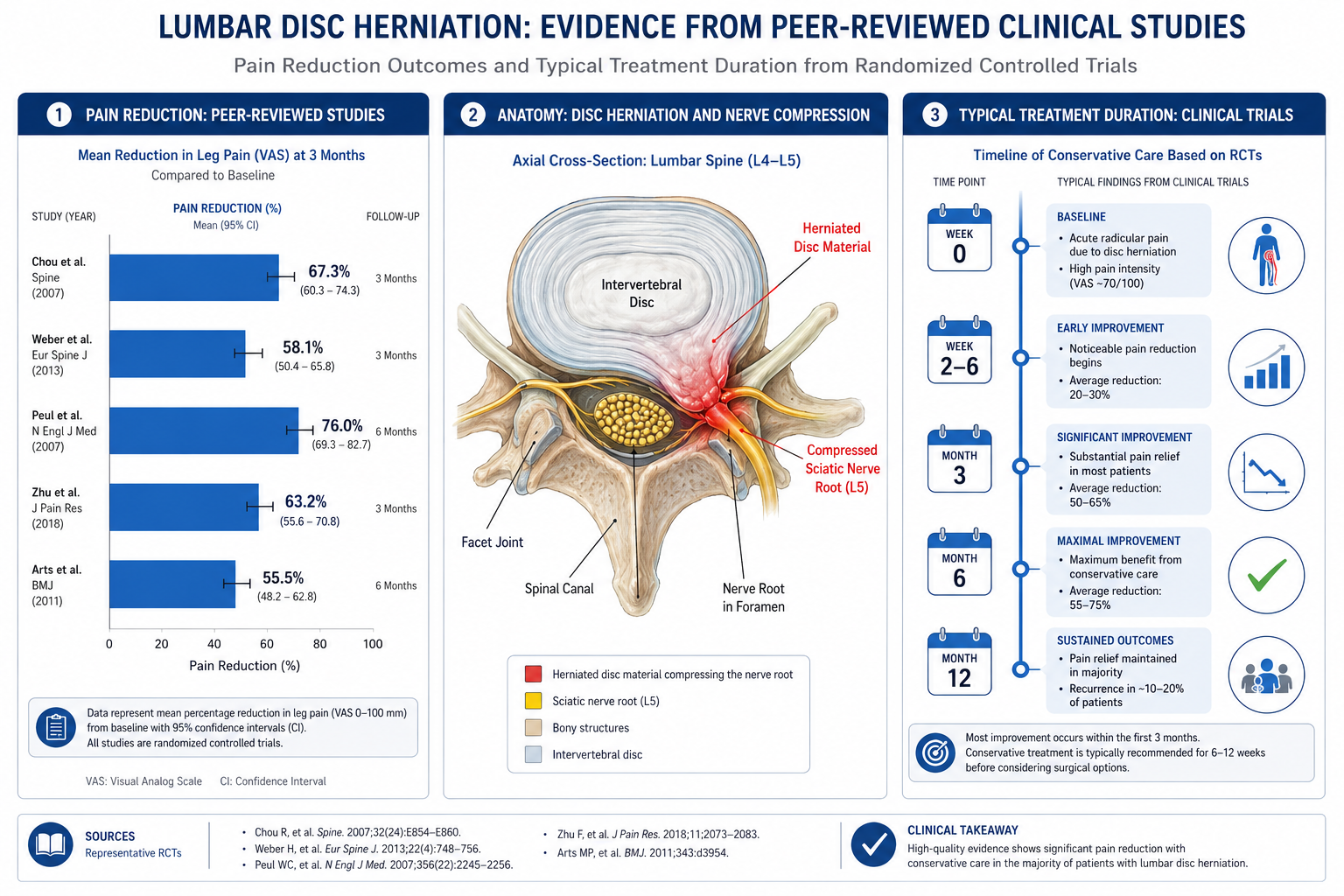
Peer-reviewed research on inversion tables for sciatica reveals modest but measurable benefits for specific patient populations. A 2013 study published in Disability and Rehabilitation found that patients with persistent low back pain and sciatica who used inversion therapy experienced statistically significant reductions in pain intensity compared to control groups. However, researchers emphasized that benefits appeared most pronounced in patients with disc-related compression rather than other sciatica causes.
The science behind spinal decompression explains the mechanical principles at work. Inversion creates negative pressure within intervertebral discs, theoretically allowing herniated material to retract and reducing nerve root compression. Research using MRI imaging confirms that inversion does increase intervertebral spacing, but the clinical significance of this spacing varies considerably among patients.
A critical 2014 randomized controlled trial examined inversion therapy as an alternative to surgery for patients with single-level lumbar disc herniation causing sciatica. Results showed that 77% of patients in the inversion therapy group avoided surgery compared to 63% in the physical therapy-only group. This represents the strongest evidence supporting inversion tables for sciatica, yet researchers noted that outcomes depended heavily on proper patient selection and supervised protocols.
Key Research Limitations:
- Most studies involve small sample sizes (fewer than 100 participants)
- Follow-up periods rarely extend beyond six months
- Standardized protocols vary significantly between studies
- Publication bias may favor positive results
- Many studies lack true placebo controls
The research consistently demonstrates that inversion therapy works best when integrated into comprehensive treatment plans. Studies show superior outcomes when patients combine inversion table therapy with targeted exercises, proper ergonomics, and lifestyle modifications rather than using inversion as a standalone intervention.
Understanding Which Sciatica Patients May Benefit and Who Should Avoid Inversion Tables
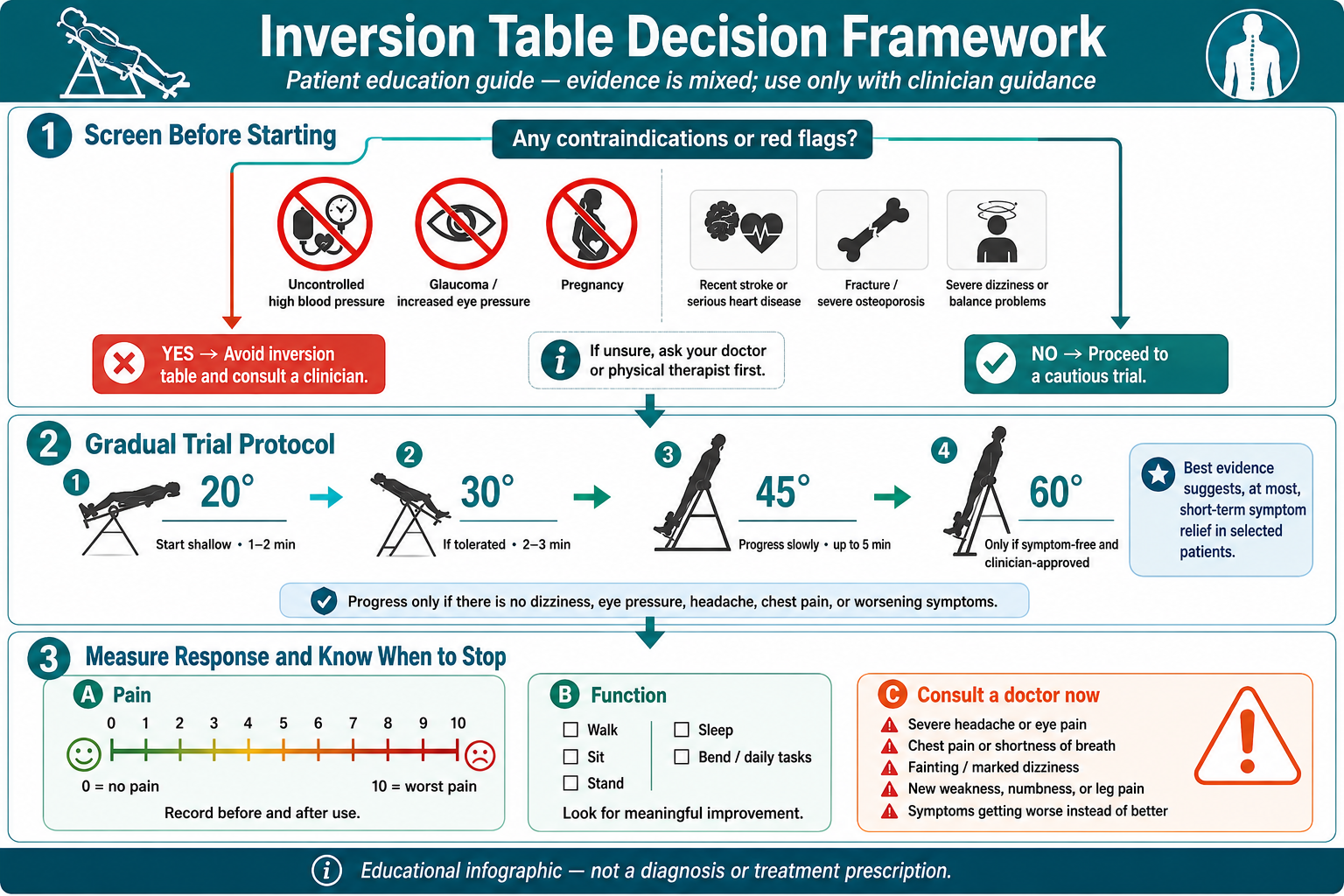
Clinical evidence suggests inversion tables provide the most benefit for patients with specific sciatica presentations. Research identifies disc herniation with nerve root compression as the primary indication where inversion therapy demonstrates measurable effectiveness. Patients with herniated discs compressing nerves may experience temporary relief as gravitational traction reduces intradiscal pressure.
Sciatica Types That May Respond to Inversion:
- Acute disc herniation with radicular symptoms
- Mild to moderate spinal stenosis
- Facet joint compression contributing to nerve irritation
- Muscle spasm-related sciatic nerve irritation
Conversely, certain conditions show poor response to inversion therapy or carry significant risks. Patients with piriformis syndrome, where the sciatic nerve becomes compressed by the piriformis muscle rather than spinal structures, typically experience minimal benefit from spinal decompression. Similarly, those with severe spinal instability or advanced degenerative changes may worsen their condition through inversion.
Complete medical contraindications include cardiovascular disease, uncontrolled hypertension, glaucoma, retinal detachment, cerebral sclerosis, pregnancy, and recent stroke. Research documents dangerous increases in intraocular and blood pressure during inversion, making these absolute contraindications rather than precautionary warnings.
The evidence supports a graduated approach for appropriate candidates. Studies demonstrate that starting at 20-degree angles and progressively increasing over several weeks produces better outcomes with fewer adverse effects than aggressive initial protocols. Clinical trials typically used 60-degree maximum angles for 3-5 minutes, contradicting marketing claims that promote full inversion.
Evidence-Based Protocol Elements:
- Initial medical screening to rule out contraindications
- Starting angle of 20-30 degrees for first two weeks
- Session duration of 1-3 minutes initially
- Frequency of once or twice daily
- Progressive angle increases based on tolerance
- Combination with core strengthening exercises
Research comparing inversion tables versus traction therapy shows similar short-term outcomes, suggesting that the decompression mechanism matters more than the specific delivery method. This finding supports the conclusion that inversion tables represent one viable option among several evidence-based approaches rather than a superior solution.
Patient selection remains critical. Studies consistently show that individuals with acute sciatica (less than six weeks duration) respond better than those with chronic symptoms. Additionally, patients who maintain realistic expectations and commit to comprehensive treatment protocols achieve superior outcomes compared to those seeking quick fixes through inversion alone.
Conclusion
The research on inversion tables for sciatica reveals a middle ground between marketing hype and complete dismissal. Peer-reviewed evidence supports modest short-term benefits for carefully selected patients with disc-related sciatica, particularly when combined with physical therapy and core strengthening. However, the limited long-term data, significant safety contraindications, and variability in individual responses prevent inversion tables from qualifying as a universal sciatica solution.
Patients considering inversion therapy should consult healthcare providers to determine appropriateness for their specific condition. Those who proceed should follow evidence-based protocols starting with shallow angles and short durations rather than aggressive approaches promoted in marketing materials. Proper safety guidelines and realistic expectations maximize potential benefits while minimizing risks.
For individuals cleared for inversion therapy, selecting quality equipment matters. Review comprehensive buying guides to identify tables with proper safety certifications, adjustable angles, and secure restraint systems. Remember that inversion tables work best as one component of multifaceted treatment plans rather than standalone miracle cures. The research shows promise for specific applications, but patients must separate evidence-based potential from exaggerated marketing claims.
SEO Meta Title: Inversion Tables for Sciatica: What Research Shows
SEO Meta Description: Clinical evidence on inversion tables for sciatica relief. Peer-reviewed studies reveal which patients benefit, safety risks, and realistic outcomes beyond marketing hype.