Nearly 80% of adults experience debilitating back pain at some point in their lives, yet most never explore the combination of spinal decompression with targeted heat therapy. The Innova ITM5900 and ITM4800 models promise to deliver this dual-action approach, but do these advanced features translate into measurable relief for conditions like sciatica and muscle spasms, or do they simply add unnecessary complexity to standard inversion therapy?
Think of these tables as a physical therapist’s hands combined with a heating pad—they work simultaneously to decompress your spine while relaxing the surrounding muscles that often sabotage traditional inversion results.
Key Takeaways
- Advanced heat and massage features target muscle tension that standard inversion tables cannot address, potentially enhancing therapeutic outcomes for sciatica and spasms
- The ITM5900 ranks #9 in 2026’s top inversion tables, demonstrating sustained market relevance and consumer satisfaction [1]
- Both models accommodate users 4’10” to 6’6″ with 300-pound weight capacity, serving a broad demographic with specialized therapeutic needs [2]
- True Balance System (ITM4800) and contoured backrest (ITM5900) represent distinct engineering approaches to optimizing center of gravity during inversion
- Multi-mode heat and massage settings provide customizable therapy sessions that users can adjust based on pain severity and treatment goals [2]
Understanding Inversion Tables with Heat and Massage: Do Innova ITM5900 and ITM4800 Deliver Real Therapeutic Value?
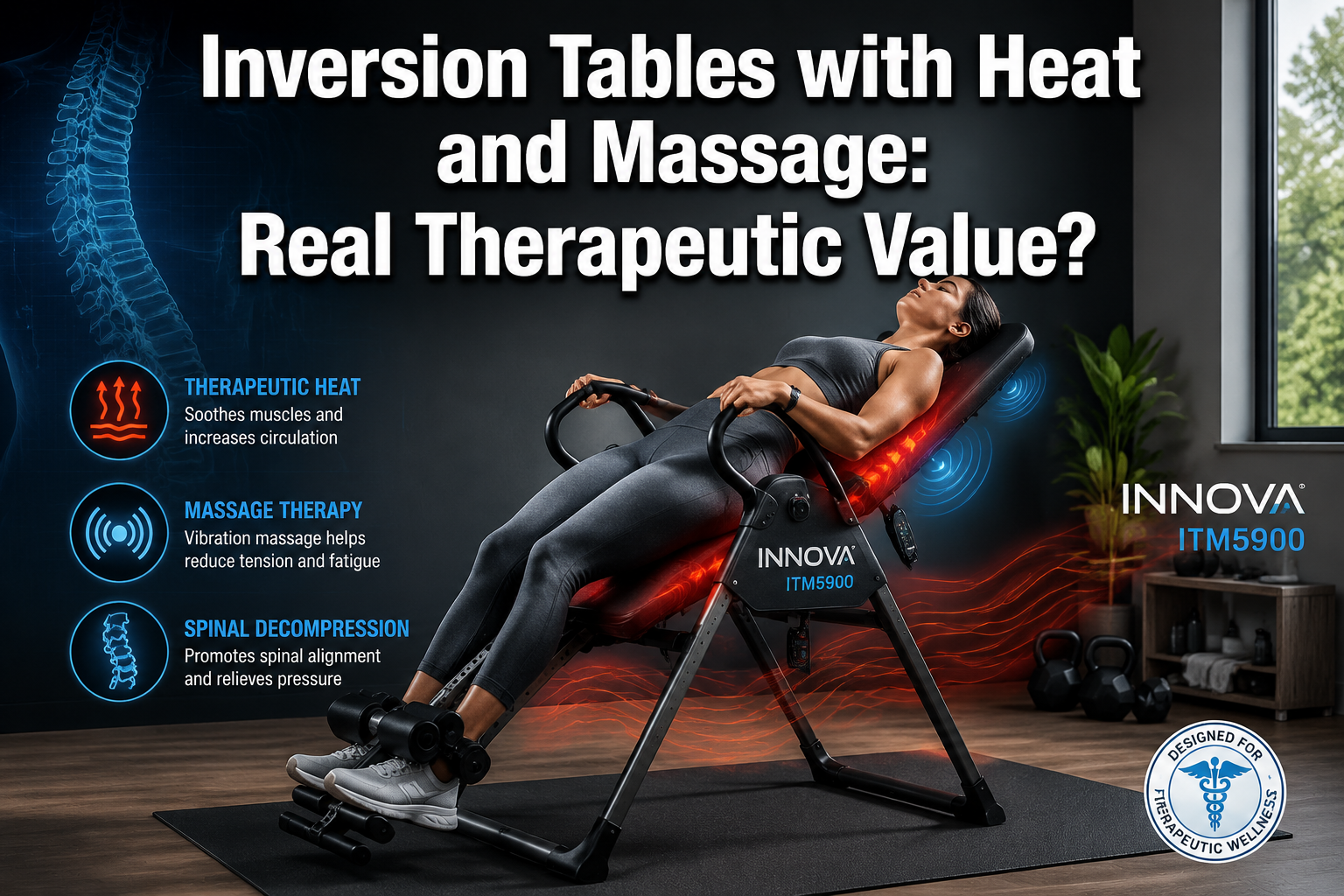
Standard inversion tables decompress the spine through gravity alone. The Innova ITM5900 and ITM4800 models add heat therapy and vibration massage to this foundation, creating a multi-modal treatment approach. This combination addresses a critical limitation: muscle guarding.
When you invert without heat, your muscles often tense reflexively, limiting the decompression benefits. Heat therapy relaxes these protective muscle contractions, allowing deeper spinal decompression. The vibration massage further reduces muscle spasms that commonly accompany conditions like herniated discs and sciatica.
The Science Behind Combined Therapy
Heat increases blood flow to affected areas, promoting healing and reducing inflammation. Vibration massage stimulates mechanoreceptors in muscle tissue, interrupting pain signals to the brain. When combined with inversion’s decompression effect, these three mechanisms work synergistically.
Research on spinal decompression shows that reducing muscle tension during treatment enhances outcomes. The ITM5900’s vertical massage pad covers the entire spine area with an integrated lumbar contour, delivering focused heat and vibration to the lower back—the region most affected by chronic pain [5].
ITM5900 vs ITM4800: Feature Comparison and Therapeutic Differences
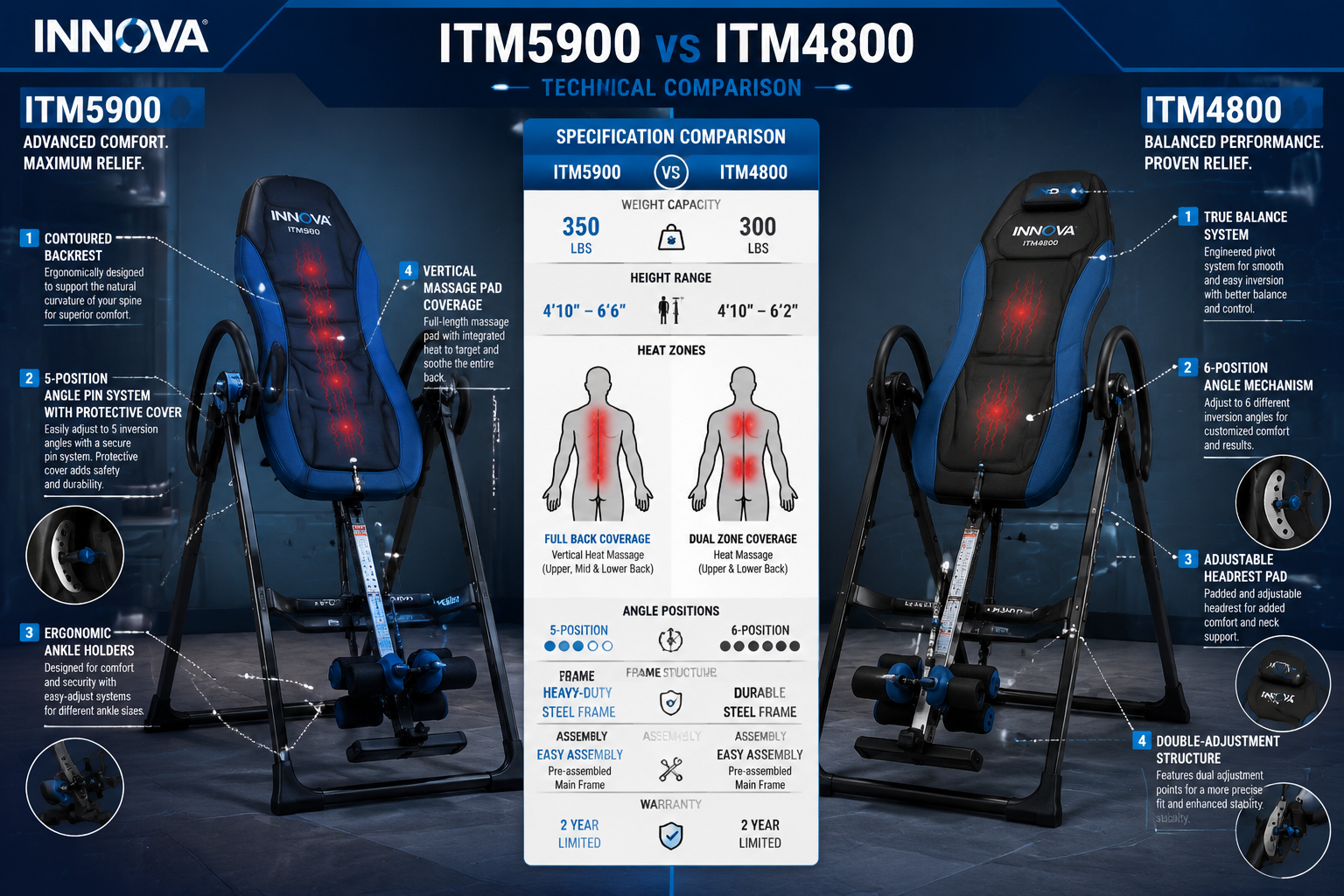
Both models share core capabilities but differ in critical ways that affect therapeutic value:
| Feature | ITM5900 | ITM4800 |
|---|---|---|
| Angle Positions | 5-position system [4] | 6-position system [3] |
| Balance Technology | Contoured backrest [1] | True Balance System [3] |
| Adjustment Method | Single adjustment | Double-adjustment structure [3] |
| Signature Feature | Vertical massage pad [5] | Adjustable headrest pad [3] |
| Ankle System | Ergonomic dual-holder design [2] | Standard ankle support |
ITM5900: Contoured Comfort Approach
The ITM5900 earns recognition for its contoured backrest that conforms to natural spinal curves [1]. This design positions heat and massage elements closer to your body, increasing therapeutic contact. The ergonomic ankle holding system features large front holders and smaller rear holders, distributing pressure more evenly during inversion [2].
Users report this configuration reduces ankle discomfort during extended sessions—a common complaint with standard designs. The 5-position angle system includes a patent-pending protective cover, simplifying angle adjustments while maintaining safety [4].
ITM4800: Precision Balance Engineering
The ITM4800’s True Balance System represents a different engineering philosophy [3]. This double-adjustment structure combines an adjustable headrest pad with height control, allowing precise center-of-gravity management. Users with varying body proportions benefit from this customization.
The 6-position side inversion pin system replaces older strap methods, providing consistent, repeatable angles [3]. This precision matters for therapeutic protocols that require specific inversion degrees. Physical therapists often recommend starting at 20-30 degrees and gradually increasing—the ITM4800’s pin system delivers this control.
Real Therapeutic Value: Heat and Massage Impact on Sciatica and Muscle Spasms
The question of therapeutic value requires examining specific conditions. For sciatica sufferers, the combination of decompression and heat addresses both nerve compression and surrounding muscle inflammation. The sciatic nerve runs through the piriformis muscle—heat therapy relaxes this muscle while inversion reduces disc pressure on the nerve root.
Users experiencing muscle spasms benefit from the vibration massage feature. Spasms often result from protective muscle guarding around injured areas. The multi-mode heat and massage settings with auto and manual selection allow users to customize intensity based on spasm severity [2].
Clinical Considerations
Both models provide heavy-duty steel construction designed for durability and smooth inversion [4]. This stability matters therapeutically—jerky movements or unstable platforms can trigger protective muscle responses that counteract treatment benefits.
The foldable frame design of the ITM5900 addresses practical concerns for home users with limited space [4]. Consistent use drives therapeutic outcomes, and storage convenience removes barriers to regular sessions.
Before starting any inversion therapy program, users should review who should not use an inversion table to ensure safety. Conditions like glaucoma, high blood pressure, and pregnancy require medical clearance.
Maximizing Results: Integration with Comprehensive Back Care
Heat and massage features deliver maximum value when integrated into a broader back care strategy. The benefits of inversion therapy multiply when combined with proper nutrition, hydration, and movement practices.
Practical Usage Protocol
Start conservatively: Begin with 1-2 minute sessions at 20-30 degrees with heat activated. The warmth prepares muscles for decompression. Gradually increase duration and angle as your body adapts.
Timing matters: Use the table when muscles are already warm—after light exercise or a warm shower. Cold, tight muscles resist decompression even with heat therapy.
Consistency beats intensity: Three 5-minute sessions weekly produce better results than one 20-minute session. Regular decompression prevents the cumulative compression that occurs during daily activities.
Both models include a one-year warranty as standard protection [4]. This coverage reflects manufacturer confidence but also highlights the importance of following safe inversion techniques to prevent misuse damage.
Safety Considerations and Contraindications
Advanced features don’t eliminate fundamental safety requirements. The 5 dangers of inversion tables apply equally to heat-equipped models. Heat therapy adds specific considerations:
⚠️ Heat sensitivity: Users with diabetes or neuropathy may not accurately sense heat levels, risking burns. Start with the lowest heat setting and monitor skin response.
⚠️ Cardiovascular concerns: Heat increases heart rate and blood flow. Combined with inversion’s cardiovascular effects, this creates additional stress for users with heart conditions.
⚠️ Medication interactions: Blood thinners, muscle relaxants, and pain medications can alter heat tolerance and balance. Consult healthcare providers before combining these therapies.
The 300-pound weight capacity accommodates most users, but exceeding this limit compromises both safety and therapeutic effectiveness [2]. Weight distribution affects the center of gravity calculations that both models’ balance systems depend on.
Cost-Benefit Analysis: Are Advanced Features Worth the Investment?
Standard inversion tables retail for $150-$300. The ITM5900 and ITM4800 command premium prices due to their heat and massage capabilities. This investment makes sense for specific user profiles:
✅ Chronic pain sufferers who have tried standard inversion without adequate relief
✅ Sciatica patients requiring both nerve decompression and muscle relaxation
✅ Athletes using inversion for recovery and performance enhancement
✅ Users with muscle spasm conditions needing targeted vibration therapy
The therapeutic value increases when heat and massage address limitations of standard inversion. For users whose muscles remain tense during basic inversion, these features transform the treatment from marginally effective to genuinely therapeutic.
Consider the alternative costs: physical therapy sessions ($75-$150 each), massage therapy ($60-$120 per session), and ongoing pain medication. A quality inversion table with therapeutic features pays for itself within months for regular users.
For guidance on selecting the right model for your needs, consult our inversion table buying guide which covers essential decision factors beyond heat and massage features.
Conclusion
The Innova ITM5900 and ITM4800 deliver genuine therapeutic value for users whose conditions benefit from combined decompression, heat, and massage therapy. These models address the muscle tension limitation that reduces standard inversion effectiveness, particularly for sciatica and muscle spasm sufferers.
The ITM5900’s contoured backrest and vertical massage pad excel for users prioritizing comfort and full-spine coverage. The ITM4800’s True Balance System and 6-position precision serve users requiring exact angle control and customizable center-of-gravity adjustment.
Action steps for prospective buyers:
Assess your specific condition: Do you experience muscle guarding during stretching? Heat and massage features directly address this issue.
Evaluate space constraints: The ITM5900’s foldable design suits smaller spaces, while the ITM4800’s stability benefits users with dedicated therapy areas.
Start with medical clearance: Review contraindications with your healthcare provider, especially if you have cardiovascular, eye, or bone density concerns.
Plan a progressive protocol: Begin conservatively and increase intensity gradually, tracking pain levels and functional improvements.
Integrate complementary practices: Combine inversion therapy with nutrition strategies that boost results and proper hydration.
The therapeutic value of these advanced models depends on matching features to your specific needs. For users whose pain involves significant muscle tension components, the investment delivers measurable relief that standard models cannot provide. Learn how to use an inversion table safely to maximize benefits while minimizing risks.
References
[1] Top 10 Best Inversion Tables in 2026 – https://www.youtube.com/watch?v=dsJg8wlxBtE
[2] Innova Advanced Heat and Massage Inversion Table Review – https://www.youtube.com/watch?v=Be-m9vnOIUk
[3] Innova ITM4800 Advanced Heat and Massage Inversion – https://www.youtube.com/watch?v=dWY05dgFDf0
[4] Innova ITM5900 Advanced Heat and Massage Inversion – https://www.youtube.com/watch?v=9-T4wbN367M
[5] Innova Heated and Massage Inversion Table Review – https://www.youtube.com/watch?v=NtnE2XP9YwY