Using an inversion table safely requires starting at shallow angles (15-20 degrees) for short sessions (1-2 minutes), ensuring your equipment meets FDA registration and UL certification standards, and stopping immediately if you experience headaches, dizziness, or vision changes. Proper setup, gradual progression, and awareness of contraindications are essential for safe inversion therapy.
Key Takeaways
Start with minimal inversion angles of 15-20 degrees for only 1-2 minutes per session
Verify your inversion table has FDA registration and UL certification before use
Stop immediately if you experience headaches, dizziness, increased pain, or vision changes
Inversion therapy increases blood pressure, slows heart rate, and raises eye pressure significantly
People with glaucoma, heart disease, high blood pressure, or pregnancy should avoid inversion tables
Between 2012 and 2022, the FDA documented 10 adverse events including spinal cord injuries and one fatality
Some studies show reduced pain for lumbar disc disease, but clinical evidence remains limited
Proper equipment setup and height/weight adjustment are critical before each use
What Is an Inversion Table and How Does It Work?
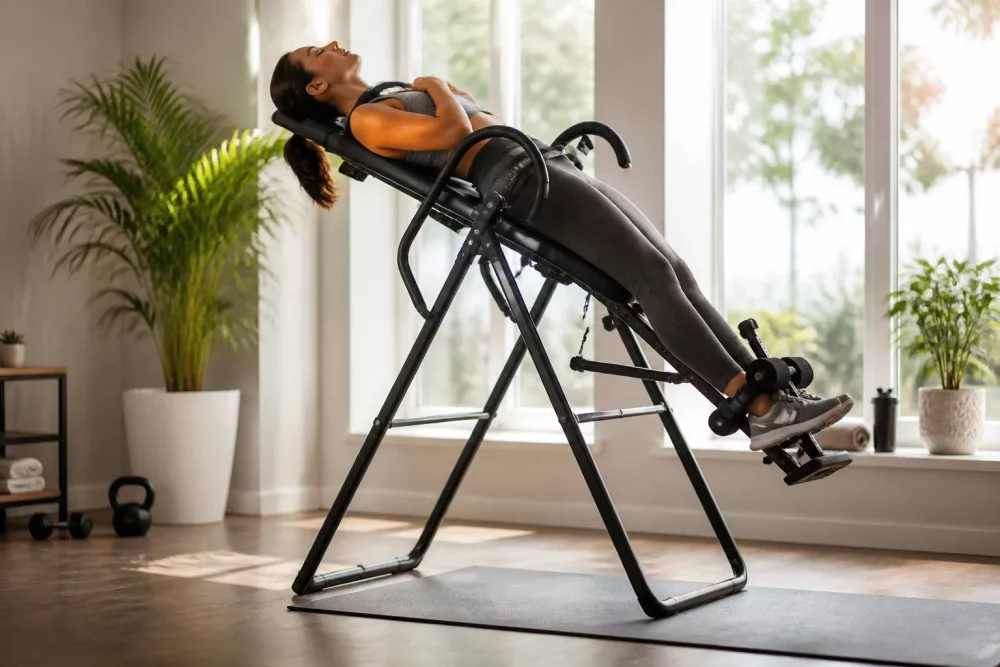
An inversion table is a padded platform that rotates on a pivot, allowing you to hang upside down or at an inverted angle while secured by ankle supports. The theory behind inversion therapy suggests that reversing gravity’s pull on your spine can decompress vertebrae, reduce nerve pressure, and potentially relieve back pain.
When you invert, gravity pulls your upper body weight away from your lower spine, creating traction. This mechanical stretching may temporarily increase the space between spinal discs and reduce compression on nerve roots. However, the effects are temporary and reverse once you return to an upright position.
Key mechanism: Gravity creates spinal traction by pulling your torso away from your hips and legs, which are secured to the table.
Who Should (and Shouldn’t) Use an Inversion Table Safely?
Inversion tables may benefit people with chronic lower back pain, sciatica, or lumbar disc issues who have no contraindications. A 2021 study found that 75% of participants with lumbar disc disease and sciatica reported less pain after six weeks of daily inversion therapy. Another small study showed women with chronic lower back pain experienced reduced pain and improved flexibility after eight weeks.
Avoid inversion tables if you have:
Glaucoma or other eye pressure conditions
High blood pressure or heart disease
Pregnancy
Herniated discs (without medical clearance)
Osteoporosis or bone fractures
Ear infections or vertigo
Cerebral sclerosis
Recent stroke or are taking blood thinners
Common mistake: Assuming inversion therapy is safe for everyone with back pain. The physiological changes (increased blood pressure, elevated eye pressure, slowed heart rate) create serious risks for people with certain conditions.
Choose inversion therapy if: You have mechanical back pain without contraindications, have consulted your doctor, and are willing to start slowly with proper equipment.
How to Set Up Your Inversion Table Safely Before First Use
Proper setup prevents equipment failure and injury. Before your first session, verify that your inversion table is completely assembled according to manufacturer instructions and that all bolts, pins, and safety features are secure.
Setup checklist:
Adjust height settings to match your exact height (most tables have a telescoping bed)
Set weight limits if your model has adjustable weight settings
Test ankle locking mechanism by securing and releasing it several times
Check pivot points for smooth rotation without sticking or jerking
Verify safety straps or tether systems are functional
Place on level surface with at least 2 feet of clearance on all sides
Keep emergency release accessible and practice using it
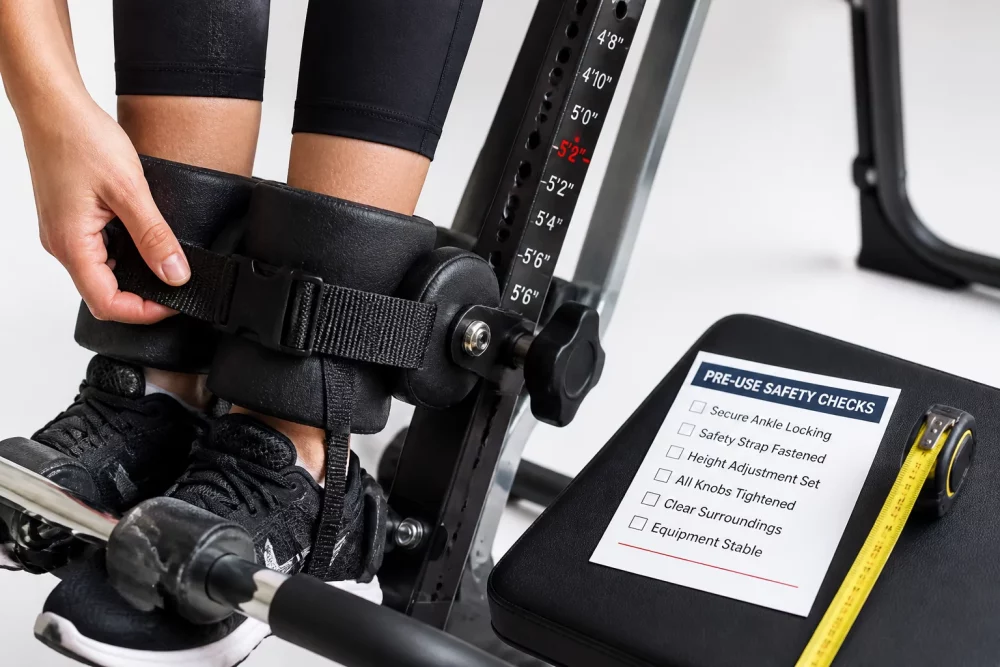
Edge case: If you’re between height settings, always choose the taller setting and add extra padding to ankle supports rather than forcing a shorter setting that could fail.
Test the table at a minimal angle before attempting full inversion. Stand on the platform, secure your ankles, and lean back slightly while holding the handles to ensure everything functions correctly.
What Are the Step-by-Step Instructions for Using an Inversion Table Safely?
Start conservatively and progress gradually. Your body needs time to adapt to the physiological changes that occur during inversion.
Session protocol for beginners:
Secure your ankles firmly but not painfully tight in the locking mechanism
Hold the handles and slowly lean back, keeping your arms above your head
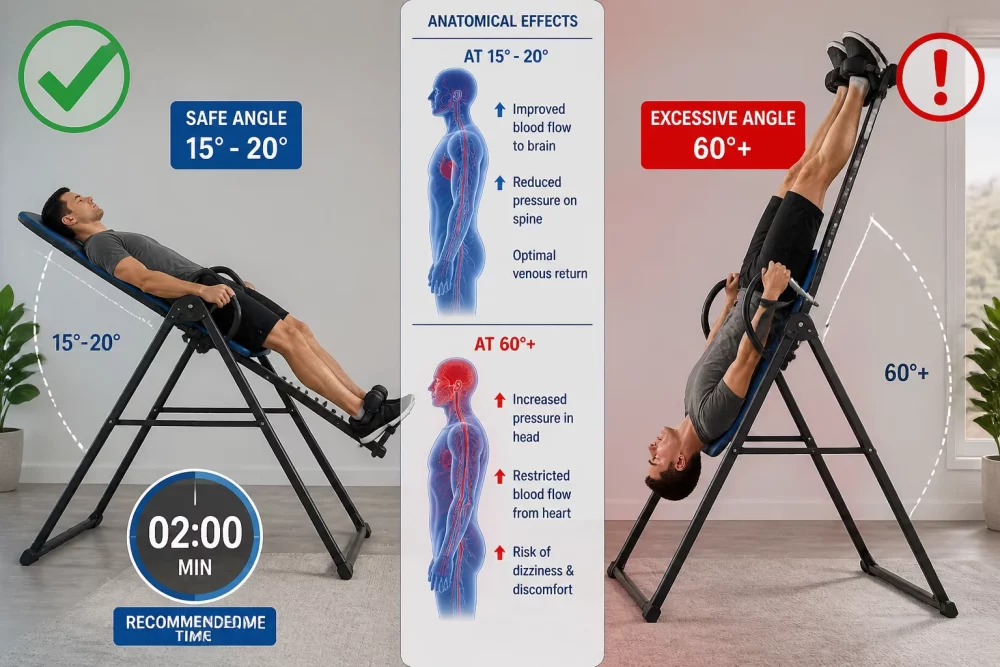
Start at 15-20 degrees (barely inverted) for your first sessions
Stay inverted for 1-2 minutes maximum initially
Return slowly by pulling on handles or shifting weight forward
Rest upright for at least 1-2 minutes before standing
Repeat 1-2 times per session if comfortable
Progression schedule:
WeekAngleDurationFrequency1-215-20°1-2 minOnce daily3-430-40°2-3 min1-2x daily5-645-60°3-5 min1-2x daily7+Up to 60°5-10 minAs tolerated
Never exceed 60 degrees unless specifically instructed by a healthcare provider. Full inversion (90 degrees) significantly increases risks without proven additional benefits.
Common mistake: Rushing progression because you feel fine initially. Adverse effects like headaches or dizziness may not appear until later sessions or at steeper angles.
What Warning Signs Mean You Should Stop Using an Inversion Table Safely?
Your body will signal when inversion is causing problems. Stop immediately and return to an upright position if you experience any of these symptoms:
Immediate stop signals:
Headaches or pressure in your head
Dizziness or lightheadedness
Vision changes (blurriness, spots, halos)
Nausea or feeling faint
Increased back pain or sharp pain
Difficulty breathing
Rapid or irregular heartbeat
Ringing in ears (tinnitus)
Between 2012 and early 2022, the FDA Medical Device Reporting Events Database documented 10 adverse inversion therapy events, including two spinal cord injuries and one fatality from brain injury. While rare, these serious events underscore the importance of recognizing warning signs early.
After-session red flags: If you experience persistent headaches, vision problems, or increased pain in the hours following inversion, discontinue use and consult your doctor before resuming.
Decision rule: If symptoms don’t resolve within 5-10 minutes of returning upright, seek medical attention. Don’t attempt another session until cleared by a healthcare provider.
How Can You Maximize Benefits While Using an Inversion Table Safely?
Combine proper technique with complementary practices to get the most from inversion therapy while minimizing risks.
Enhancement strategies:
Time your sessions for when muscles are warm (after light exercise or a warm shower)
Breathe deeply during inversion to promote relaxation and reduce muscle tension
Perform gentle stretches while inverted (arm raises, side bends) if comfortable
Stay hydrated before and after sessions
Track your progress with a journal noting angle, duration, and how you feel
Combine with physical therapy exercises recommended by your provider
Maintenance tips:
Inspect equipment before each use for wear or damage
Clean padding regularly to prevent skin irritation
Lubricate pivot points according to manufacturer guidelines
Replace worn ankle straps or padding immediately
Choose enhancement exercises if: You’re comfortable at your current angle and duration, have no contraindications, and want to add gentle movement. Avoid exercises if you’re still adapting to basic inversion.
What Does the Evidence Say About Inversion Table Safety and Effectiveness?
The research on inversion therapy shows mixed results. Some studies demonstrate short-term pain relief, while major medical organizations note the lack of strong clinical evidence.
Supporting evidence: Small studies have shown benefits for specific populations. Women with chronic lower back pain experienced reduced pain and improved torso flexibility after eight weeks of treatment. The 2021 study on lumbar disc disease showed 75% of participants reported improvements after six weeks.
Limitations: The American College of Physicians stated in 2017 that there is a lack of clinical evidence to support inversion therapy’s effectiveness. Most studies are small, short-term, and don’t compare inversion to other treatments effectively.
Physiological facts: Inversion measurably increases blood pressure, slows heart rate, and significantly increases eye pressure. These aren’t theoretical risks—they’re documented physiological responses that occur in everyone who inverts, regardless of health status.
Bottom line: Inversion may provide temporary relief for some people with mechanical back pain, but it’s not a cure and carries real risks. The evidence doesn’t support it as a first-line treatment, and safer alternatives (physical therapy, exercise, medication) should be tried first.
What Are the Best Alternatives to Inversion Tables for Back Pain?
If inversion tables seem too risky or you have contraindications, several evidence-based alternatives exist for managing back pain.
Safer options:
Physical therapy: Targeted exercises and manual therapy with professional guidance
Yoga and stretching: Gentle poses that decompress the spine without full inversion
Foam rolling: Self-myofascial release to reduce muscle tension
Traction devices: Mechanical or manual traction applied by professionals
Core strengthening: Building support muscles to reduce spinal load
Heat and cold therapy: Reducing inflammation and promoting blood flow
Massage therapy: Professional treatment to release muscle tension
Comparison consideration: Physical therapy has stronger evidence for long-term back pain management than inversion therapy and doesn’t carry the cardiovascular and eye pressure risks.
Choose alternatives if: You have any contraindications to inversion, prefer evidence-based treatments, or want to address the underlying causes of back pain rather than temporary symptom relief.
Frequently Asked Questions
How long should I use an inversion table each day?
Start with 1-2 minutes once daily, gradually increasing to 5-10 minutes 1-2 times daily over several weeks. Never exceed 10 minutes per session without medical supervision.
Can inversion tables help with herniated discs?
Some people with herniated discs report relief, but you should only use inversion therapy for disc issues with explicit approval from your doctor, as it can worsen certain disc conditions.
What angle is safest for beginners on an inversion table?
Begin at 15-20 degrees (barely inverted) for the first 1-2 weeks. This minimal angle allows your body to adapt while minimizing cardiovascular and eye pressure changes.
Do I need FDA-approved inversion tables?
Look for FDA-registered tables (meeting medical device reporting requirements) and UL-certified equipment (tested for safety and durability). These certifications indicate higher quality and safety standards.
Can inversion tables cause strokes?
While extremely rare, the increased blood pressure and altered blood flow during inversion can theoretically increase stroke risk in susceptible individuals. People with cardiovascular disease or on blood thinners should avoid inversion.
Should I use an inversion table before or after exercise?
Use it after exercise when muscles are warm and more pliable. Avoid inversion immediately before exercise, as the temporary muscle relaxation could increase injury risk during activity.
How quickly will I see results from inversion therapy?
Some people report immediate temporary relief, while others notice benefits after 2-4 weeks of consistent use. If you see no improvement after 6-8 weeks, inversion therapy may not be effective for your condition.
Can I sleep on an inversion table?
Never sleep or remain inverted for extended periods. The prolonged cardiovascular and eye pressure changes can cause serious harm. Limit sessions to 10 minutes maximum.
What’s the weight limit for most inversion tables?
Most tables support 250-300 pounds, though heavy-duty models accommodate up to 350 pounds. Always verify your table’s specific weight limit and never exceed it.
Do chiropractors recommend inversion tables?
Opinions vary among chiropractors. Some recommend them as part of a comprehensive treatment plan, while others prefer manual adjustments and exercise. Consult your specific provider for personalized advice.
Can inversion tables help with posture?
Inversion may temporarily decompress the spine, but it doesn’t address the muscle imbalances and habits that cause poor posture. Core strengthening and postural awareness training are more effective for long-term posture improvement.
Are there age restrictions for inversion table use?
No specific age limits exist, but older adults with age-related conditions (osteoporosis, cardiovascular disease, glaucoma) face higher risks. Anyone over 60 should consult their doctor before starting inversion therapy.
Conclusion
Using an inversion table safely requires careful attention to equipment quality, proper setup, gradual progression, and awareness of your body’s signals. Start with minimal angles of 15-20 degrees for just 1-2 minutes, ensuring your table meets FDA registration and UL certification standards. Stop immediately if you experience headaches, dizziness, vision changes, or increased pain.
While some research suggests potential benefits for specific back pain conditions, the evidence remains limited and the physiological risks are real. Inversion increases blood pressure, slows heart rate, and raises eye pressure in everyone who uses it. People with glaucoma, heart disease, high blood pressure, or pregnancy should avoid inversion tables entirely.
Your next steps: If you decide to try inversion therapy, consult your doctor first to rule out contraindications. Invest in quality equipment with proper safety certifications, follow the progressive protocol outlined above, and consider combining inversion with evidence-based treatments like physical therapy and core strengthening. Track your progress honestly—if you don’t see meaningful improvement after 6-8 weeks, explore alternative treatments with stronger evidence for long-term back pain management.