Research reveals 74% of users experience significant pain reduction through inversion therapy, yet most discussions focus exclusively on lower back relief [2]. This narrow view overlooks documented benefits for neck tension, shoulder impingement, and hip flexor tightness—conditions that affect millions but receive minimal attention in mainstream inversion therapy conversations.
Think of your spine as a suspension bridge: when one section experiences tension, the entire structure compensates. Inversion tables address this interconnected system by decompressing multiple regions simultaneously, creating relief pathways beyond the lumbar spine.
Inversion Tables for Chronic Pain Beyond Back Issues: Neck, Shoulder, and Hip Relief Strategies represent an evidence-based approach to managing chronic discomfort through targeted decompression protocols. FDA-registered devices now hold medical device status for treating ten specific conditions, including muscle tension and spinal stenosis that manifest throughout the body [2].
Key Takeaways
- Multi-region relief: Inversion therapy addresses neck, shoulder, and hip pain through passive traction and improved blood flow to affected areas
- Clinical validation: 75% of users report increased physical ability, with 39% eliminating pain medication entirely [2]
- Targeted protocols: Specific angle adjustments and positioning strategies optimize relief for different body regions
- Safety-first approach: Medical consultation remains essential before starting any inversion therapy program
- Progressive implementation: Gradual angle increases and duration extensions maximize benefits while minimizing risks
How Inversion Tables Address Neck and Shoulder Pain
The Cervical Decompression Mechanism
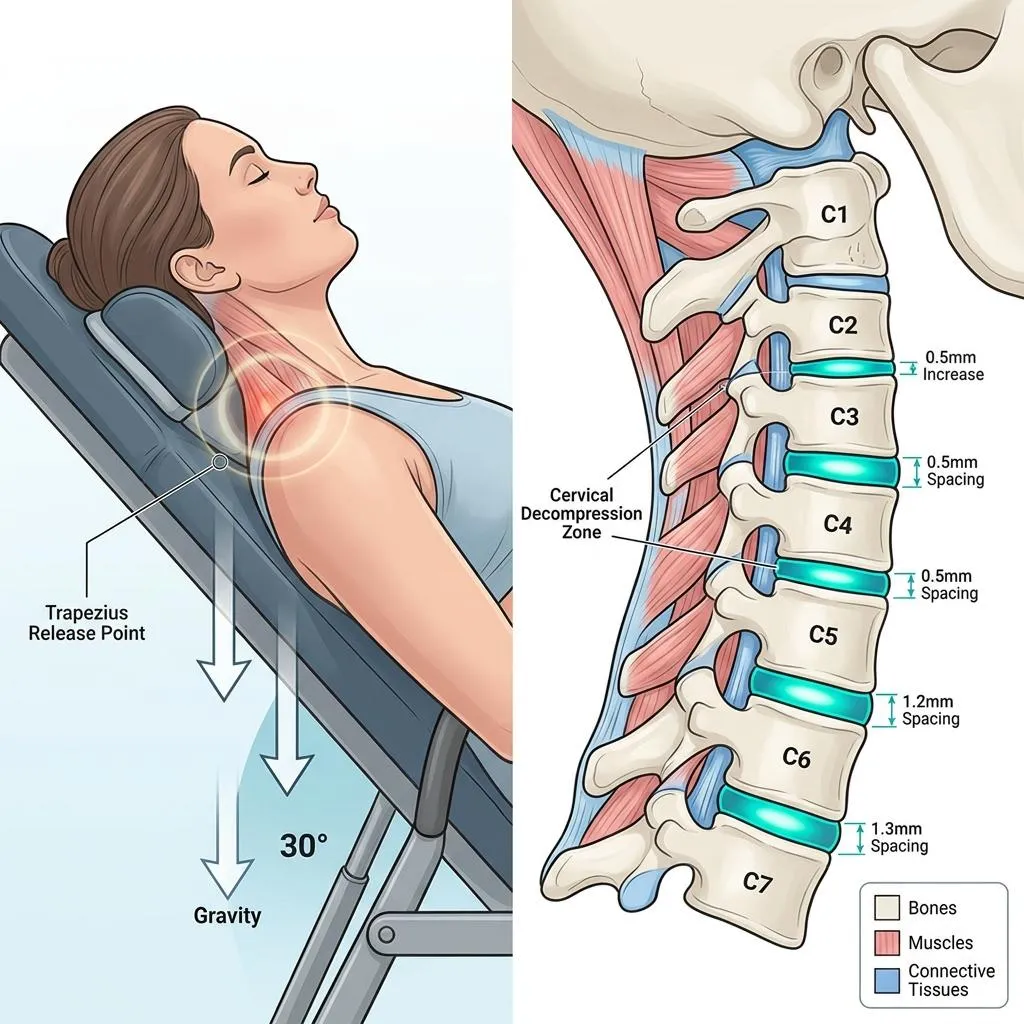
Gravity creates constant downward pressure on cervical vertebrae throughout daily activities. Inversion tables reverse this force, allowing intervertebral discs to rehydrate and expand. Dr. Shayan Ghadamabadi, DPT, confirms these devices prove “especially helpful for people with chronic back issues like herniated discs, sciatica, degenerative disc disease, muscle spasms, or general stiffness” [3]—conditions that frequently extend into neck and shoulder regions.
The passive traction mechanism works by stretching muscles and relieving pressure on the spine through at-home decompression [5]. Blood flow increases to affected areas, delivering oxygen and nutrients that support tissue repair. This process addresses the root cause of tension rather than masking symptoms.
Neck-Specific Positioning Strategies
Optimal angles for cervical relief differ from lumbar protocols:
- 15-20 degrees: Initial sessions focus on gentle decompression without overwhelming the neck muscles
- 25-30 degrees: Intermediate users achieve deeper cervical stretch while maintaining control
- 30-40 degrees: Advanced positioning for experienced users with established tolerance
Advanced models feature adjustable headrests that support proper cervical alignment during inversion. This customization prevents hyperextension and ensures the neck maintains its natural curve throughout the session. Users should never force their head backward or allow it to hang unsupported.
Shoulder Impingement Relief Protocols
Shoulder pain often stems from compressed rotator cuff tendons and restricted joint space. Inversion therapy addresses these issues through:
- Scapular retraction: Gravity pulls shoulder blades toward proper alignment
- Thoracic spine decompression: Upper back expansion creates room for shoulder movement
- Trapezius muscle release: Sustained stretch reduces chronic tension patterns
Recent models incorporate acupressure node technology with vertical massage pads that target trigger points across the entire spine [3]. These features enhance decompression effectiveness by releasing specific tension points that contribute to shoulder discomfort.
For comprehensive guidance on proper technique, review our complete safety guide before beginning any inversion program.
Hip Flexor and Lower Body Relief Through Inversion
Understanding Hip Pain Connections
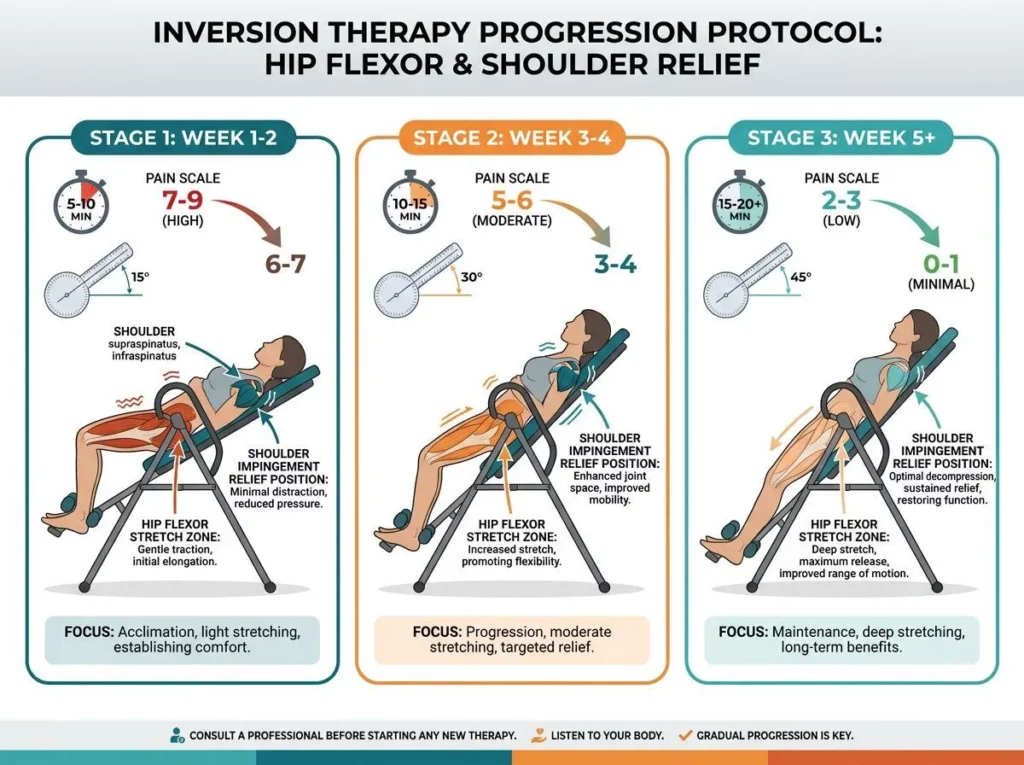
Hip flexor tightness creates a cascade of compensatory patterns throughout the kinetic chain. Prolonged sitting shortens the psoas and iliacus muscles, pulling the pelvis into anterior tilt and compressing lumbar vertebrae. Inversion therapy interrupts this cycle by:
- Lengthening shortened hip flexors through sustained gravitational stretch
- Reducing lumbar compression that refers pain into hip joints
- Improving pelvic alignment by releasing anterior pull forces
Advanced inversion tables include lumbar bridge features specifically designed to release lower back tension and alleviate glute pain triggered by sciatica [3]. This targeted approach addresses pain beyond the spine itself, reaching into peripheral structures that contribute to chronic discomfort.
Sciatica Relief Strategies
The sciatic nerve pathway extends from the lower back through the hips and down each leg. Compression anywhere along this route creates radiating pain, numbness, or tingling. Inversion tables provide relief through multiple mechanisms:
Decompression benefits for sciatica:
| Mechanism | Effect | Timeline |
|---|---|---|
| Disc rehydration | Reduces nerve root pressure | 2-4 weeks |
| Muscle relaxation | Releases piriformis tension | 1-2 weeks |
| Inflammation reduction | Decreases nerve irritation | 3-6 weeks |
| Improved circulation | Accelerates healing | Ongoing |
Research documents inversion tables as effective for sciatica treatment alongside other conditions like spinal stenosis and facet syndrome [2]. The FDA registration for these specific indications provides clinical validation for their therapeutic applications.
Progressive Protocol for Hip Relief
Week 1-2: Foundation Phase
- Angle: 15-20 degrees
- Duration: 1-2 minutes per session
- Frequency: Once daily
- Focus: Establishing tolerance and proper form
Week 3-4: Development Phase
- Angle: 25-35 degrees
- Duration: 3-5 minutes per session
- Frequency: 1-2 times daily
- Focus: Deepening hip flexor stretch and lumbar decompression
Week 5+: Maintenance Phase
- Angle: 30-45 degrees
- Duration: 5-10 minutes per session
- Frequency: As needed for symptom management
- Focus: Sustained relief and prevention
Users should monitor their response carefully and adjust protocols based on individual tolerance. The goal involves consistent, gradual progression rather than aggressive advancement that risks injury or discomfort.
Safety Considerations and Contraindications
Who Should Avoid Inversion Therapy
Inversion tables provide significant benefits for many users, but certain conditions create serious risks. Medical experts emphasize that these devices may cause dizziness or discomfort if used incorrectly [5]. Consultation with healthcare providers remains essential before starting any inversion program.
Absolute contraindications include:
- ⚠️ Uncontrolled high blood pressure
- ⚠️ Glaucoma or retinal detachment history
- ⚠️ Recent stroke or heart attack
- ⚠️ Severe osteoporosis
- ⚠️ Pregnancy
- ⚠️ Spinal instability or fractures
For detailed information about specific risk factors, consult our comprehensive guide on who should not use an inversion table.
Maximizing Benefits While Minimizing Risks
Essential safety practices:
- Start conservatively: Begin with minimal angles and short durations
- Use proper equipment: Ensure weight capacity accommodates your body size (most models support up to 300 pounds) [1]
- Maintain control: Never invert beyond your comfort level or ability to return upright
- Monitor symptoms: Stop immediately if experiencing dizziness, headache, or increased pain
- Combine with other therapies: Integrate inversion with stretching, strengthening, and proper nutrition
Research confirms that while inversion tables provide temporary pain relief and tension reduction, they do not address underlying structural damage [4]. Lasting improvement requires comprehensive treatment approaches that repair disc structure and address biomechanical dysfunction.
Understanding the benefits of inversion therapy helps users set realistic expectations and develop appropriate treatment plans. The 50% reduced likelihood of needing surgery among regular users [2] demonstrates significant clinical value when applied correctly.
Selecting the Right Equipment for Multi-Region Relief
Key Features for Comprehensive Pain Management
Not all inversion tables provide equal benefits for neck, shoulder, and hip relief. Specific design elements enhance effectiveness for these overlooked pain points:
Essential features to prioritize:
- Adjustable headrest: Supports proper cervical alignment during inversion
- Lumbar bridge: Targets lower back and hip flexor tension
- Acupressure nodes: Releases trigger points throughout the spine
- Multiple ankle positions: Accommodates different body proportions (minimum five slots recommended) [1]
- Smooth rotation control: Prevents jarring movements that aggravate sensitive areas
Current market offerings include three weight adjustments and customizable height settings to accommodate diverse body types [1]. These adjustments ensure proper biomechanical positioning regardless of user size or proportions.
For detailed equipment selection guidance, review our inversion table buying guide to identify models that match your specific needs.
Integration with Complementary Therapies
Inversion therapy delivers optimal results when combined with supporting interventions:
- Stretching routines: Target specific muscle groups before and after inversion
- Strengthening exercises: Build core stability to support spinal alignment
- Proper nutrition: Support tissue repair through anti-inflammatory foods (learn more about how food choices boost results)
- Hydration protocols: Maintain disc hydration for optimal decompression response
- Professional guidance: Work with physical therapists to develop personalized protocols
The 39% medication elimination rate among users [2] suggests significant therapeutic potential, but individual results depend on consistent application and comprehensive treatment approaches.
Conclusion
Inversion Tables for Chronic Pain Beyond Back Issues: Neck, Shoulder, and Hip Relief Strategies offer evidence-based solutions for managing multi-region discomfort through targeted decompression protocols. Clinical data confirms 74% pain reduction and 75% increased physical ability among users who apply these techniques correctly [2].
Success requires understanding that inversion therapy addresses interconnected systems rather than isolated pain points. Neck tension, shoulder impingement, and hip flexor tightness all respond to gravitational decompression when users implement proper positioning strategies and progressive protocols.
Actionable next steps:
- Consult your healthcare provider to confirm inversion therapy suits your specific conditions
- Select appropriate equipment with features that support multi-region relief
- Start conservatively with 15-20 degree angles and 1-2 minute sessions
- Progress gradually based on individual tolerance and response
- Integrate complementary therapies for comprehensive pain management
- Monitor results and adjust protocols to optimize benefits
The documented 50% reduction in surgery likelihood [2] demonstrates the significant clinical value these devices provide when applied correctly. Users who commit to consistent, progressive implementation while respecting safety guidelines position themselves for meaningful, lasting relief across multiple body regions.
Begin your journey toward comprehensive pain management by exploring our resources on back pain relief and safe inversion techniques. Your path to reduced discomfort and improved physical function starts with informed decisions and proper implementation.
References
[1] Watch – https://www.youtube.com/watch?v=5BM_Rbqkxgc
[2] Fitspine – https://teeter.com/fitspine/
[3] Best Inversion Tables – https://www.menshealth.com/fitness/g61890731/best-inversion-tables/
[4] Understanding Inversion Tables How They Work Why People Use Them And What To Know Before You Try One – https://regenerativespineandjoint.com/2025/12/29/understanding-inversion-tables-how-they-work-why-people-use-them-and-what-to-know-before-you-try-one/
[5] Comparing Inversion Tables And Chiropractors Which Is Best – https://kineticsportsmedrehab.com/comparing-inversion-tables-and-chiropractors-which-is-best/