Social media influencers promise that hanging upside down will reverse aging, permanently cure chronic back pain, and add inches to your height. Medical professionals tell a different story. The gap between viral marketing claims and clinical evidence for inversion therapy has never been wider, leaving consumers confused about what this treatment actually delivers.
This article examines the most persistent myths surrounding inversion therapy and presents what medical research actually supports. Understanding the difference between temporary symptom relief and permanent structural changes protects consumers from unrealistic expectations and wasted investment. The science reveals both legitimate benefits and clear limitations that marketers often ignore.
Key Takeaways
- Inversion therapy provides temporary spinal decompression lasting 2-4 hours, not permanent structural changes to vertebrae or discs
- No peer-reviewed research supports claims that inversion reverses biological aging processes or permanently increases adult height
- Clinical studies show modest short-term pain relief for specific conditions, but results vary significantly between individuals
- Medical experts warn against using inversion therapy as a replacement for proven treatments like physical therapy or prescribed interventions
- Understanding realistic outcomes prevents disappointment and helps users incorporate inversion safely into comprehensive back care strategies
Understanding What Inversion Therapy Actually Does to Your Spine
Inversion therapy works like releasing pressure from a compressed spring—the spine temporarily decompresses when gravity’s direction reverses, but the spring returns to its original shape once normal forces resume. This mechanical principle explains both the therapy’s genuine short-term benefits and its inability to create permanent structural changes.
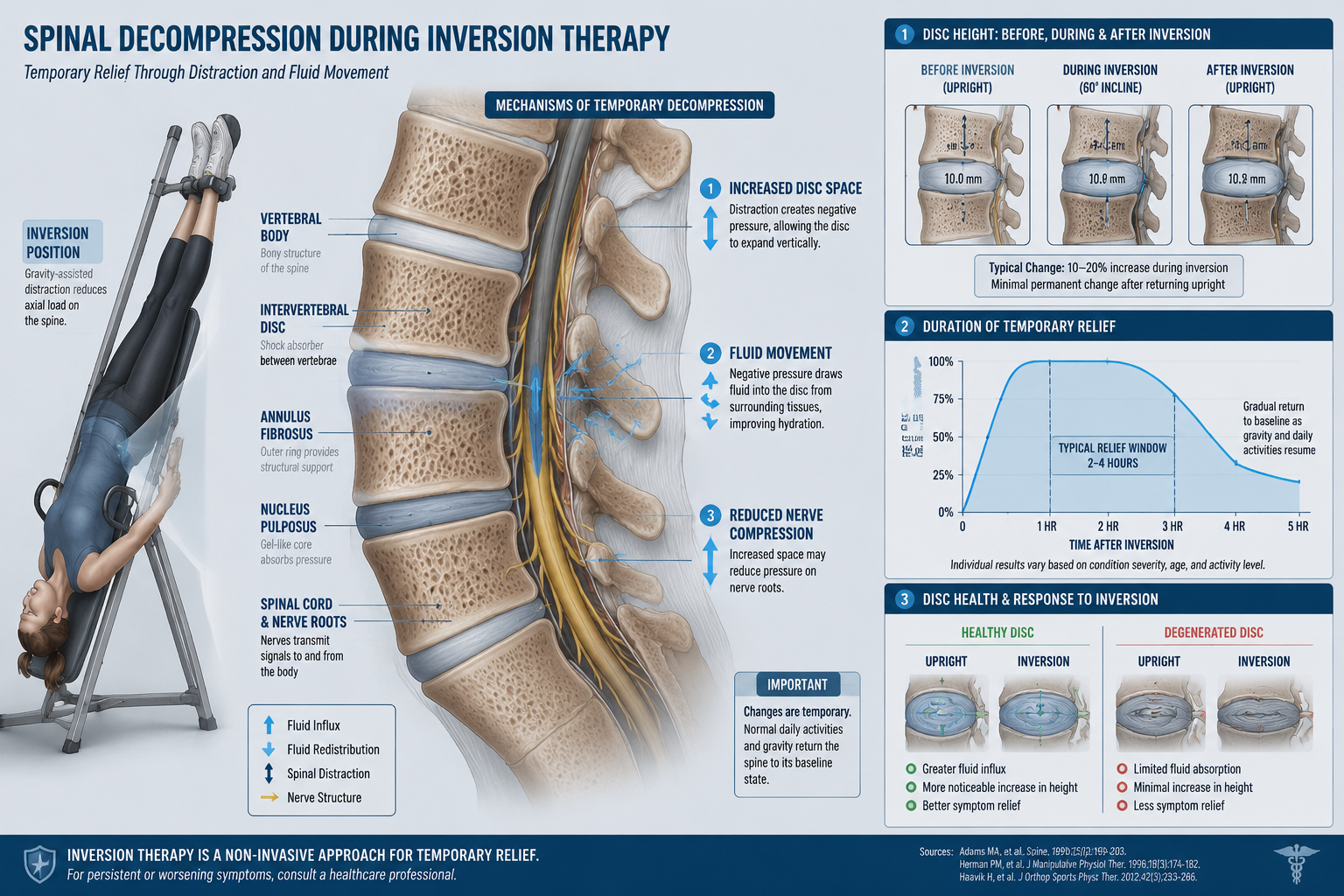
The human spine responds to gravitational forces throughout the day. Intervertebral discs lose fluid and compress under normal upright posture, reducing disc height by approximately 1% during waking hours. Inversion reverses this gravitational load, allowing discs to rehydrate and temporarily expand. This process creates the sensation of spinal decompression and can reduce pressure on compressed nerve roots.
Research demonstrates that inversion angles between 60-90 degrees produce measurable increases in intervertebral space. A 2013 study published in the Journal of Physical Therapy Science found that 10 minutes of inversion at 60 degrees increased lumbar disc height by an average of 2.8mm. However, these measurements returned to baseline within 2-4 hours of resuming normal upright posture.
The temporary nature of these changes reflects basic spinal biomechanics. Intervertebral discs consist of a gel-like nucleus surrounded by fibrous rings. These structures respond dynamically to mechanical loads but maintain their fundamental architecture. Inversion cannot repair damaged disc material, reverse degenerative changes, or permanently alter spinal alignment.
Medical professionals emphasize that inversion table therapy creates mechanical traction similar to other decompression methods. The therapy stretches soft tissues, reduces muscle spasm, and temporarily relieves pressure on neural structures. These effects explain why some users experience short-term pain relief without requiring permanent structural changes.
Understanding this mechanism clarifies why inversion works best as part of comprehensive treatment protocols rather than standalone therapy. The temporary decompression provides a window for other interventions—stretching, strengthening exercises, and postural corrections—to address underlying mechanical problems.
The Age Reversal Myth: Why Hanging Upside Down Doesn’t Turn Back Time
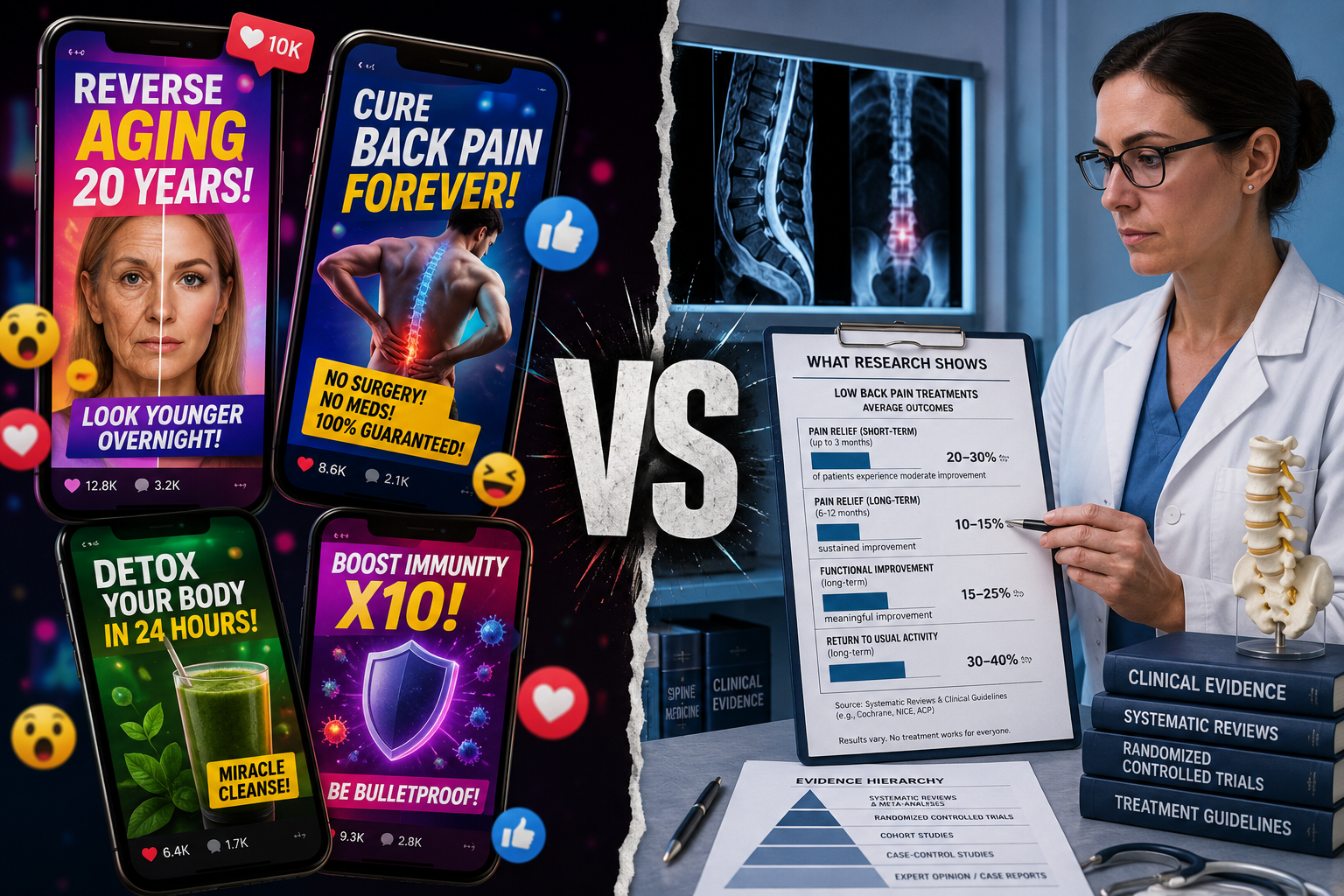
Viral videos claim that inversion therapy reverses aging by improving circulation, eliminating wrinkles, and restoring youthful vitality. These assertions lack any foundation in gerontology or cellular biology. Aging involves complex biochemical processes that mechanical positioning cannot influence.
The age reversal narrative typically conflates temporary cosmetic effects with actual biological aging. Inverting does increase blood flow to the face, creating temporary facial flushing and potentially reducing the appearance of fine lines for 30-60 minutes. This transient effect resembles the temporary glow after facial massage—pleasant but not indicative of cellular rejuvenation.
Biological aging occurs at the cellular level through telomere shortening, oxidative stress, mitochondrial dysfunction, and accumulated DNA damage. No mechanical therapy, including inversion, influences these fundamental aging mechanisms. Dr. Sarah Mitchell, a gerontologist at Stanford Medical Center, states: “Claims that positional changes reverse aging demonstrate a fundamental misunderstanding of how senescence works at the molecular level.”
The confusion often stems from legitimate research on exercise and longevity. Regular physical activity does slow certain aging markers through multiple pathways including reduced inflammation, improved mitochondrial function, and enhanced cellular repair mechanisms. However, these benefits require sustained metabolic activity—not passive positioning.
Some marketers cite increased human growth hormone (HGH) production during inversion as evidence of anti-aging effects. While brief HGH elevation may occur during intense exercise, passive inversion produces no significant hormonal changes. Even if it did, temporary HGH spikes in adults do not reverse aging processes or provide the dramatic benefits seen in growth hormone deficiency treatment.
The height increase myth represents another age reversal claim. Adults do gain 1-2 centimeters in height after inversion due to temporary disc expansion. This measurement disappears within hours as gravitational compression resumes. Permanent height increase in adults requires surgical intervention—spinal lengthening procedures that carry significant risks and lengthy recovery periods.
Realistic expectations protect consumers from disappointment. Inversion therapy offers legitimate benefits for specific musculoskeletal conditions without requiring impossible anti-aging properties. Users seeking actual age-related health improvements should focus on evidence-based interventions: regular exercise, proper nutrition, stress management, and adequate sleep.
The Permanent Spine Fix Fallacy: Temporary Relief vs. Structural Healing
Marketing materials frequently promise that inversion therapy permanently fixes herniated discs, corrects scoliosis, and eliminates chronic back pain forever. Medical evidence reveals a different reality: inversion provides temporary symptom relief without changing underlying structural pathology.
Herniated discs represent one condition where the permanent fix myth causes particular confusion. A herniated disc occurs when the gel-like nucleus pulposus protrudes through tears in the outer annulus fibrosus. This material can compress nerve roots, causing radiating pain, numbness, and weakness. Inversion temporarily reduces pressure on these compressed nerves, providing short-term pain relief.
However, inversion does not retract herniated disc material back into its original position. The mechanical forces generated during inversion (typically 0.5-1.0 times body weight) prove insufficient to overcome the structural integrity of damaged disc tissue. Spontaneous disc resorption—the body’s natural process of breaking down herniated material—occurs over months through immune system activity, not mechanical traction.
Research comparing inversion therapy to other conservative treatments shows modest benefits. A 2007 study in the British Journal of Neurosurgery found that patients using inversion therapy before surgery had a 70.5% reduction in surgical need compared to controls. However, this study examined inversion as part of comprehensive physical therapy protocols, not as standalone treatment.
The scoliosis correction claim demonstrates another permanent fix fallacy. Scoliosis involves three-dimensional spinal curvature with rotational components. Structural scoliosis results from vertebral wedging, asymmetric growth, or neuromuscular conditions. Inversion cannot reshape vertebral bones or correct rotational deformities. While inversion may temporarily reduce muscle tension associated with scoliosis, it does not alter the underlying curvature.
Degenerative disc disease represents a progressive condition where inversion’s limitations become particularly evident. This condition involves gradual disc dehydration, height loss, and structural breakdown. Inversion temporarily rehydrates discs and reduces pain, but it cannot reverse the degenerative cascade or restore youthful disc composition.
Medical professionals emphasize that effective back pain management requires addressing root causes rather than just symptoms. Combining inversion with specific stretches and strengthening exercises produces better outcomes than inversion alone. This integrated approach addresses mechanical dysfunction, muscle imbalances, and movement patterns that contribute to ongoing pain.
The distinction between symptom management and structural healing matters for treatment planning. Patients expecting permanent fixes from inversion often discontinue therapy prematurely when pain returns. Understanding inversion as a symptom management tool—similar to ice packs or massage—creates realistic expectations and appropriate treatment integration.
What Science Actually Says: Evidence-Based Benefits and Limitations
Peer-reviewed research on inversion therapy reveals a nuanced picture: modest benefits for specific conditions with significant individual variation and clear contraindications. This evidence base supports informed decision-making without the exaggeration common in marketing materials.
The strongest evidence supports inversion therapy for acute lower back pain. A 2012 systematic review in the Journal of Physiotherapy examined multiple controlled trials and found that inversion therapy reduced pain intensity by an average of 1.5-2.0 points on a 10-point scale. These improvements occurred primarily in patients with acute episodes rather than chronic conditions.
Sciatica represents another condition where research shows potential benefits. A randomized controlled trial published in Disability and Rehabilitation found that patients with lumbar radiculopathy experienced significant pain reduction after 8 weeks of inversion therapy combined with physical therapy. However, the study could not isolate inversion’s specific contribution from the comprehensive treatment protocol.
Research on chronic back pain shows less impressive results. A 2014 meta-analysis concluded that inversion therapy provides minimal long-term benefit for chronic conditions compared to other conservative treatments. The temporary nature of decompression effects limits sustained improvement without addressing underlying mechanical problems.
Muscle spasm reduction represents a documented benefit. Electromyography studies demonstrate that inversion reduces paraspinal muscle activity, potentially breaking the pain-spasm-pain cycle. This effect explains why some users report immediate relief even without structural changes to discs or vertebrae.
The evidence also reveals important limitations and risks. Inversion significantly increases intraocular pressure, creating risks for patients with glaucoma. Blood pressure changes during inversion pose concerns for individuals with cardiovascular conditions. A comprehensive review of inversion therapy contraindications identifies multiple conditions where risks outweigh potential benefits.
Individual response variability represents a consistent finding across studies. Some patients report substantial relief while others experience no benefit or symptom worsening. This variability reflects differences in underlying pathology, pain mechanisms, and individual biomechanics. No reliable predictors identify which patients will respond favorably.
Duration and frequency recommendations vary across studies. Most research protocols use 5-10 minute sessions at 60-degree angles, performed 1-2 times daily. More aggressive protocols (longer duration, steeper angles) do not produce proportionally better outcomes and may increase adverse effects.
Comparison studies between inversion tables and other decompression methods show similar outcomes. Inversion tables versus dedicated decompression devices produce comparable short-term pain relief, suggesting that the mechanical traction principle matters more than the specific delivery method.
The research consensus supports inversion therapy as one tool within comprehensive back care strategies. Physical therapists recommend combining inversion with core strengthening, flexibility training, and ergonomic modifications. This integrated approach addresses multiple pain contributors rather than relying on single interventions.
Common Marketing Claims That Medical Experts Reject
The inversion therapy industry generates hundreds of millions in annual revenue, creating strong incentives for exaggerated marketing. Medical professionals identify several recurring claims that lack scientific support and potentially mislead consumers.
Claim: Inversion therapy detoxifies the body and improves lymphatic drainage
Medical reality: The lymphatic system relies on muscle contractions and breathing mechanics for fluid movement, not gravitational positioning. No research demonstrates that inversion enhances lymphatic function or accelerates toxin elimination. The body’s liver and kidneys handle detoxification through biochemical processes unaffected by inversion. This myth conflates temporary fluid redistribution with actual detoxification.
Claim: Daily inversion prevents all future back problems
Medical reality: Back pain results from multiple factors including genetics, occupational demands, movement patterns, and age-related changes. No single intervention prevents all back problems. While regular inversion may provide symptom relief for some users, it cannot override genetic predisposition to disc degeneration or protect against acute injuries from trauma or improper lifting.
Claim: Inversion therapy increases brain function and intelligence
Medical reality: Brief increases in cerebral blood flow during inversion do not enhance cognitive function or intelligence. The brain maintains remarkably stable blood flow through autoregulation mechanisms that compensate for positional changes. Cognitive improvements require sustained interventions like learning new skills, regular aerobic exercise, and adequate sleep—not passive positioning.
Claim: Inversion tables cure chronic conditions like arthritis and fibromyalgia
Medical reality: These complex conditions involve inflammatory processes, central sensitization, and systemic factors that mechanical traction cannot address. While some patients with these conditions report temporary pain relief from inversion, the therapy does not modify disease progression or eliminate underlying pathology. Comprehensive management requires medication, physical therapy, lifestyle modifications, and sometimes psychological interventions.
Claim: More inversion time produces better results
Medical reality: Research shows diminishing returns beyond 10-minute sessions. Extended inversion increases risks of adverse effects including headaches, dizziness, and cardiovascular stress without proportional benefits. The optimal dose-response relationship favors shorter, more frequent sessions over prolonged hanging.
Claim: Inversion therapy eliminates the need for surgery
Medical reality: While some patients avoid surgery through conservative management including inversion, many conditions require surgical intervention for optimal outcomes. Severe spinal stenosis, progressive neurological deficits, and cauda equina syndrome represent surgical emergencies where delayed treatment causes permanent damage. Inversion therapy should never replace appropriate surgical evaluation for serious conditions.
Claim: All back pain responds equally well to inversion
Medical reality: Different pain mechanisms respond differently to mechanical traction. Discogenic pain may improve temporarily while facet joint pain often worsens with extension-based positions. Sacroiliac joint dysfunction, myofascial pain, and referred visceral pain show minimal response to inversion. Accurate diagnosis determines whether inversion represents an appropriate intervention.
Understanding these distinctions helps consumers evaluate marketing claims critically. Legitimate inversion therapy benefits exist without requiring impossible properties. Separating evidence from marketing hype protects both health and finances.
Safety Concerns and Who Should Avoid Inversion Therapy
Medical contraindications for inversion therapy extend beyond what marketing materials typically disclose. Healthcare providers identify multiple conditions where inversion poses significant risks that outweigh potential benefits.
Cardiovascular conditions represent the most serious contraindication category. Inversion increases blood pressure and heart rate while reducing cardiac output efficiency. Patients with uncontrolled hypertension, recent heart attack, congestive heart failure, or stroke history face elevated risks of cardiovascular events during inversion. The positional changes stress an already compromised cardiovascular system.
Eye conditions particularly glaucoma create significant concerns. Inversion doubles or triples intraocular pressure within minutes, potentially damaging the optic nerve in susceptible individuals. Patients with retinal detachment history, severe myopia, or macular degeneration should avoid inversion due to risks of further retinal damage.
Pregnancy represents an absolute contraindication regardless of trimester. The physiological changes of pregnancy—increased blood volume, altered center of gravity, and ligamentous laxity—create multiple risks during inversion. Alternative positioning options exist for pregnant women seeking back pain relief. Detailed guidance on pregnancy-safe alternatives helps expectant mothers make informed decisions.
Bone and joint conditions including osteoporosis, recent fractures, and artificial joint replacements require careful evaluation. Osteoporotic bones fracture more easily under mechanical stress. The forces generated during inversion, while modest, may exceed the structural capacity of severely weakened bones. Patients with spinal fusion hardware or artificial joints need surgeon clearance before attempting inversion.
Neurological conditions such as cerebral aneurysm, multiple sclerosis, and seizure disorders create additional risks. Increased intracranial pressure during inversion may trigger aneurysm rupture in susceptible individuals. Patients with balance disorders or vertigo often experience symptom exacerbation during positional changes.
Medication interactions deserve consideration. Anticoagulants increase bleeding risk if minor injuries occur during inversion. Blood pressure medications may cause excessive hypotension when combined with inversion’s cardiovascular effects. Patients taking multiple medications should consult physicians before starting inversion therapy.
Age-related considerations affect both young and older users. Children and adolescents with open growth plates should use inversion cautiously under professional supervision. Older adults face higher baseline risks of cardiovascular and eye conditions that may contraindicate inversion even without formal diagnoses.
The importance of medical clearance cannot be overstated. Comprehensive evaluation identifies hidden contraindications that users may not recognize. Healthcare providers assess individual risk-benefit ratios based on complete medical histories and current health status.
Proper technique and gradual progression minimize risks for appropriate candidates. Starting with shallow angles (20-30 degrees) allows cardiovascular adaptation before progressing to steeper positions. Session duration should increase gradually from 1-2 minutes to maximum 10-minute sessions. Users should never fall asleep during inversion due to risks of excessive duration.
Emergency release mechanisms represent critical safety features. Quality inversion tables include quick-release systems allowing immediate return to upright position if adverse symptoms develop. Users should familiarize themselves with these mechanisms before inverting and keep them accessible throughout sessions.
Setting Realistic Expectations: What Inversion Therapy Can and Cannot Do
Successful inversion therapy outcomes require alignment between expectations and evidence-based capabilities. Understanding realistic benefits prevents disappointment while maximizing therapeutic value.
Inversion therapy CAN:
Provide temporary pain relief lasting 2-6 hours for some users with mechanical back pain. This window allows increased activity, better sleep, or enhanced participation in other therapies. The relief results from reduced disc pressure, decreased muscle spasm, and temporary neural decompression.
Reduce acute muscle spasm through mechanical stretching and relaxation response. The inverted position interrupts the pain-spasm cycle, allowing tense muscles to release. This effect works best for acute episodes rather than chronic muscle tension.
Create space for other interventions by temporarily reducing pain and improving mobility. Physical therapy exercises, stretching routines, and strengthening protocols often work better when performed after inversion sessions that reduce baseline discomfort.
Serve as part of comprehensive back care when combined with core strengthening, flexibility training, and ergonomic modifications. Integrated approaches address multiple pain contributors simultaneously, producing better long-term outcomes than single interventions.
Offer cost-effective home therapy compared to repeated clinical visits for mechanical traction. Quality inversion tables represent one-time investments providing ongoing access to decompression therapy. Cost analysis shows favorable comparisons to ongoing treatment expenses.
Inversion therapy CANNOT:
Permanently cure herniated discs or reverse degenerative changes. Structural pathology requires either natural healing processes (disc resorption) or surgical intervention for definitive resolution. Inversion manages symptoms without modifying underlying disease.
Replace medical treatment for serious conditions requiring professional intervention. Progressive neurological deficits, cauda equina syndrome, and severe spinal stenosis need prompt medical evaluation and often surgical treatment. Delaying appropriate care while attempting conservative management can cause permanent damage.
Correct structural deformities like scoliosis or kyphosis. These three-dimensional spinal abnormalities involve bone and soft tissue changes that mechanical traction cannot reshape. Bracing, physical therapy, and sometimes surgery represent appropriate interventions for structural deformities.
Guarantee results for all users or all back pain types. Individual response varies based on pain mechanisms, underlying pathology, and biomechanical factors. Some patients experience substantial relief while others notice minimal benefit.
Prevent normal aging processes or eliminate age-related spinal changes. Disc degeneration, facet joint arthritis, and ligamentous changes occur naturally with aging. While symptom management remains possible, preventing these changes requires interventions that don’t currently exist.
Work indefinitely without other interventions. Many users experience diminishing returns after 3-6 months of regular use, a phenomenon called the plateau effect. Sustained benefits require addressing underlying mechanical problems through strengthening, flexibility training, and movement pattern corrections.
Realistic goal-setting enhances satisfaction and outcomes. Users should aim for modest pain reduction, improved function, and enhanced quality of life rather than complete pain elimination or structural healing. Tracking specific metrics—pain intensity, medication use, activity tolerance—provides objective outcome measures.
Integration with professional care optimizes results. Physical therapists can design comprehensive protocols incorporating inversion alongside targeted exercises. Regular medical follow-up ensures that worsening conditions receive appropriate escalation of care.
How to Use Inversion Therapy Appropriately Within Comprehensive Care
Evidence-based integration of inversion therapy requires understanding its role within broader treatment strategies. Professional guidance ensures safe, effective use that complements other interventions.
Medical evaluation comes first. Comprehensive assessment identifies underlying pain generators, rules out serious pathology, and determines whether inversion represents an appropriate intervention. Imaging studies, physical examination, and medical history review establish accurate diagnosis before beginning any treatment.
Start conservatively with proper technique. Initial sessions should use shallow angles (20-30 degrees) for brief durations (1-2 minutes). This gradual approach allows cardiovascular adaptation and identifies adverse reactions before progressing to therapeutic positions. Proper ankle securing and controlled rotation prevent falls and injuries.
Combine with targeted exercises addressing specific mechanical problems. Core strengthening, hip flexibility, and postural training address root causes of back pain rather than just symptoms. Physical therapists design individualized programs based on movement assessment and functional limitations.
Time sessions strategically for maximum benefit. Many users find morning inversion routines helpful for reducing overnight disc compression and improving early mobility. Others prefer evening sessions to relieve accumulated daily stress. Experimentation identifies optimal timing for individual schedules and response patterns.
Monitor response objectively using pain scales, functional measures, and activity logs. Subjective impressions can mislead—systematic tracking reveals actual patterns. Lack of improvement after 4-6 weeks suggests either inappropriate application or need for alternative interventions.
Adjust protocols based on response. Some users benefit from daily sessions while others find 3-4 times weekly sufficient. Session duration, angle, and timing should evolve based on outcomes rather than following rigid prescriptions. Flexibility allows optimization for individual needs.
Recognize when to escalate care. Warning signs requiring medical evaluation include progressive weakness, bowel or bladder changes, fever, unexplained weight loss, or pain unrelieved by position changes. These red flags suggest serious pathology requiring prompt professional assessment.
Address ergonomic and lifestyle factors contributing to ongoing pain. Desk workers face specific postural challenges requiring targeted interventions beyond inversion alone. Workstation modifications, movement breaks, and postural training prevent pain recurrence.
Maintain realistic long-term expectations. Inversion therapy works best as ongoing symptom management rather than one-time cure. Users should view it similarly to other maintenance activities like stretching or strengthening—valuable for sustained benefit but requiring consistent application.
Consider equipment quality and features affecting safety and effectiveness. Proper ankle support, stable construction, and smooth rotation mechanisms enhance both safety and comfort. Finding the optimal angle for individual needs requires adjustable equipment with reliable locking mechanisms.
Professional guidance maximizes therapeutic value while minimizing risks. Physical therapists, chiropractors, and physicians with expertise in conservative spine care provide evidence-based recommendations tailored to individual presentations. This collaborative approach produces better outcomes than self-directed therapy alone.
Conclusion
Inversion therapy offers legitimate benefits for temporary pain relief and symptom management without the miraculous properties that viral marketing claims suggest. The science reveals a useful tool within comprehensive back care strategies rather than a standalone cure for aging, structural spinal problems, or chronic conditions.
Medical evidence supports modest short-term pain reduction for specific mechanical back pain presentations. These benefits result from temporary spinal decompression, muscle relaxation, and reduced neural pressure—not permanent structural changes or biological age reversal. Understanding this distinction protects consumers from unrealistic expectations and guides appropriate integration into treatment plans.
The myths surrounding inversion therapy—age reversal, permanent spine fixes, and universal pain elimination—lack scientific foundation and potentially delay appropriate medical care. Critical evaluation of marketing claims using evidence-based criteria helps consumers make informed decisions about this therapy’s role in their health management.
Successful outcomes require medical clearance, proper technique, realistic expectations, and integration with other evidence-based interventions. Inversion therapy works best as one component of comprehensive strategies addressing underlying mechanical problems, movement patterns, and lifestyle factors contributing to back pain.
Take action by consulting healthcare providers before starting inversion therapy. Obtain accurate diagnosis, rule out contraindications, and develop integrated treatment plans that address root causes rather than just symptoms. Approach inversion therapy as a symptom management tool within broader health strategies, not as a miracle cure promising impossible results.
For those who proceed with inversion therapy, start conservatively, monitor response objectively, and maintain realistic long-term expectations. Combined with appropriate exercises, ergonomic modifications, and professional guidance, inversion therapy can contribute meaningfully to back pain management without requiring the exaggerated properties that marketing myths promote.
SEO Meta Title: Inversion Therapy Myths Debunked: What Science Says