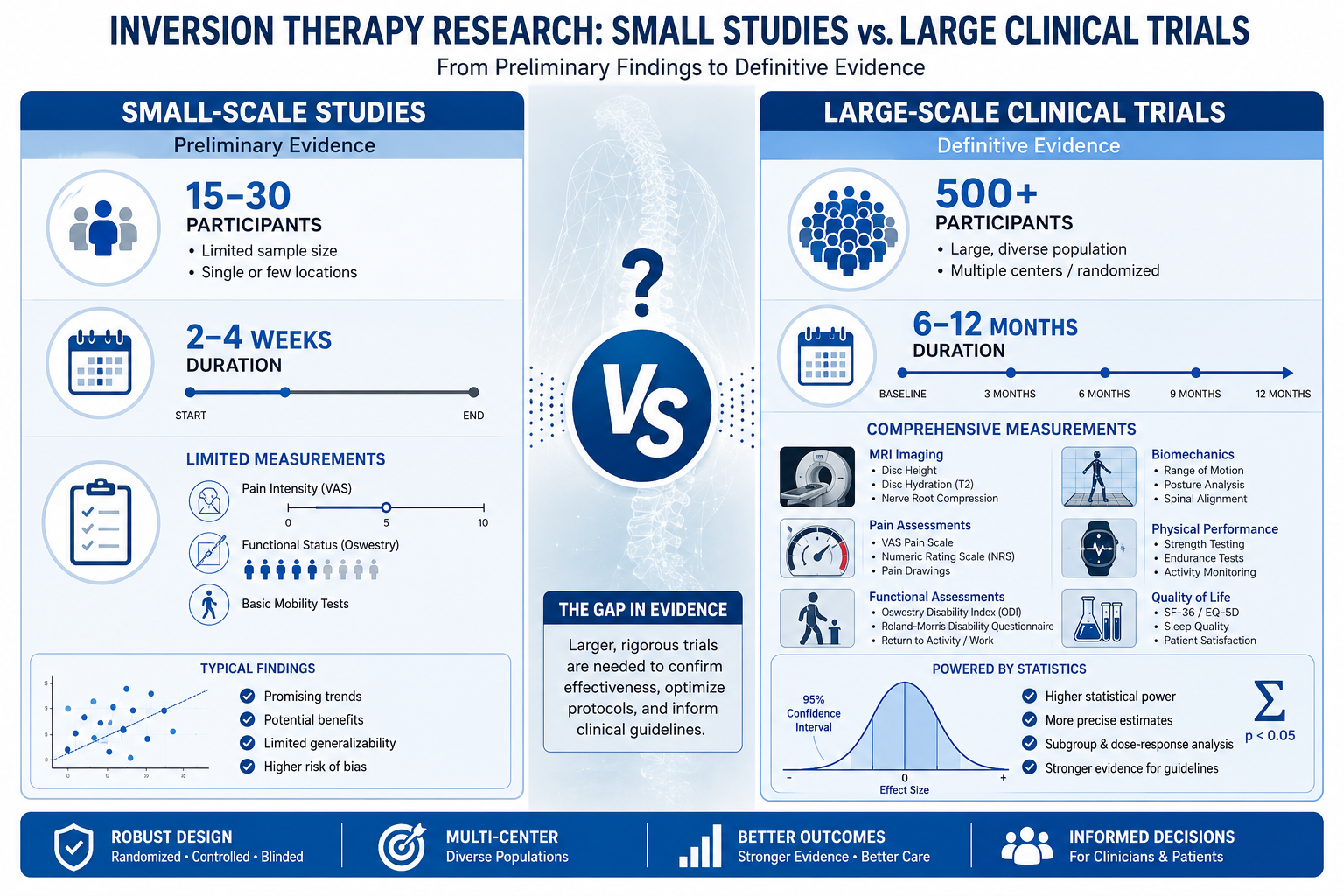
Millions of people worldwide use inversion tables for back pain relief, yet the scientific evidence supporting this popular therapy remains surprisingly thin. The Inversion Table Research Gap: Why Studies Are Small and What Larger Clinical Trials Might Reveal represents a critical issue in modern pain management research. Most existing studies involve fewer than 30 participants, last only a few weeks, and measure limited outcomes. This research gap leaves consumers, healthcare providers, and insurance companies without the robust evidence they need to make informed decisions about inversion therapy’s true effectiveness and safety profile.
Understanding the inversion table research gap resembles trying to judge a book by reading only its first chapter. Researchers have glimpsed promising results in small samples, but they lack the comprehensive data that only large-scale, long-term clinical trials can provide. This limitation affects everyone seeking evidence-based solutions for chronic back pain, sciatica, and spinal decompression needs.
Key Takeaways
- Current inversion therapy studies typically include only 15-30 participants and last 2-8 weeks, limiting their statistical power and generalizability
- Methodological challenges include difficulty recruiting diverse participants, high costs of long-term monitoring, and lack of standardized protocols across studies
- Larger clinical trials could reveal optimal inversion angles, session durations, and frequency for specific conditions like herniated discs and sciatica
- Future research should measure long-term outcomes, cost-effectiveness compared to other treatments, and safety profiles across diverse populations
- The research gap affects clinical adoption, insurance coverage decisions, and consumer confidence in inversion therapy as a legitimate treatment option
Why Current Inversion Table Studies Remain Small
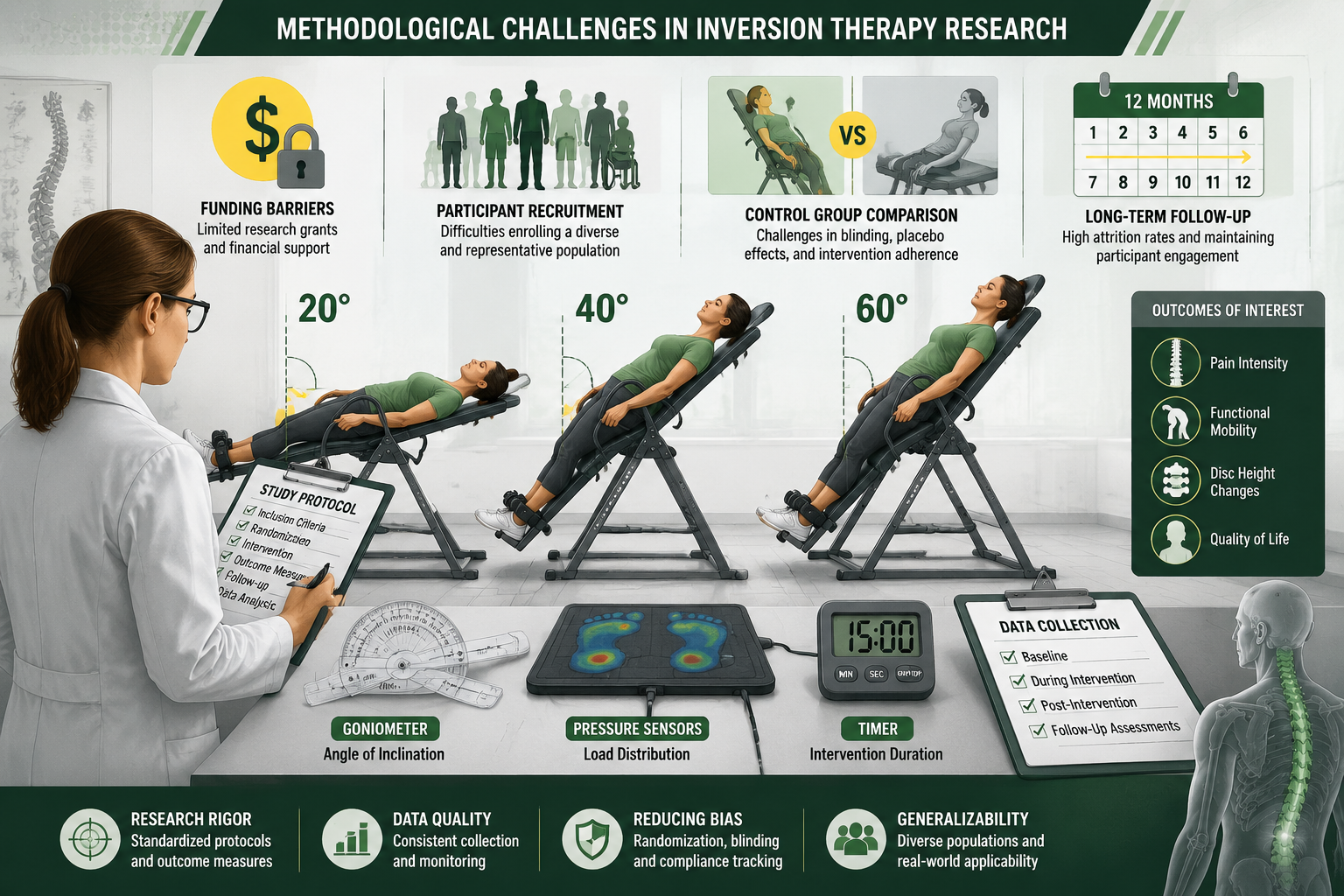
Researchers face substantial barriers when designing inversion therapy studies. Financial constraints top the list of challenges. A comprehensive clinical trial examining inversion therapy requires significant funding for equipment, facility space, personnel, and participant compensation. Unlike pharmaceutical studies backed by billion-dollar drug companies, inversion table research attracts limited commercial sponsorship. Equipment manufacturers lack the resources that pharmaceutical giants possess, and academic institutions prioritize research with higher funding potential.
The participant recruitment challenge compounds these financial limitations. Researchers need volunteers who meet specific criteria: diagnosed back conditions, willingness to commit to regular sessions, and absence of contraindications like high blood pressure or glaucoma. This narrow recruitment pool shrinks further when studies require participants to visit research facilities multiple times weekly for supervised sessions. Many potential participants cannot accommodate these time demands, especially when studies offer minimal compensation.
Standardization issues plague existing research protocols. Different studies use varying inversion angles, session durations, and frequency schedules. One study might examine 60-degree inversions for five minutes daily, while another investigates 20-degree inversions for ten minutes three times weekly. This lack of consistency makes comparing results across studies nearly impossible. Researchers struggle to determine which protocols work best because each study essentially tests a different intervention.
Control group design presents another significant obstacle. Ethical considerations prevent researchers from denying treatment to people experiencing severe back pain. Creating a true placebo for inversion therapy proves difficult—participants know whether they’re inverting or not. Some studies use “sham” inversion at minimal angles, but participants often recognize this approach. The absence of effective blinding weakens study validity and introduces potential bias.
Short study durations reflect practical constraints rather than ideal research design. Most inversion therapy studies last only 2-8 weeks because longer trials exponentially increase costs and participant dropout rates. Researchers recognize that chronic back pain develops over years and likely requires extended treatment periods, yet they cannot secure funding or maintain participant compliance for 6-12 month studies. This temporal limitation prevents researchers from assessing long-term effectiveness, sustained benefits after treatment cessation, or potential adverse effects that emerge only with prolonged use.
The measurement challenge adds another layer of complexity. Researchers must balance objective measurements like MRI imaging and range-of-motion testing with subjective pain scales and quality-of-life assessments. Comprehensive measurement protocols require expensive equipment and trained personnel. Small studies typically rely on self-reported pain scales and basic functional assessments, missing opportunities to document physiological changes in disc height, nerve compression, or muscle tension that might validate inversion therapy’s mechanisms.
Institutional review boards impose strict safety monitoring requirements that increase study complexity. Researchers must screen participants thoroughly for contraindications, monitor blood pressure and intraocular pressure during sessions, and maintain emergency protocols. These safety measures protect participants but add substantial administrative burden and cost to small research teams. Many researchers lack the infrastructure to meet these requirements while simultaneously collecting robust outcome data.
The publication bias in academic journals favors novel findings over replication studies. Researchers who conduct small pilot studies can publish preliminary positive results, but securing funding for larger confirmatory trials proves difficult. Grant reviewers often view inversion therapy as “alternative medicine” rather than mainstream treatment, reducing funding priority. This bias perpetuates the cycle of small, underpowered studies that cannot definitively establish efficacy.
Geographic limitations restrict participant diversity in existing studies. Most inversion therapy research occurs in specific regions or countries, limiting generalizability across different populations. Cultural attitudes toward alternative therapies, healthcare system structures, and baseline activity levels vary globally. Small studies conducted in single locations cannot capture this diversity, leaving questions about how inversion therapy performs across different demographic groups.
The Inversion Table Research Gap: Understanding Current Evidence Limitations
The existing body of inversion therapy research reveals significant gaps that limit clinical confidence. A systematic review of published studies shows that sample sizes rarely exceed 50 participants, with most hovering between 15-30 subjects. This small sample size reduces statistical power—the ability to detect true treatment effects. Researchers cannot confidently distinguish between genuine therapeutic benefits and random variation when working with such limited data.
Current evidence demonstrates short-term pain reduction in many small studies, but researchers cannot determine whether these benefits persist beyond the treatment period. The typical study follows participants for only 4-8 weeks, with minimal or no follow-up assessment after treatment ends. This limitation prevents researchers from answering critical questions: Do benefits last for months or years? Do participants need ongoing inversion sessions to maintain improvements? Does the body adapt to inversion therapy, requiring increased intensity over time?
The heterogeneity of back pain conditions studied creates another evidence gap. Some studies include participants with non-specific low back pain, others focus on diagnosed herniated discs, and still others examine sciatica or degenerative disc disease. Each condition may respond differently to inversion therapy, yet small sample sizes prevent subgroup analysis. Researchers cannot determine which specific diagnoses benefit most from inversion treatment when studies lump diverse conditions together.
Outcome measurement inconsistency hampers evidence synthesis. Different studies use different pain scales (Visual Analog Scale, Numeric Rating Scale, McGill Pain Questionnaire), functional assessments (Oswestry Disability Index, Roland-Morris Questionnaire), and quality-of-life measures. This measurement variability makes meta-analysis—combining results across studies—challenging. Researchers struggle to calculate overall effect sizes when each study reports outcomes differently.
The dose-response relationship remains poorly understood. Optimal inversion angle, session duration, and treatment frequency remain unknown because studies test widely varying protocols. Some evidence suggests that moderate angles (20-60 degrees) provide benefits without excessive cardiovascular stress, but researchers lack the data to establish precise recommendations. This uncertainty leaves practitioners and consumers guessing about ideal treatment parameters.
Comparative effectiveness data remains scarce. Few studies compare inversion therapy directly to other conservative treatments like physical therapy, chiropractic care, or medication. Without head-to-head comparisons, healthcare providers cannot determine where inversion therapy fits in the treatment hierarchy. Does it work better than, worse than, or similarly to established treatments? Current evidence cannot answer this fundamental question.
The mechanism of action requires further investigation. Researchers theorize that inversion therapy works through spinal decompression, reduced disc pressure, improved circulation, and muscle relaxation. However, most studies measure only clinical outcomes (pain and function) without assessing these proposed mechanisms. Larger trials with advanced imaging could document actual changes in disc height, nerve root compression, and muscle tension, validating or refuting these theoretical mechanisms.
Safety data from small studies provides limited reassurance. While existing research reports few serious adverse events, small sample sizes cannot detect rare complications. A study with 30 participants might miss adverse events that occur in 1% of users—a rate that becomes significant when millions of people use inversion tables. Larger trials could establish more precise safety profiles and identify risk factors for complications.
Cost-effectiveness analysis remains absent from inversion therapy research. Healthcare systems and insurance companies need data comparing the costs and outcomes of inversion therapy to alternative treatments. Does investing in an inversion table save money compared to ongoing physical therapy visits or medication costs? Current research provides no economic analysis to guide coverage decisions.
The placebo effect’s contribution to observed benefits remains unclear. Back pain responds strongly to placebo treatments, with some studies showing 30-40% improvement in placebo groups. Small inversion therapy studies often lack adequate control groups, making it impossible to separate specific treatment effects from non-specific placebo responses. Larger, well-controlled trials could quantify how much benefit comes from actual spinal decompression versus expectation and attention.
Long-term adherence patterns need investigation. Many treatments show good results in supervised research settings but fail in real-world use because people don’t maintain treatment protocols. Researchers don’t know what percentage of inversion table purchasers use their equipment consistently over months and years. Understanding adherence patterns would help predict real-world effectiveness beyond controlled study conditions.
Subgroup analysis remains impossible with current sample sizes. Do older adults respond differently than younger people? Do men and women show different response patterns? Does body weight affect outcomes? Do people with acute versus chronic pain benefit differently? These important clinical questions require large samples that allow researchers to examine treatment effects across demographic and clinical subgroups.
The interaction between inversion therapy and other treatments deserves study. Most people with chronic back pain use multiple interventions simultaneously—medication, exercise, physical therapy, and lifestyle modifications. Current research cannot determine whether inversion therapy adds meaningful benefit when combined with other treatments or whether it works best as a standalone intervention.
Publication bias likely skews available evidence. Researchers and journals preferentially publish positive findings, while negative or null results often remain unpublished. This bias creates an overly optimistic picture of treatment effectiveness. Larger, pre-registered clinical trials with mandatory results reporting would provide more balanced evidence.
For readers interested in understanding how inversion therapy compares to other treatment options, our comprehensive comparison of inversion tables versus decompression therapy devices examines the clinical outcomes and features of different approaches to spinal decompression.
What Larger Clinical Trials Could Reveal About Inversion Therapy
Properly powered clinical trials with 500+ participants could transform our understanding of inversion therapy. These large-scale studies would provide the statistical power to detect moderate treatment effects with confidence. Researchers could establish whether inversion therapy produces clinically meaningful improvements—not just statistically significant changes, but differences that actually matter to patients’ daily lives.
Large trials could definitively establish optimal treatment protocols. By randomizing participants to different inversion angles (20, 40, 60 degrees), session durations (3, 5, 10 minutes), and frequency schedules (daily, three times weekly, twice weekly), researchers could identify the most effective approach for each condition. This protocol optimization would eliminate the current guesswork that leaves consumers and practitioners uncertain about best practices.
Condition-specific efficacy data would emerge from adequately powered trials. Researchers could recruit sufficient numbers of participants with herniated discs, sciatica, degenerative disc disease, and non-specific back pain to analyze each condition separately. This stratified approach would reveal which diagnoses benefit most from inversion therapy and which show minimal response. Healthcare providers could then make evidence-based recommendations tailored to specific conditions rather than offering generic advice.
Long-term outcome assessment would answer critical questions about sustained benefits. A 12-month trial with follow-up assessments at 3, 6, 9, and 12 months would document whether improvements persist after treatment ends. Researchers could identify the minimum effective “maintenance dose”—how often people need to use inversion therapy to sustain initial gains. This information would help consumers decide whether purchasing an inversion table represents a worthwhile long-term investment.
Advanced imaging in large trials could validate proposed mechanisms. Researchers could use MRI to measure actual changes in disc height, disc hydration, and nerve root compression before and after inversion therapy. These objective measurements would confirm or refute the theoretical basis for inversion therapy’s effectiveness. If imaging shows no structural changes despite clinical improvement, researchers would need to investigate alternative mechanisms like muscle relaxation or pain gate modulation.
Comprehensive safety monitoring in large trials would establish precise risk profiles. With hundreds of participants, researchers could detect adverse events occurring in 1-2% of users—rates invisible in small studies. Detailed cardiovascular monitoring would quantify blood pressure and heart rate changes across different inversion angles and durations. Ophthalmologic assessments would measure intraocular pressure changes and identify risk factors for eye-related complications. This safety data would enable evidence-based contraindication lists and risk stratification.
Comparative effectiveness trials would position inversion therapy within the treatment landscape. Head-to-head studies comparing inversion therapy to physical therapy, chiropractic manipulation, medication, and usual care would establish relative efficacy. Researchers could determine whether inversion therapy works better as a first-line treatment, an adjunct to other therapies, or a second-line option for people who don’t respond to conventional care.
Economic analysis embedded in large trials would inform coverage decisions. Researchers could calculate cost per quality-adjusted life year (QALY) gained—a standard metric for healthcare value assessment. By comparing the costs of purchasing and using an inversion table to ongoing treatment costs for alternative therapies, economists could determine whether inversion therapy represents good value for healthcare systems and individual consumers.
Subgroup analysis would reveal which populations benefit most. Large samples enable researchers to examine treatment effects across age groups, sex, body mass index categories, pain duration (acute versus chronic), and baseline severity levels. This granular analysis would help practitioners identify ideal candidates for inversion therapy and counsel patients about expected outcomes based on their specific characteristics.
Adherence patterns documented in large trials would predict real-world effectiveness. Researchers could track how consistently participants use inversion therapy over months, identify barriers to adherence, and test strategies to improve compliance. Understanding typical usage patterns would help set realistic expectations for consumers and identify people who need additional support to maintain treatment protocols.
Dose-response curves would emerge from large trials testing multiple protocol variations. Researchers could determine whether more inversion (longer duration, steeper angles, higher frequency) produces proportionally better outcomes or whether benefits plateau at moderate doses. This information would help optimize treatment efficiency—achieving maximum benefit with minimum time investment.
Predictive models could identify treatment responders. By collecting comprehensive baseline data—demographics, clinical characteristics, psychological factors, imaging findings—and analyzing which variables predict good outcomes, researchers could develop decision tools. These tools would help practitioners identify patients most likely to benefit from inversion therapy before recommending treatment.
Combination therapy studies would test whether inversion therapy enhances other treatments. Large trials could randomize participants to inversion therapy alone, physical therapy alone, or both combined. This factorial design would reveal whether treatments work synergistically or provide redundant benefits. Such data would guide multimodal treatment planning.
Quality-of-life assessment would extend beyond pain measurement. Large trials could document improvements in sleep quality, work productivity, recreational activity participation, and psychological well-being. These broader outcomes matter greatly to patients and provide a more complete picture of treatment impact than pain scores alone.
Mechanism studies nested within large trials could test specific hypotheses. For example, researchers could measure inflammatory markers, muscle tension via electromyography, and autonomic nervous system activity to understand how inversion therapy produces clinical benefits. This mechanistic understanding would guide protocol refinement and identify biomarkers that predict treatment response.
Those interested in learning more about specific conditions that may benefit from inversion therapy can explore our targeted guide examining medical conditions and inversion table therapy, which provides diagnosis-specific information based on current evidence.
Methodological Improvements Needed in Future Research
Future inversion therapy trials must adopt rigorous methodological standards to overcome current limitations. Researchers should implement pre-registration protocols, publishing detailed study plans before data collection begins. Pre-registration prevents selective outcome reporting and publication bias by committing researchers to analyze and report all planned outcomes regardless of results. This transparency would provide more balanced evidence than the current literature, which likely overrepresents positive findings.
Standardized intervention protocols across studies would enable meaningful comparison and meta-analysis. Professional organizations should develop consensus guidelines specifying inversion angles, session durations, frequency schedules, and progression protocols for different conditions. When all researchers use similar protocols, the field can build cumulative knowledge rather than generating isolated findings from incomparable studies.
Sham-controlled designs require creative solutions to the blinding challenge. Researchers could use motorized inversion tables that move participants to predetermined angles without visual feedback, preventing participants from knowing their assigned angle. Alternatively, studies could compare different inversion protocols (20 degrees versus 60 degrees) rather than inversion versus no inversion, eliminating the need for sham controls while still providing comparative data.
Multi-site trials would enhance generalizability and accelerate recruitment. By conducting studies across multiple geographic locations, researchers could enroll diverse participants more quickly and test whether results hold across different populations and healthcare settings. Multi-site designs also reduce the risk that findings reflect local factors rather than true treatment effects.
Pragmatic trial designs would assess real-world effectiveness. Rather than studying inversion therapy under ideal conditions with supervised sessions and highly selected participants, pragmatic trials would enroll typical patients and allow home-based treatment with minimal supervision. This approach tests whether inversion therapy works in actual clinical practice, not just in controlled research environments.
Adaptive trial designs could optimize efficiency. These designs allow researchers to modify study parameters based on accumulating data—stopping early if clear benefits or harms emerge, dropping ineffective treatment arms, or increasing sample size in promising subgroups. Adaptive designs reduce the time and cost required to answer research questions while maintaining statistical validity.
Patient-reported outcome measures should follow standardized frameworks. The NIH Patient-Reported Outcomes Measurement Information System (PROMIS) provides validated, comparable measures of pain, physical function, and quality of life. Widespread adoption of these standardized measures would facilitate meta-analysis and enable researchers to compare inversion therapy outcomes to other treatments studied using the same measures.
Objective outcome measures should complement subjective reports. Wearable activity monitors could document changes in daily activity levels and movement patterns. Functional performance tests like timed walking, sit-to-stand repetitions, and reach tests could provide objective evidence of improved physical function. These objective measures reduce bias and provide concrete evidence of treatment effects.
Long-term follow-up should extend beyond the active treatment period. Researchers should assess outcomes at 3, 6, and 12 months after treatment completion to document sustained benefits or relapse patterns. This extended follow-up requires additional resources but provides essential information about treatment durability that short-term studies cannot capture.
Economic evaluation should accompany clinical trials. Researchers should collect data on healthcare utilization, work productivity, and quality-adjusted life years to enable cost-effectiveness analysis. This economic perspective helps healthcare systems and payers make informed coverage decisions based on value, not just efficacy.
Mechanism studies should employ advanced technology. Functional MRI could document brain activity changes related to pain processing. Pressure sensors could measure actual spinal decompression forces during inversion. Electromyography could assess muscle relaxation. These mechanistic studies would validate theoretical models and potentially identify biomarkers predicting treatment response.
Participant selection should balance inclusion and exclusion criteria. Overly restrictive criteria limit generalizability, while overly broad criteria introduce heterogeneity that obscures treatment effects. Researchers should carefully define target populations based on specific diagnoses, pain characteristics, and prior treatment history. Clear inclusion criteria enable clinicians to identify appropriate candidates for inversion therapy.
Adherence monitoring should use objective methods. Smart inversion tables with usage tracking could document actual treatment adherence rather than relying on self-report. This objective data would reveal real-world usage patterns and enable analysis of dose-response relationships based on actual exposure rather than prescribed protocols.
Adverse event monitoring should follow systematic protocols. Researchers should use standardized adverse event questionnaires at each assessment point, actively soliciting information about potential complications rather than waiting for spontaneous reports. This proactive approach would capture minor adverse events that participants might not volunteer and provide comprehensive safety data.
Statistical analysis plans should specify primary and secondary outcomes, subgroup analyses, and sensitivity analyses before data collection. This pre-specification prevents data dredging—searching for significant findings after seeing the data—which inflates false positive rates. Transparent statistical methods enhance credibility and reproducibility.
For those concerned about safety considerations, particularly regarding cardiovascular effects, our complete safety guide for hypertension patients using inversion tables provides detailed information about blood pressure monitoring and risk management.
The Impact of Research Gaps on Clinical Practice and Consumer Decisions
The inversion table research gap creates significant challenges for healthcare providers attempting to make evidence-based recommendations. Physicians, physical therapists, and chiropractors face difficult decisions when patients ask about inversion therapy. Without robust clinical trial data, practitioners cannot confidently predict who will benefit, what outcomes to expect, or how inversion therapy compares to established treatments. This uncertainty leads to inconsistent recommendations—some providers enthusiastically endorse inversion therapy while others dismiss it as unproven.
Insurance coverage decisions reflect this evidence gap. Most health insurance plans classify inversion tables as unproven or experimental, denying coverage for purchase or rental. This classification stems directly from the lack of large, high-quality clinical trials demonstrating efficacy and cost-effectiveness. Without insurance coverage, consumers bear the full cost of inversion tables, creating financial barriers that limit access regardless of potential benefits.
The research gap affects clinical practice guidelines. Professional organizations like the American College of Physicians and the North American Spine Society rarely mention inversion therapy in their back pain treatment guidelines. These guidelines rely on systematic reviews of high-quality evidence, which currently doesn’t exist for inversion therapy. The absence from clinical guidelines reduces mainstream medical acceptance and relegates inversion therapy to “alternative” or “complementary” status.
Consumer decision-making suffers from the evidence vacuum. People researching inversion tables encounter conflicting information—enthusiastic testimonials from satisfied users alongside warnings from skeptical healthcare providers. Without authoritative clinical trial data, consumers cannot distinguish marketing hype from genuine therapeutic benefit. This uncertainty leads some people to avoid potentially helpful treatment while others invest in equipment that may not address their specific condition.
The research gap enables misleading marketing claims. In the absence of definitive evidence, manufacturers can make broad claims about benefits without rigorous substantiation. While regulatory agencies prohibit false advertising, the gray area of “insufficient evidence” allows companies to suggest benefits that haven’t been proven. Consumers struggle to evaluate these claims without access to comprehensive clinical trial data.
Healthcare resource allocation reflects evidence quality. Hospitals and clinics invest in treatments supported by strong evidence while avoiding those with questionable efficacy. The weak evidence base for inversion therapy means that few healthcare facilities offer it as a treatment option. This limited availability forces interested patients to purchase home equipment without professional guidance or supervision.
The liability concerns stemming from limited safety data affect clinical adoption. Healthcare providers worry about recommending treatments with poorly documented risk profiles. While existing small studies report few serious adverse events, practitioners recognize that rare complications might not appear until thousands of people use inversion therapy. This liability concern makes providers hesitant to recommend inversion therapy, especially for patients with cardiovascular or eye conditions.
Research funding priorities perpetuate the evidence gap. Funding agencies prioritize research on treatments with strong preliminary evidence or significant commercial backing. The modest existing evidence for inversion therapy and limited industry funding create a catch-22: researchers need funding to conduct large trials that would generate strong evidence, but they cannot secure funding without strong preliminary evidence.
The research gap affects product development and innovation. Manufacturers lack clear guidance about optimal design features because research hasn’t established which angles, padding configurations, or additional features enhance therapeutic outcomes. This uncertainty leads to feature proliferation—manufacturers add heat, massage, and other amenities without evidence that these additions improve clinical outcomes.
Patient advocacy and support groups struggle to provide evidence-based guidance. Organizations serving people with back pain want to recommend effective treatments but cannot confidently endorse inversion therapy given the limited evidence. This cautious stance may deprive members of potentially beneficial treatment options.
The research gap influences medical education and training. Physical therapy and medical school curricula rarely cover inversion therapy because it lacks the evidence base that justifies inclusion in crowded syllabi. This educational gap means that graduating healthcare providers have minimal knowledge about inversion therapy, perpetuating the cycle of limited clinical adoption.
Comparative effectiveness research suffers from the evidence vacuum. Health services researchers attempting to compare outcomes across different back pain treatments cannot include inversion therapy in analyses because robust outcome data doesn’t exist. This exclusion from comparative studies further marginalizes inversion therapy in clinical decision-making.
The research gap affects international treatment patterns. Countries with evidence-based healthcare systems that require proven efficacy before coverage or recommendation effectively exclude inversion therapy from mainstream care. This geographic variation in acceptance creates confusion and inequity in access to potentially beneficial treatment.
Quality improvement initiatives in healthcare systems cannot optimize inversion therapy protocols without evidence. Healthcare organizations use clinical trial data to develop best-practice protocols, train staff, and monitor outcomes. The absence of this data for inversion therapy prevents systematic quality improvement efforts.
Readers interested in understanding the broader context of inversion therapy adoption can explore our analysis of why the global inversion table market is growing 5.5% annually, which examines consumer trends despite the research limitations.
Future Research Priorities and Study Design Recommendations
The research community should prioritize several key studies to close the inversion table research gap. A large-scale, multi-site randomized controlled trial comparing inversion therapy to physical therapy for chronic low back pain represents the highest priority. This trial should enroll 500+ participants, use standardized protocols, measure outcomes at 3, 6, and 12 months, and include economic analysis. Such a study would provide definitive evidence about inversion therapy’s comparative effectiveness and value.
Condition-specific trials should target diagnoses most likely to benefit from spinal decompression. Separate studies examining herniated discs with radiculopathy, degenerative disc disease, and spinal stenosis would establish efficacy for specific pathologies. These targeted trials would enable evidence-based recommendations tailored to individual diagnoses rather than generic advice for “back pain.”
Dose-optimization studies should systematically test different inversion angles, session durations, and frequency schedules. A factorial design could efficiently test multiple protocol variations simultaneously, identifying optimal parameters for different conditions and patient characteristics. This research would eliminate current uncertainty about best practices and enable standardized treatment protocols.
Mechanism studies employing advanced imaging should document physiological changes during and after inversion therapy. Real-time MRI during inversion could visualize disc decompression and nerve root space changes. Pre-post imaging could measure sustained structural changes. These mechanistic studies would validate or refute theoretical models and potentially identify biomarkers predicting treatment response.
Long-term observational studies should follow inversion table users for years to document real-world effectiveness, adherence patterns, and rare adverse events. These pragmatic studies would complement controlled trials by revealing how inversion therapy performs outside research settings. Registry-based studies could efficiently collect data from thousands of users at relatively low cost.
Comparative effectiveness research should position inversion therapy within comprehensive treatment algorithms. Studies comparing inversion therapy to medication, injections, surgery, and multimodal rehabilitation would establish where inversion therapy fits in the treatment hierarchy. This research would guide clinical decision-making about when to recommend inversion therapy.
Safety studies should focus on high-risk populations. Dedicated trials examining inversion therapy in people with controlled hypertension, glaucoma, or cardiovascular disease would establish whether these conditions represent absolute contraindications or whether careful monitoring enables safe use. These safety studies would expand or refine contraindication lists based on evidence rather than theoretical concerns.
Economic modeling studies should project long-term costs and outcomes. Decision-analytic models could estimate lifetime costs and quality-adjusted life years for different treatment strategies, including inversion therapy. These models would inform coverage decisions and help patients make cost-effective choices.
Implementation research should identify barriers and facilitators to inversion therapy adoption. Studies examining why some people adhere to treatment while others abandon their equipment would inform strategies to improve real-world effectiveness. This research would bridge the gap between efficacy (does it work in trials?) and effectiveness (does it work in practice?).
Combination therapy trials should test whether inversion therapy enhances other treatments. Studies examining inversion therapy plus exercise, inversion therapy plus manual therapy, or inversion therapy plus medication would reveal optimal treatment combinations. This research would guide multimodal treatment planning.
Predictive modeling studies should develop tools identifying treatment responders. Machine learning approaches could analyze baseline characteristics, imaging findings, and psychological factors to predict who will benefit from inversion therapy. These predictive tools would enable personalized treatment recommendations.
Qualitative research should explore patient experiences and preferences. In-depth interviews and focus groups would reveal what patients value about inversion therapy, barriers to use, and strategies that facilitate adherence. This patient-centered research would inform intervention design and implementation strategies.
Technology development studies should test innovations like smart inversion tables with biofeedback, virtual reality distraction, or automated angle progression. These studies would determine whether technological enhancements improve outcomes or adherence compared to standard equipment.
Systematic review and meta-analysis should synthesize existing evidence using rigorous methods. While current evidence has limitations, proper synthesis could identify consistent patterns and knowledge gaps. Updated systematic reviews should occur regularly as new studies emerge.
Research methodology studies should develop and validate inversion therapy-specific outcome measures. Condition-specific questionnaires capturing outcomes most relevant to inversion therapy users would provide more sensitive measurement than generic instruments.
For readers interested in understanding proper technique and safety protocols, our complete guide to inversion table therapy covers benefits, safety considerations, and proper use based on current evidence and expert recommendations.
Conclusion
The Inversion Table Research Gap: Why Studies Are Small and What Larger Clinical Trials Might Reveal represents a critical challenge in modern pain management. Current evidence consists primarily of small, short-term studies that cannot definitively establish efficacy, optimal protocols, or comprehensive safety profiles. Financial constraints, recruitment challenges, and methodological limitations prevent researchers from conducting the large-scale trials needed to answer fundamental questions about inversion therapy’s effectiveness.
Larger clinical trials could transform our understanding of inversion therapy by establishing condition-specific efficacy, identifying optimal treatment protocols, documenting long-term outcomes, and providing comprehensive safety data. These studies would enable evidence-based clinical recommendations, inform insurance coverage decisions, and help consumers make informed choices about investing in inversion equipment.
The research gap affects everyone involved in back pain management—patients seeking effective treatment, healthcare providers making recommendations, insurance companies deciding coverage, and manufacturers developing products. Closing this gap requires coordinated effort from research funders, academic institutions, equipment manufacturers, and healthcare organizations.
For individuals currently considering inversion therapy, the limited evidence creates uncertainty but doesn’t necessarily preclude careful trial under appropriate supervision. Consulting with healthcare providers, starting with conservative protocols, monitoring for adverse effects, and maintaining realistic expectations represent prudent approaches given current knowledge limitations.
The path forward requires commitment to rigorous research methodology, adequate funding for large-scale trials, and patience to conduct long-term studies that provide definitive answers. Until researchers close the inversion table research gap, consumers and healthcare providers must navigate uncertainty, balancing potential benefits against unknown risks and unproven efficacy.
Those ready to explore inversion therapy despite evidence limitations should prioritize safety by reviewing contraindications, starting with minimal angles and short durations, and progressing gradually under professional guidance. Understanding that current evidence cannot guarantee specific outcomes helps maintain appropriate expectations while exploring this potentially beneficial treatment option.
The future of inversion therapy depends on the research community’s willingness to invest in comprehensive studies that finally answer the questions that millions of back pain sufferers deserve to have answered with scientific certainty.
SEO Meta Title: Inversion Table Research Gap: Why Studies Are Small (2026)
SEO Meta Description: Discover why inversion table studies remain small, what methodological challenges researchers face, and what larger clinical trials could reveal about effectiveness.