Back pain can make driving, sleeping, or sitting at work feel exhausting. The National Institute of Neurological Disorders and Stroke reports that about 80 percent of adults deal with low back pain at some point, and that constant ache can leave you feeling older and less capable than you really are.
Pilates for back strength uses slow, controlled movements to train the muscles that support each vertebra. By improving core control, spinal alignment, and breathing, it can reduce pain and help your spine move with less strain. This guide shows how Pilates differs from standard workouts, which back‑focused exercises to start with, how to adjust them to your body, and how to combine them with gentle inversion therapy at home with guidance from resources like Best Inversion Table Reviews.
If you want a practical, non‑surgical plan for your back, small, regular sessions can add up to a spine that feels stronger and more supported.
Key Takeaways
A Pilates‑based back program can feel like a reset button for an overworked spine. Here is how it helps, and how inversion fits in.
Whole‑back training: Pilates for back strength works all three layers of back muscles, from big movers like the latissimus dorsi to deep stabilizers like the multifidus. This balanced focus supports healthier spinal curves, better posture, and fewer flare‑ups while you sit, walk, or lift.
Steady progress over weeks: Consistent practice builds endurance in the muscles that hold your spine steady. Many people notice less morning stiffness and easier movement within four to eight weeks. Research on spinal decompression in Disability and Rehabilitation (link) reports similar timeframes for pain relief and flexibility gains.
Gentle mobility first: Warm‑up moves such as Cat–Cow, thread the needle, and the Mermaid stretch wake up stiff segments of the spine and prepare joints and soft tissues before harder work, making strengthening exercises feel safer and more comfortable.
Great partner for inversion therapy: Inversion therapy uses gravity to reduce pressure on spinal discs. Inversion can lengthen tight muscles and slightly widen spaces between vertebrae. Following this with Pilates helps the muscles learn to keep that new space through active control.
Short, realistic home sessions: Two to four focused sessions per week at home can be plenty when you focus on quality. Adding an inversion table chosen with help from Best Inversion Table Reviews can deepen relief without relying only on medication or frequent clinic visits.
“Change happens through movement and movement heals.”
— Joseph Pilates
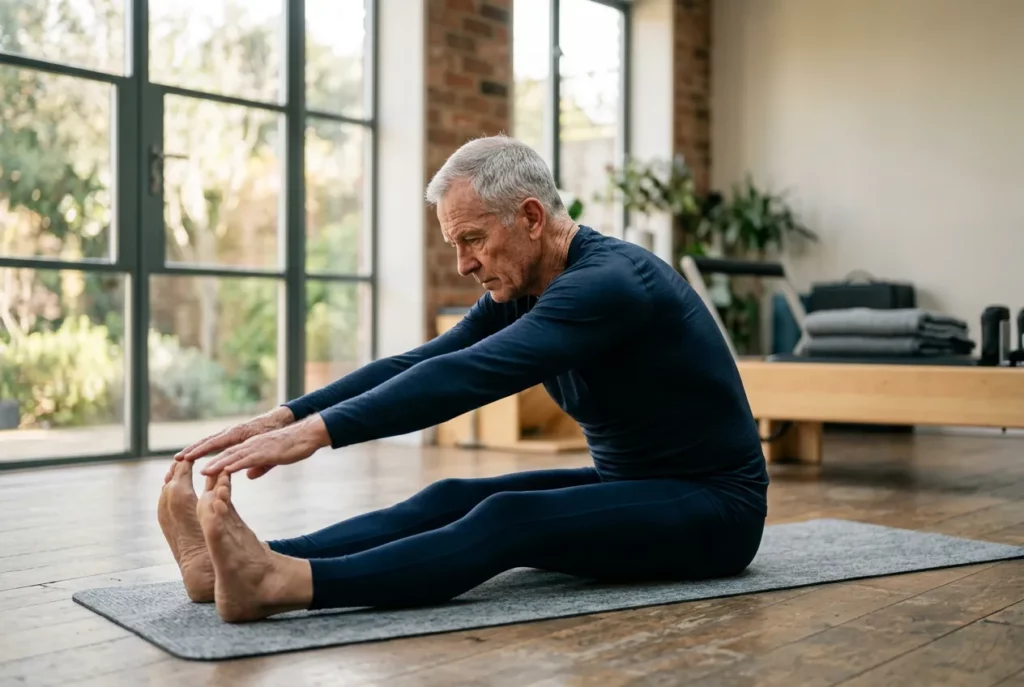
Why Pilates for Back Strength Works Differently Than Other Exercises
Pilates for back strength treats your spine as one connected system instead of just building big surface muscles. It trains the deep stabilizers to share the load with the larger back and core muscles, so your spine is supported from every angle.
Your back has three main muscle layers:
Superficial layer: Includes the trapezius and latissimus dorsi, which move your shoulders and arms.
Intermediate layer: Helps with breathing by moving the ribs.
Deep layer: Includes the erector spinae and multifidus, which sit close to the spine and keep each segment steady as you move.
Typical gym routines (like heavy rows or pull‑downs) focus on the superficial layer and often ignore the smaller stabilizers. Pilates flips that script with precise control, slower tempo, and specific breathing that wake up the multifidus and deep abdominals. The NHS notes that Pilates can improve strength, posture, and flexibility for people with lower back pain, reflecting this deeper focus.
Two key ideas set Pilates apart:
Rib‑to‑hip connection: Gently drawing your lower ribs toward the front of your pelvis during movement engages your deep core muscles and supports the lumbar spine. This reduces excessive arching and spreads forces more evenly across the discs.
Spinal articulation: Instead of moving your back as one stiff block, you roll it one segment at a time (for example, in a slow roll‑down or bridge). This smooth motion brings circulation to the discs, highlights stiff spots, and teaches your nervous system to control movement through the whole spine.
Together with functional ranges of motion that mimic daily tasks like bending to tie shoes or loading a dishwasher, Pilates builds strength that carries directly into real life.
Essential Pilates Exercises for Back Strength and Spinal Stability
These essential Pilates exercises guide you from gentle mobility to stronger, more stable support for your spine. Start with warm‑ups to free stiff joints, then move into strengthening work for the entire posterior chain.
Foundational Warm-Up Movements To Prepare The Spine
Foundational warm‑up movements restore easy motion before you add effort. This matters for back safety because cold, stiff tissues protest quickly once you load them.
Cat–Cow: On hands and knees, round your spine toward the ceiling as you exhale, then gently arch and open your chest as you inhale. This helps each vertebra glide and links breathing with spinal motion.
Thread the Needle / Book Openings:
Thread the needle: From hands and knees, slide one arm under the other, letting your shoulder and head move toward the floor, then return with control.
Book openings: Lying on your side with arms together, sweep the top arm open to twist your chest while the hips stay stacked.
Both moves restore upper‑back rotation, which often stiffens in desk workers.
Mermaid Stretch: Sitting in a Z‑shape, reach one arm up and side‑bend while keeping the opposite hip grounded. This targets the sides of the spine and the quadratus lumborum. A few slow rounds build better awareness so your body is ready for strengthening.
As a common physical therapy saying goes, “Motion is lotion for your joints”—as long as it stays within a comfortable range.
Strengthening Exercises That Target the Entire Posterior Chain
Once your spine moves more freely, build strength in the posterior chain—the muscles along the back of your body that help you stand, lift, and walk without strain.
Prone Press
Lying face down with hands beside your chest, gently lift your chest while keeping your lower ribs heavy on the mat. Think of lengthening your breastbone forward rather than pushing straight up. This teaches your upper and lower back to extend without overloading the lumbar area.Dart
Lie face down with arms along your sides. Reach your fingertips toward your heels as your chest floats slightly away from the mat. Small arm pulses at the top add endurance for the upper back and shoulder stabilizers while keeping your neck long.Swimming
From a face‑down position with arms overhead, lift opposite arm and leg in a small flutter pattern. Breathe in for five counts and out for five counts, creating a set of rhythmic beats. This move trains coordination and endurance in the multifidus, glutes, and shoulder stabilizers.Articulating Glute Bridge
Lying on your back with knees bent, curl your pelvis under and slowly peel your spine off the mat until your body forms a straight line from shoulders to knees. Pause, then roll back down one vertebra at a time. When steady, progress to single‑leg bridges to challenge stabilizers on each side of the low back.Bird Dog Quadruped Balance
On hands and knees, reach one leg straight back and the opposite arm forward, keeping your trunk level. Hold for a breath, then switch sides. This classic move builds strength and control in the multifidus and deep core as they prevent wobbling.Single‑Leg Deadlift
Standing on one leg with a soft knee, hinge at the hips as the back leg lifts behind you, keeping your spine long. When your torso and back leg form a straight line, press through the standing heel to return to upright. This directly trains safer bending mechanics for everyday tasks like picking items up from the floor.
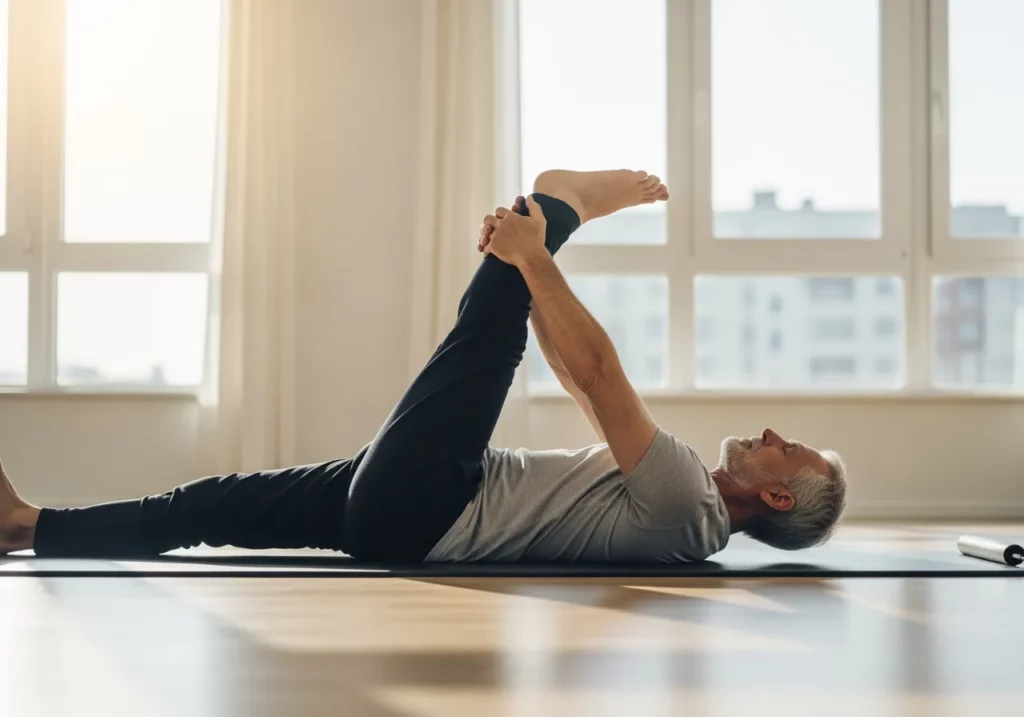
To quickly compare what each exercise emphasizes:
| Exercise | Main Focus | Best For |
|---|---|---|
| Prone Press | Gentle spinal extension | Easing stiffness in upper and mid‑back |
| Dart | Upper‑back endurance | Countering rounded shoulders |
| Swimming | Whole‑back coordination and stamina | Building tolerance for daily activity |
| Articulating Glute Bridge | Glutes and segmental spinal control | Supporting the low back during lifting and standing |
| Bird Dog | Deep core and multifidus stability | Improving balance and trunk control |
| Single‑Leg Deadlift | Hip hinge and posterior chain strength | Safer bending and lifting in daily life |
Start with one or two warm‑up moves and two or three strengthening exercises, performing 8–12 controlled repetitions of each.
How To Adapt Pilates for Back Strength To Your Body and Fitness Level
Adapting Pilates for back strength to your body helps you gain results without flare‑ups. Different backs need different starting points, especially when pain, age‑related changes, or heavy training loads are part of your story.
If you have chronic back pain or sciatica
Begin with core‑supported positions on your back. Moves like articulating bridges, gentle pelvic tilts, and small leg motions let the floor support your spine while you train your deep abdominals and multifidus. Keep a light rib‑to‑hip connection so your lower back stays near neutral instead of arching. Stop and contact a doctor or physical therapist if you feel sharp pain, new numbness, or spreading tingling.If you are a senior or middle‑aged adult
The National Osteoporosis Foundation highlights weight‑bearing and muscle‑strengthening exercise as important for bone density. Controlled standing Pilates moves like the Reverse Bridge and Single‑Leg Deadlift fit this goal. Gentle mobility work such as Cat–Cow and thoracic rotations helps reduce the rounded upper posture that can appear with age. Check with a healthcare provider before trying new moves if you have osteoporosis, spinal stenosis, or a history of surgery.If you are an athlete or fitness enthusiast
Pilates works well as cross‑training and active recovery. You might add light dumbbells or resistance bands to Bird Dog or bridge variations to increase challenge while keeping clean form. Best Inversion Table Reviews explains how to pair these sessions with short inversion at angles around 10–20 degrees, so your spine gets both muscle support and gentle decompression. For most people, two to four focused sessions per week fit well beside regular training and work.
Combining Pilates With Inversion Therapy for Deeper Spine Relief
Combining Pilates for back strength with inversion therapy brings together passive decompression and active muscle training. Inversion tables use your body weight and gravity to lengthen the spine slightly, and Pilates helps your muscles maintain that improved alignment once you stand up.
During inversion, your body tilts so your head rests a bit below your hips. This position can:
Widen the spaces between vertebrae
Stretch tight back muscles
Improve blood flow to discs and surrounding tissues
According to the Mayo Clinic, people with uncontrolled high blood pressure, glaucoma, or recent surgery should avoid inversion, so medical clearance is important. For many others, starting with short sessions at shallow angles—often 10–20 degrees—offers a gentle first trial.
A study in Disability and Rehabilitation (link) followed 47 adults with long‑term low back pain who used three sets of three‑minute inversions per session. Over eight weeks they showed meaningful improvements in pain and flexibility. When you add Pilates, the muscles around the spine learn to hold on to those gains during daily standing, walking, and lifting.
Best Inversion Table Reviews helps you choose inversion tables that fit this combined approach, from budget‑friendly to premium models. Their guides explain features such as:
Contoured backrests that follow natural spinal curves
Adjustable ankle locks for comfort
Angle‑limiting systems that keep your tilt within your provider’s recommendations
By matching the table to your body size, comfort needs, and Pilates routine, you can build a home setup that supports your spine without overspending on features you do not need.
A simple way to blend the two methods:
Short Pilates warm‑up (5–10 minutes)
Gentle inversion (2–3 minutes)
Main Pilates strengthening session (15–20 minutes)
Brief inversion cool‑down (1–2 minutes), if approved by your provider
With consistent practice, this pattern can offer both short‑term relief after long days and long‑term strength that protects your back.
Start Building a Stronger Spine Today
Starting a Pilates for back strength routine is one of the simplest ways to care for your spine. You do not need a gym or long workouts—just a mat, some floor space, and steady practice.
Aim for three or four short sessions per week that mix warm‑ups, back‑specific exercises, and a few standing moves. If you and your healthcare provider agree that inversion is appropriate, adding a carefully chosen table can give your back another layer of relief. Always check with a doctor or physical therapist before new exercise if you have acute pain, recent surgery, or complex diagnoses. For help choosing an inversion table that fits your space, budget, and spine goals, visit Best Inversion Table Reviews and build a home routine that can support you for years.
Frequently Asked Questions
This section answers common questions about using Pilates and inversion therapy for back strength so you can move forward with confidence.
Question 1 How Often Should I Do Pilates for Back Strength?
You get the best back‑strength gains when you practice Pilates about three to four times per week. Sessions of 20–30 minutes that focus on warm‑ups, posterior chain moves, and core control are usually enough for most people to notice less stiffness and better posture within several weeks.
Question 2 Is Pilates Safe for People With Herniated Discs or Sciatica?
Pilates can be safe for herniated discs or sciatica when you use proper modifications and guidance. Start with supine, core‑supported work such as bridges and gentle leg movements, avoid deep backbends at first, and always consult a physical therapist or spine specialist before beginning.
Question 3 Can Pilates Replace Physical Therapy for Back Pain?
Pilates does not replace physical therapy for back pain, especially after injury or surgery. Clinical Pilates is often used inside physical therapy programs, guided by licensed professionals; once your provider clears you, Pilates can become a long‑term maintenance plan alongside periodic check‑ins.
Question 4 How Does Inversion Therapy Work With Pilates for Back Strength?
Inversion therapy passively decompresses the spine, which can reduce muscle tension and improve disc hydration before or after Pilates. This creates a more receptive base for core and back‑strengthening exercises. Best Inversion Table Reviews suggests starting at shallow angles around 10–20 degrees and progressing slowly as your comfort and strength improve.