Nearly 80% of adults experience debilitating back pain at some point in their lives, yet the treatment landscape remains frustratingly divided. Patients face a critical choice: invest in an inversion table for home use or commit to supervised physical therapy sessions. The question of inversion tables vs. traditional physical therapy: which actually works better for back pain demands evidence-based answers, not marketing hype.
Think of this decision like choosing between a home gym and a personal trainer—both build strength, but the approach, supervision, and outcomes differ dramatically. This comparison examines clinical outcomes, recovery timelines, and the mixed research landscape to help you make an informed decision about your back pain treatment strategy.
Key Takeaways
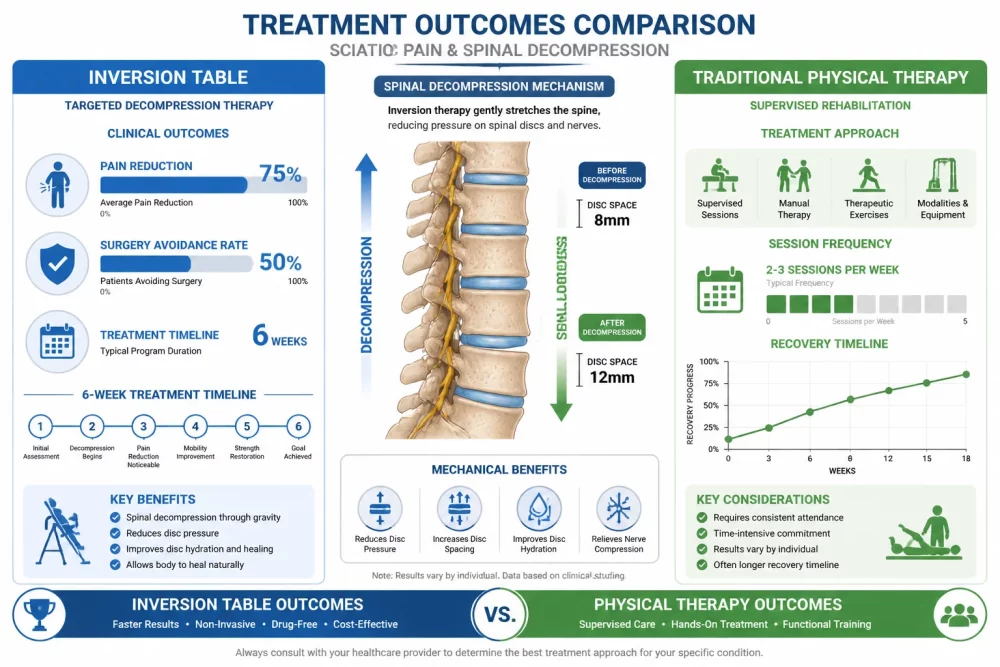
✅ Clinical studies show 75% of inversion table users report pain reduction after 6 weeks, with 50% avoiding surgery compared to non-users[1][3]
✅ Traditional physical therapy provides supervised, targeted treatment with stronger long-term evidence for chronic conditions
✅ Inversion therapy works best for short-term relief when combined with other treatments, not as a standalone solution
✅ Safety considerations and contraindications make professional guidance essential before starting either approach
✅ Cost, convenience, and individual health conditions significantly impact which treatment delivers better results
Understanding the Clinical Evidence Behind Each Approach
What Research Reveals About Inversion Table Effectiveness
The evidence supporting inversion therapy presents a mixed but intriguing picture. A 2021 study analyzed participants with lumbar disc disease and sciatica who used inversion tables daily for 6 weeks. The protocol required 6 repetitions over 30 minutes, with each inversion lasting at least 2 minutes. Results showed 75% of participants reported less pain and better functionality[1]. However, researchers note the study received sponsorship from Teeter, a major inversion table manufacturer.
More compelling data emerges from surgical avoidance rates. The same 2021 research found that only 21% of inversion therapy users needed surgery after 2 years, versus 43% in non-users[1]. Participants also required significantly less pain medication throughout the follow-up period.
A separate case-controlled study reinforced these findings, demonstrating that sciatica patients using Teeter inversion tables regularly were 50% less likely to need surgery than controls, even 2 years later[3]. Over 75% reported improvements in both pain levels and disability scores.
Despite these promising numbers, Cleveland Clinic experts emphasize the limitations. They note that evidence comes from small studies supporting inversion tables primarily for short-term relief of chronic low back pain, sciatica, and spasms[6]. Optimal use involves 3 minutes at a 60-degree tilt, not the extreme inversions some users attempt.
The mechanism behind inversion therapy centers on spinal decompression. When you invert, gravity pulls your body weight away from compressed discs, increasing intervertebral space and reducing lumbar muscle activity[5]. This creates a traction effect similar to professional spinal decompression but without clinical supervision.
However, well-designed studies reveal a sobering reality: no significant long-term benefits exist for acute or chronic back pain from inversion tables alone[4]. The short-term muscle and tissue stretching effects provide temporary relief but don’t address underlying structural problems.
For those interested in exploring this option, understanding how to use an inversion table safely becomes paramount before starting any home therapy program.
Traditional Physical Therapy: The Supervised Treatment Standard
Physical therapy operates on fundamentally different principles than passive inversion. Licensed therapists assess individual biomechanics, identify movement dysfunction, and create targeted exercise programs that address root causes rather than just symptoms.
Clinical comparisons favor physical therapy’s precision and lasting improvements. Mechanical spinal decompression shows stronger evidence than conventional physiotherapy, with greater pain reduction, mobility gains, and decreased medication use[2]. Professional treatment also improves disc hydration and nutrient flow through controlled, targeted interventions.
The supervised nature of physical therapy provides critical advantages. Therapists adjust techniques based on real-time feedback, modify exercises as patients progress, and identify compensatory movement patterns that perpetuate pain. This personalized approach addresses the specific pathology causing discomfort rather than applying a one-size-fits-all solution.
Physical therapy protocols typically include:
- Manual therapy techniques that mobilize restricted joints
- Therapeutic exercises strengthening core stabilizers
- Postural training correcting alignment issues
- Modalities like ultrasound or electrical stimulation
- Education on body mechanics and injury prevention
Recovery timelines vary significantly based on condition severity. Acute back pain may resolve within 4-6 weeks of consistent therapy, while chronic conditions require 8-12 weeks or longer. Unlike inversion tables that provide immediate but temporary relief, physical therapy builds lasting functional improvements.
The evidence supporting physical therapy alternatives continues to evolve, but supervised treatment maintains the strongest research backing for long-term outcomes.
Comparing Outcomes: Which Delivers Better Results for Back Pain?
Short-Term Relief vs. Long-Term Recovery
The debate over inversion tables vs. traditional physical therapy: which actually works better for back pain hinges largely on your treatment goals and timeline expectations.
Inversion tables excel at providing immediate symptom relief. Users often experience reduced pain within minutes of inverting as spinal decompression temporarily alleviates nerve compression. This makes inversion therapy valuable for acute flare-ups or as part of a broader pain management strategy. The benefits of inversion therapy for lasting back relief become most apparent when combined with other interventions.
However, this relief typically lasts only hours, not days or weeks. Studies confirm inversion tables offer only short-term spinal loading reduction and mild traction[2]. The passive nature of inversion means you’re not actively strengthening muscles, correcting movement patterns, or addressing biomechanical dysfunction.
Physical therapy targets long-term recovery through active rehabilitation. While initial sessions may not provide the immediate relief that inversion does, the cumulative effect builds functional capacity that prevents future episodes. Patients develop stronger core muscles, improved flexibility, and better movement awareness that protects the spine during daily activities.
Research comparing spinal decompression therapy to inversion tables shows decompression provides targeted disc and nerve treatment under supervision, delivering more precise and lasting improvements[2]. Professional treatment adjusts negative pressure for specific spinal areas, unlike inversion’s uncontrolled full-spine stretch[7].
Cost, Convenience, and Accessibility Factors
Financial considerations significantly impact treatment decisions. Quality inversion tables range from $200-$500 for home use, representing a one-time investment. Physical therapy sessions cost $50-$150 per visit without insurance, with typical treatment plans requiring 12-24 sessions over 6-12 weeks.
Total cost comparison:
| Treatment Option | Initial Cost | Ongoing Costs | Total (12 weeks) |
|---|---|---|---|
| Inversion Table | $200-$500 | $0 | $200-$500 |
| Physical Therapy | $0-$50 (copay) | $50-$150/session | $600-$3,600 |
| Combined Approach | $200-$500 | $50-$150/session | $800-$4,100 |
Insurance coverage dramatically affects these calculations. Most plans cover physical therapy with modest copays, while inversion tables rarely qualify for reimbursement. However, the convenience of home treatment eliminates travel time, scheduling conflicts, and time off work.
For those exploring equipment options, our inversion table buying guide helps identify models that balance quality and affordability.
Safety Considerations and Contraindications
Safety profiles differ substantially between these approaches. Physical therapy under professional supervision carries minimal risk when therapists screen for contraindications and modify techniques appropriately.
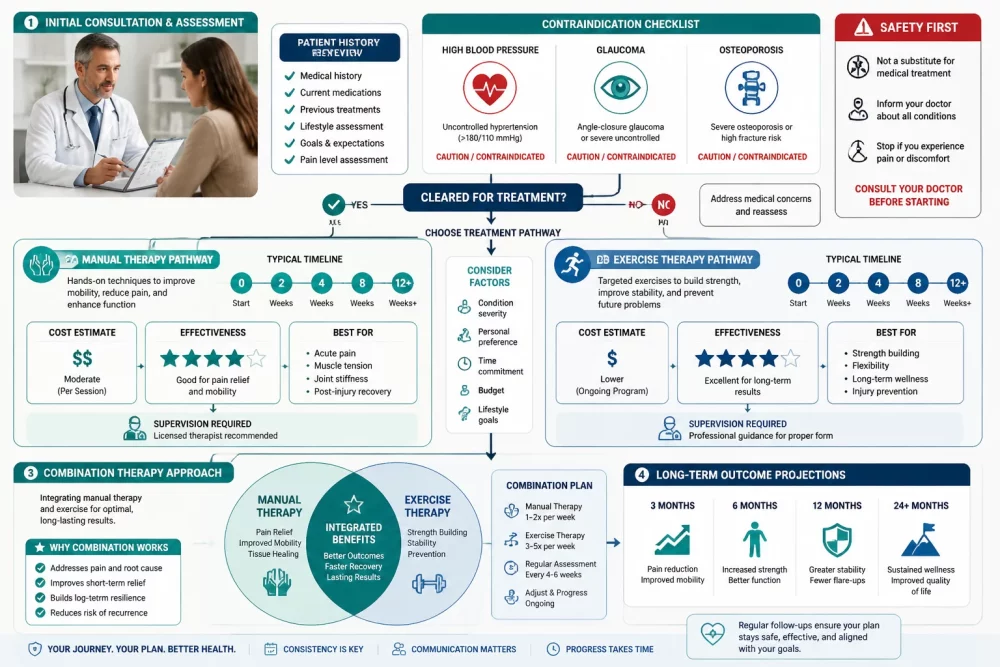
Inversion therapy presents more significant safety concerns. Critical contraindications include:
- High blood pressure or heart disease
- Glaucoma or retinal detachment risk
- Osteoporosis or bone fragility
- Pregnancy
- Herniated discs in certain locations
- Recent stroke or cerebral sclerosis
Cleveland Clinic experts emphasize that individuals with these conditions should avoid inversion therapy entirely[6]. The inverted position increases intraocular and blood pressure, potentially causing serious complications in vulnerable populations.
Understanding who should not use an inversion table prevents dangerous situations. Even healthy users face risks from improper technique, excessive inversion angles, or prolonged sessions.
Physical therapists screen for contraindications during initial evaluations and adjust treatment plans accordingly. This professional oversight makes supervised therapy safer for individuals with complex medical histories.
The Combination Approach: Best of Both Worlds?
Emerging evidence suggests combining inversion therapy with physical therapy delivers superior outcomes compared to either approach alone. Studies indicate inversion tables prove beneficial when combined with physical therapy to lower surgery rates[2], though they lack standalone long-term efficacy.
This integrated strategy leverages each method’s strengths:
Inversion therapy provides:
- Immediate symptom relief during acute flare-ups
- Convenient home-based maintenance between PT sessions
- Cost-effective long-term pain management
- Spinal decompression that complements active exercises
Physical therapy contributes:
- Professional assessment and diagnosis
- Targeted exercises addressing root causes
- Movement re-education preventing recurrence
- Supervised progression ensuring safety
Patients following this combined approach often use inversion tables for 3-5 minutes daily while attending physical therapy 2-3 times weekly. The inversion sessions manage symptoms between appointments, while therapy sessions build the functional capacity needed for lasting recovery.
For optimal results with home inversion, proper nutrition supports tissue healing. Learn how food choices boost your inversion table results to maximize treatment effectiveness.
Making Your Decision: Which Treatment Fits Your Situation?
The question of inversion tables vs. traditional physical therapy: which actually works better for back pain lacks a universal answer. Your optimal choice depends on several individual factors:
Choose inversion therapy when you:
- Experience intermittent back pain without serious underlying pathology
- Need convenient home-based symptom management
- Have budget constraints limiting professional treatment
- Want to complement existing physical therapy
- Pass medical screening for contraindications
Choose physical therapy when you:
- Suffer from chronic or severe back pain
- Need professional diagnosis of underlying problems
- Have complex medical conditions requiring supervision
- Want long-term functional improvement, not just symptom relief
- Have insurance coverage making cost manageable
Consider combination therapy when you:
- Experience moderate to severe chronic pain
- Can afford both approaches
- Want immediate relief plus long-term recovery
- Have cleared medical screening for inversion use
- Commit to active participation in rehabilitation
A 2026 randomized trial currently compares inversion table therapy to Mulligan techniques for chronic low back pain and flexibility[8], though full results remain unavailable. As research evolves, the evidence increasingly supports individualized treatment plans rather than one-size-fits-all recommendations.
Before starting any treatment, consult healthcare providers who understand your complete medical history. They can identify dangers of inversion tables specific to your situation and recommend the safest, most effective approach.
Conclusion
The evidence reveals that inversion tables and traditional physical therapy serve different but complementary roles in back pain relief strategies. Inversion therapy delivers impressive short-term results, with 75% of users reporting pain reduction and 50% avoiding surgery when used consistently[1][3]. However, these benefits work best as part of a comprehensive treatment plan rather than a standalone solution.
Traditional physical therapy maintains stronger evidence for long-term recovery, addressing root causes through supervised, targeted interventions. The precision and professional oversight of PT create lasting functional improvements that passive inversion cannot match[2].
For most individuals experiencing back pain, the optimal approach combines both methods: physical therapy builds the foundation for long-term recovery while inversion therapy provides convenient symptom management between sessions. This integrated strategy leverages each treatment’s strengths while minimizing limitations.
Take action today:
- Schedule a medical evaluation to identify contraindications and underlying pathology
- Consult a physical therapist for professional assessment and treatment planning
- Research quality inversion tables if cleared for home therapy
- Start conservatively with short inversion sessions at moderate angles
- Track your progress objectively through pain scales and functional measures
Your back pain deserves evidence-based treatment, not guesswork. Whether you choose inversion therapy, physical therapy, or a combination approach, make your decision based on clinical evidence, professional guidance, and your individual health circumstances. The path to lasting relief requires commitment, patience, and the right treatment strategy for your unique situation.
References
[1] Inversion Therapy – https://www.goodrx.com/conditions/musculoskeletal/inversion-therapy
[2] Spinal Decompression Vs Inversion Table – https://www.cristchiropractic.com/spinal-decompression-vs-inversion-table
[3] Inversion Therapy Reduces Surgery – https://teeter.com/blog/inversion-therapy-reduces-surgery/
[4] Can Inversion Tables Relieve Back Pain – https://spinecenterla.com/can-inversion-tables-relieve-back-pain/
[5] Inversion Tables Work – https://ssorkc.com/inversion-tables-work/
[6] Can Inversion Tables Really Relieve Back Pain – https://health.clevelandclinic.org/can-inversion-tables-really-relieve-back-pain
[7] Spinal Decompression Vs Inversion Tables Which Works Better – https://draperspinalcare.com/blog/spinal-decompression-vs-inversion-tables-which-works-better/