Approximately 3% of the global population lives with scoliosis, yet most patients receive conflicting advice about whether inversion therapy can reshape their curved spines. The truth challenges popular assumptions: inversion tables deliver measurable physiological effects, but these changes operate through entirely different mechanisms than most people expect when seeking treatment for Inversion Tables for Scoliosis and Spinal Alignment: What Structural Changes Actually Occur?
Think of inversion therapy like stretching a coiled spring—the moment you release tension, the spring returns to its original shape. This analogy captures the fundamental reality of how gravity reversal affects scoliotic spines.
Key Takeaways
✅ No permanent structural changes: Inversion tables cannot reshape scoliotic curves or correct spinal misalignment permanently
✅ Temporary decompression occurs: Spinal discs expand and rehydrate during inversion, creating short-term relief from gravitational compression
✅ Pain relief is real but brief: Users experience genuine symptom reduction lasting hours to days, not weeks or months
✅ Medical supervision required: Scoliosis patients must obtain provider approval before starting any inversion protocol
✅ Augmentation tool only: Inversion works best alongside comprehensive treatment programs, not as standalone therapy
Understanding the Biomechanics: What Actually Happens During Inversion
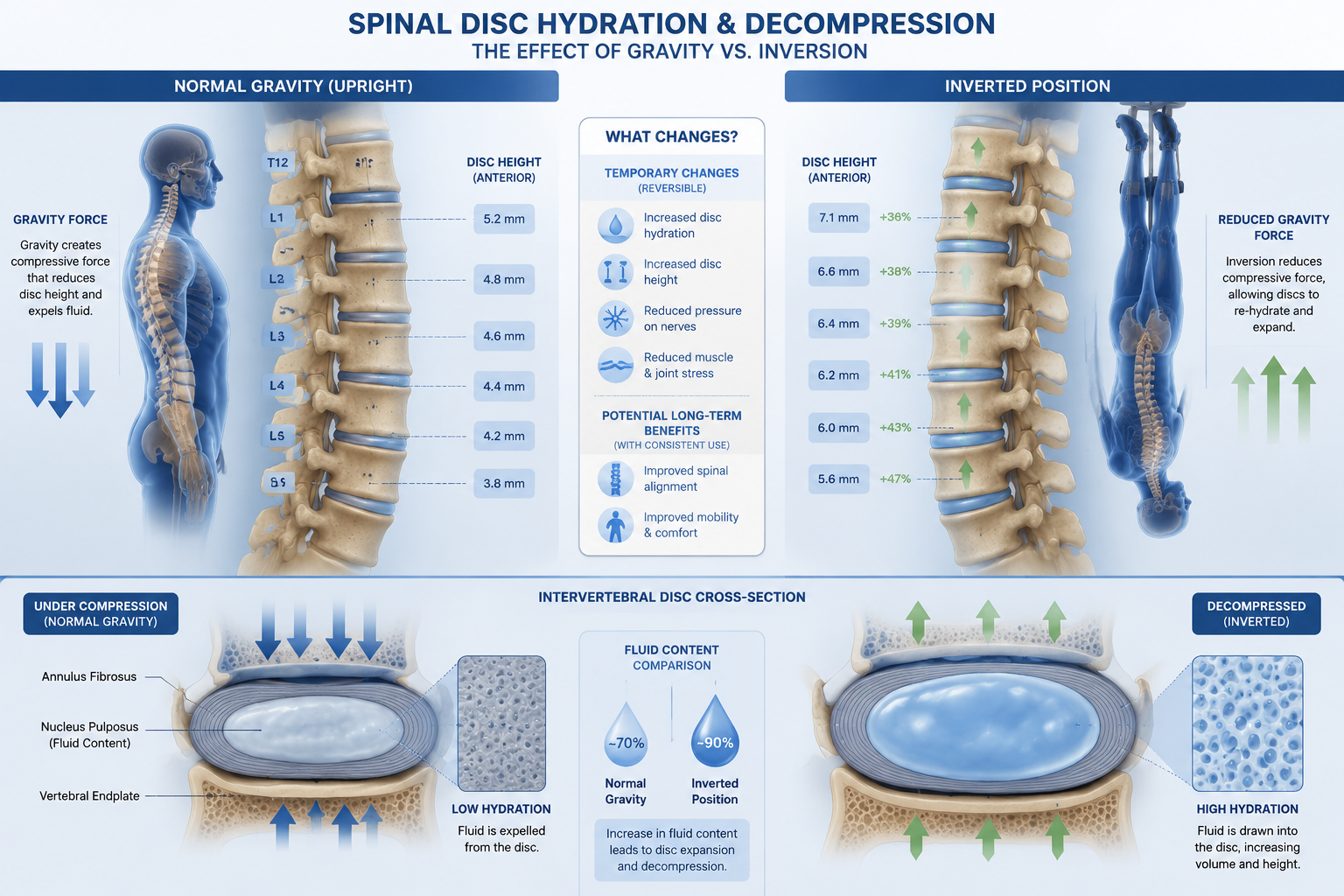
The spine responds to inverted positioning through predictable physiological mechanisms. Gravity reversal creates axial decompression—the vertebrae separate slightly as gravitational load shifts from compression to traction. This process affects every spinal segment, including those involved in scoliotic curvature.
Disc hydration represents the primary structural change during inversion. Intervertebral discs absorb fluid when pressure decreases, expanding their height by 2-5mm temporarily. This rehydration improves nutrient exchange and waste removal within disc tissue. The effect lasts several hours post-inversion before gravitational compression gradually returns discs to baseline dimensions.
Ligament and muscle tension decreases as the spine elongates. Paraspinal muscles relax when they no longer fight gravity to maintain upright posture. This muscular relaxation contributes significantly to pain relief, particularly for individuals whose scoliosis creates chronic muscle imbalances and fatigue.
However, these changes remain completely reversible. The scoliotic curve itself—the lateral deviation and rotational component of vertebral positioning—experiences no permanent correction. Idiopathic scoliosis involves neurological underdevelopment and structural bone changes that inversion cannot address. The spine returns to its pre-inversion alignment within hours of resuming normal activities.
Research confirms this limitation. A 2013 study by Kim et al. demonstrated that inversion therapy reduced pain and improved flexibility in chronic low back pain patients, but the study measured symptom relief rather than structural correction. No peer-reviewed research substantiates claims that inversion therapy realigns scoliotic spines or produces lasting curve reduction.
For those exploring safe inversion techniques, understanding these biomechanical realities helps set appropriate expectations. The therapy delivers genuine benefits, but structural realignment isn’t among them.
Temporary Relief vs. Permanent Correction: The Clinical Evidence
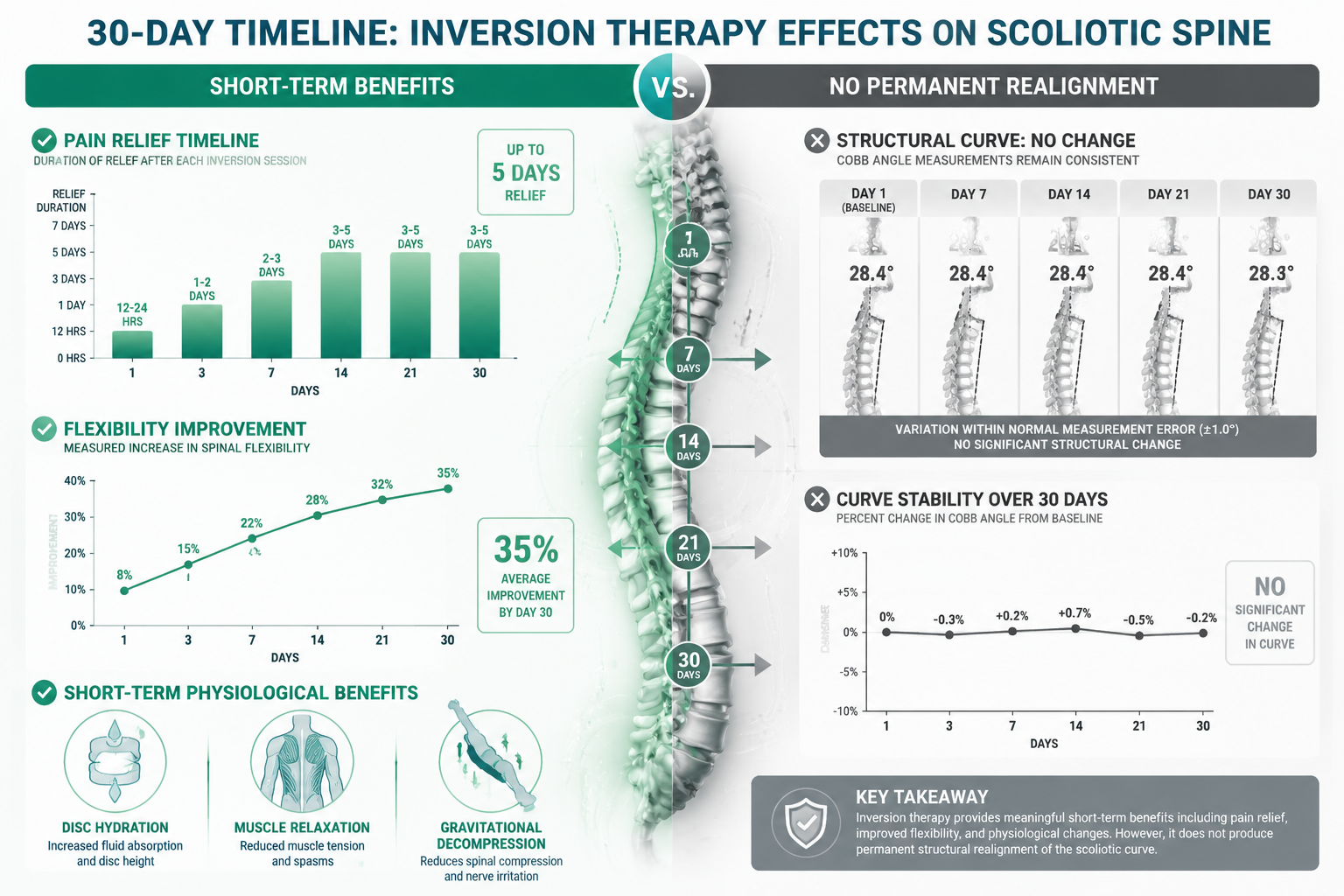
Clinical evidence draws a clear distinction between symptom management and structural correction when evaluating Inversion Tables for Scoliosis and Spinal Alignment: What Structural Changes Actually Occur? The research landscape reveals consistent patterns across multiple studies and clinical observations.
Short-Term Benefits Documented
Adult scoliosis patients report measurable pain reduction following inversion sessions. This relief stems from:
- Reduced nerve compression: Disc expansion creates more space for nerve roots exiting the spinal column
- Improved circulation: Enhanced blood flow to compressed tissues accelerates healing processes
- Muscle relaxation: Decreased paraspinal tension reduces referred pain patterns
- Endorphin release: The stretching sensation triggers natural pain-relieving compounds
These benefits typically last 4-12 hours after a single session. Regular users may extend relief duration through consistent practice, but the effects remain temporary. Once gravitational compression resumes, the spine gradually returns to its baseline state.
Structural Limitations Confirmed
No research demonstrates that inversion tables produce permanent curve reduction in scoliotic spines. The reasons are fundamental:
- Neurological factors: Idiopathic scoliosis involves brain-spine communication deficits that passive traction cannot correct
- Bone remodeling: Vertebral wedging and rotation require active neuromuscular reeducation, not passive stretching
- Ligamentous adaptation: Shortened ligaments on the concave curve side need targeted lengthening protocols
- Muscle imbalances: Asymmetric muscle development requires specific strengthening exercises
The CLEAR Institute classifies inversion tables as therapeutic tools for pain relief, core strength, flexibility, and disc circulation—but explicitly states they cannot reduce structural scoliosis curves.
The 2026 Treatment Landscape
As of 2026, advanced treatments like custom ScoliBrace use 3D imaging to achieve up to 30% curve reduction through active correction mechanisms. These approaches contrast sharply with inversion therapy’s passive decompression model. The gap between passive and active treatment modalities explains why inversion tables serve as augmentation tools rather than primary interventions.
Patients considering inversion therapy duration should recognize these limitations. Sessions typically range from 1-10 minutes for beginners, gradually increasing as tolerance builds. However, longer duration doesn’t translate to greater structural correction—it simply extends temporary decompression benefits.
Integration with Comprehensive Care
Inversion tables deliver optimal results when combined with:
- Scoliosis-specific chiropractic care: Active adjustments address vertebral positioning
- Physical therapy exercises: Targeted movements strengthen weak muscle groups
- Bracing protocols: External support guides spinal growth in adolescents
- Nutritional support: Food choices that boost recovery enhance tissue healing
This integrated approach acknowledges inversion therapy’s role as a complementary modality rather than standalone treatment. The Hudson Valley Scoliosis center emphasizes that no research supports inversion therapy’s ability to realign scoliotic spines, reinforcing the need for comprehensive treatment strategies.
Safety Considerations for Scoliosis Patients
⚠️ Critical safety requirements apply to scoliosis patients considering inversion therapy:
- Medical clearance mandatory: No scoliosis patient should use inversion without provider approval
- Contraindications apply: High blood pressure, glaucoma, heart disease, and pregnancy prohibit inversion use
- Supervision recommended: Physical therapist guidance ensures proper technique and progression
- Monitoring required: Track pain levels, curve measurements, and functional capacity throughout treatment
Patients should review who should not use inversion tables before beginning any protocol. The risks increase for individuals with severe curves (>40 degrees) or progressive scoliosis requiring surgical intervention.
Realistic Outcome Expectations
Setting appropriate expectations prevents disappointment and guides treatment decisions. Inversion tables for scoliosis patients offer:
✅ Temporary pain relief lasting hours to days
✅ Improved flexibility during and shortly after sessions
✅ Enhanced disc nutrition supporting overall spinal health
✅ Stress reduction through relaxation and endorphin release
✅ Core strengthening when combined with inverted exercises
❌ Permanent curve reduction through passive traction alone
❌ Structural realignment of rotated vertebrae
❌ Correction of underlying neurological factors
❌ Replacement for active treatment modalities
This balanced perspective helps patients make informed decisions about incorporating inversion therapy into their scoliosis management plans. The therapy delivers genuine value within its limitations, particularly for adult patients managing chronic pain rather than seeking curve correction.
For those exploring inversion therapy benefits, understanding the distinction between symptom relief and structural correction proves essential. The evidence supports inversion as a valuable pain management tool but not as a corrective intervention for spinal misalignment.
Conclusion
The evidence reveals a clear answer to questions about Inversion Tables for Scoliosis and Spinal Alignment: What Structural Changes Actually Occur? Inversion therapy creates temporary, reversible changes—disc rehydration, muscle relaxation, and decompression—but cannot permanently reshape scoliotic curves or correct spinal misalignment. The therapy delivers genuine short-term pain relief and improved flexibility, making it valuable as an augmentation tool within comprehensive treatment programs.
Scoliosis patients considering inversion therapy should obtain medical clearance, work with qualified providers, and maintain realistic expectations. The therapy works best when combined with active interventions like scoliosis-specific chiropractic care, targeted exercises, and appropriate bracing protocols.
Next steps for readers:
- Consult your healthcare provider to determine if inversion therapy suits your specific condition
- Review our complete inversion table buying guide to select appropriate equipment
- Start with a 30-day beginner progression under professional supervision
- Track your symptoms and functional improvements to assess therapy effectiveness
- Integrate inversion sessions with other evidence-based treatments for optimal results
Remember: inversion tables serve as therapeutic tools for symptom management, not corrective devices for structural spinal conditions. This understanding empowers you to use the therapy appropriately while pursuing comprehensive care for scoliosis.
SEO Meta Title: Inversion Tables for Scoliosis: Structural Changes Explained