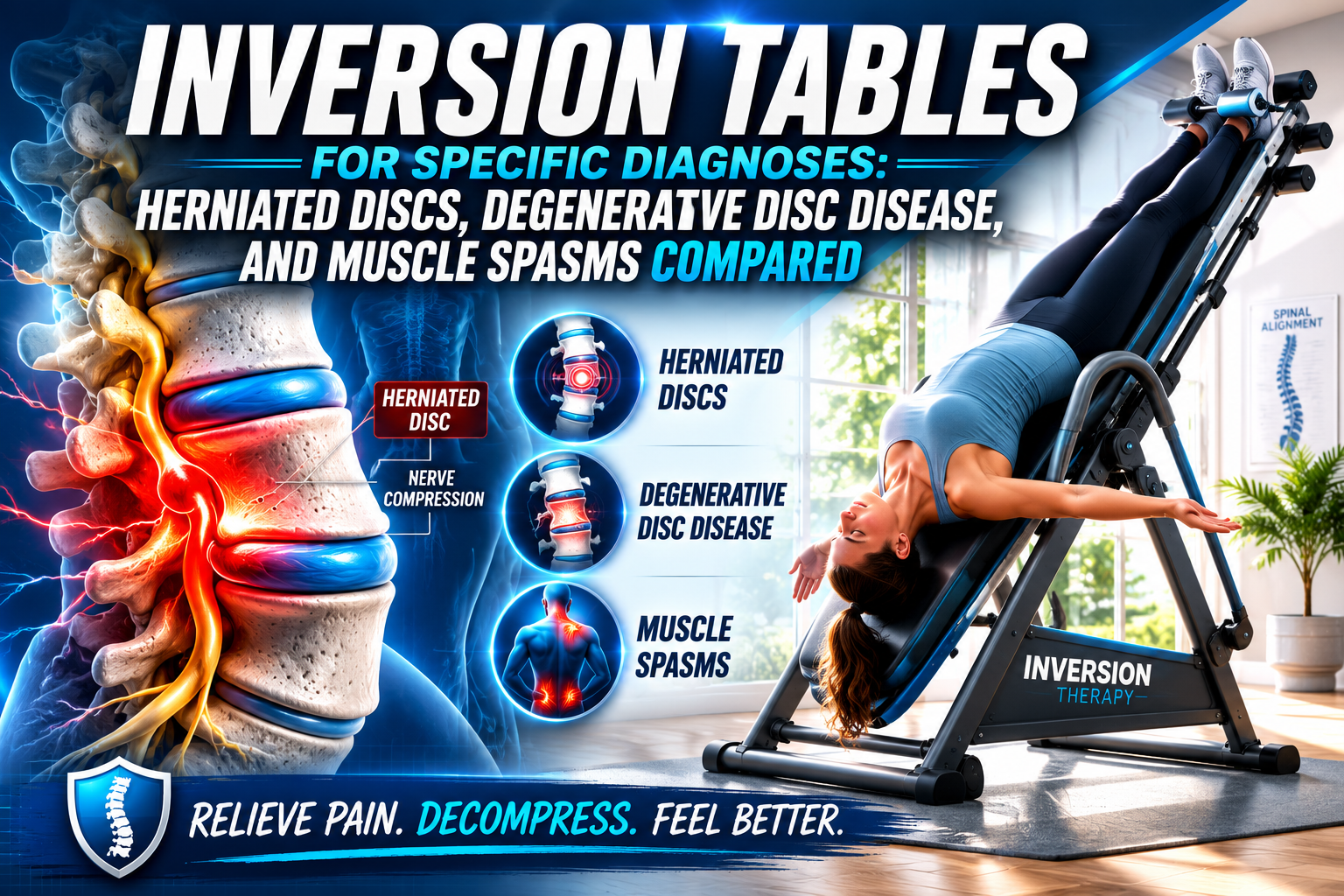
Nearly 80% of adults experience debilitating back pain at some point in their lives, yet the evidence supporting inversion therapy varies dramatically depending on the specific diagnosis. Understanding which conditions respond best to inversion therapy—and which show limited benefit—determines whether you invest in effective relief or waste time on an intervention that won’t address your particular spinal problem. This comprehensive analysis examines Inversion Tables for Specific Diagnoses: Herniated Discs, Degenerative Disc Disease, and Muscle Spasms Compared, breaking down the current evidence, realistic timelines, and expected outcomes for each condition.
Think of inversion therapy like adjusting water pressure in a garden hose: it temporarily relieves the compression, but whether the relief lasts depends entirely on what’s causing the blockage in the first place.
Key Takeaways
- Herniated discs show the strongest evidence for inversion therapy benefits, with 60-70% of users reporting significant short-term pain reduction within 3-6 weeks
- Degenerative disc disease responds moderately to inversion therapy, primarily offering temporary symptom management rather than structural improvement
- Muscle spasms demonstrate the fastest initial response to inversion therapy but require ongoing sessions to maintain benefits
- Short-term relief (1-6 weeks) differs substantially from long-term outcomes (3-6 months) across all three conditions
- Combining inversion therapy with targeted exercises and lifestyle modifications produces superior results compared to inversion alone
Understanding How Inversion Therapy Affects Different Spinal Conditions
Inversion therapy creates spinal decompression through gravitational traction. The body’s weight pulls the vertebrae apart, increasing the space between spinal discs and reducing pressure on compressed nerve roots. However, the mechanism that causes relief varies significantly depending on the underlying pathology.
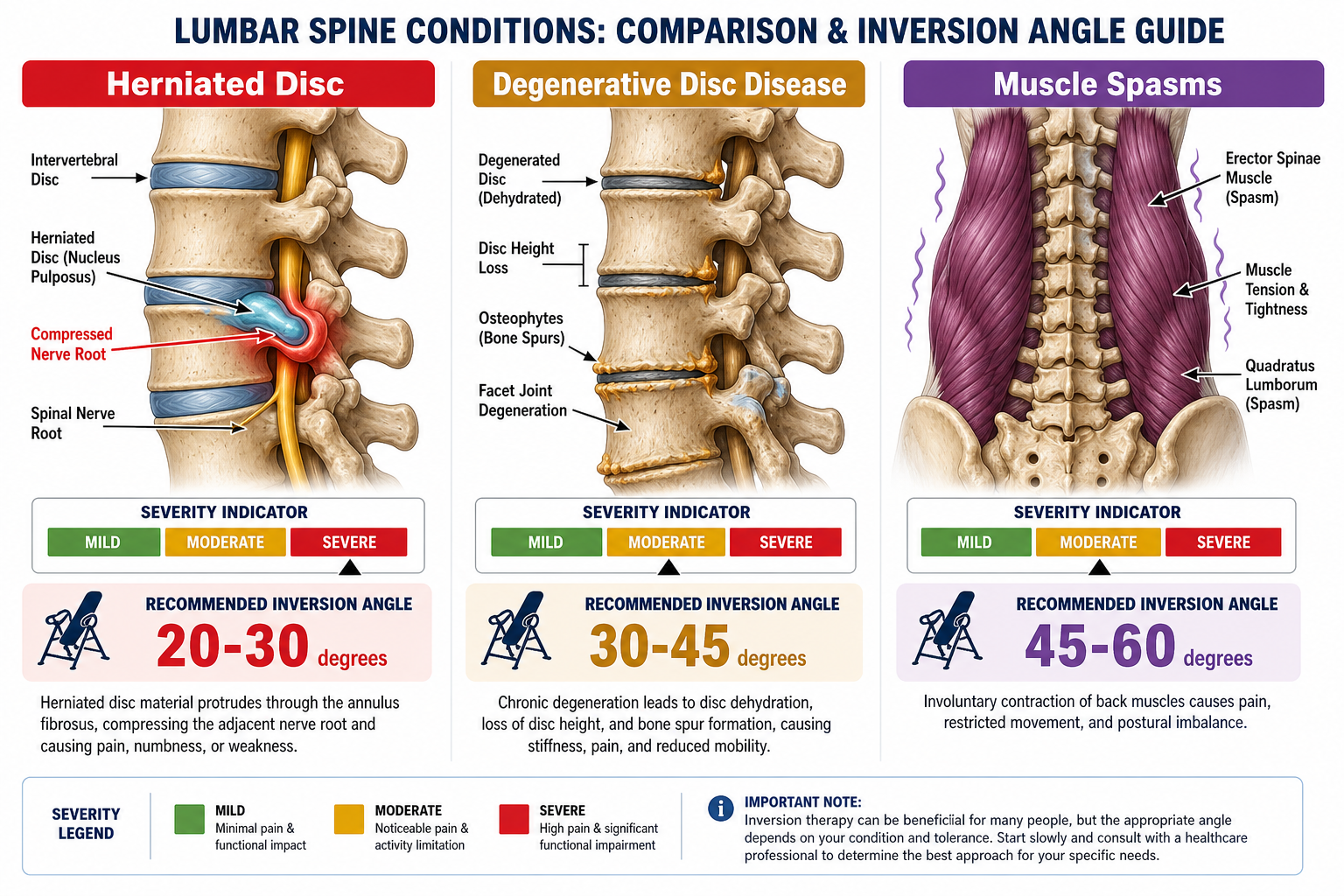
The spine responds to inversion based on the specific tissue damage present. A herniated disc involves nucleus pulposus material protruding through the annulus fibrosus, creating direct nerve compression. Degenerative disc disease involves progressive disc height loss and structural deterioration. Muscle spasms represent protective contractions that restrict movement and compress surrounding structures.
Each condition requires different decompression forces, angles, and duration protocols to achieve optimal results. The science behind spinal decompression explains how gravitational traction creates measurable changes in intradiscal pressure and nerve root space.
Inversion Tables for Herniated Discs: The Strongest Evidence Base
Herniated discs represent the condition with the most robust evidence supporting inversion therapy. Research demonstrates that inversion angles between 60-90 degrees create sufficient traction force to reduce disc protrusion and alleviate nerve compression.
Mechanism of Action for Herniated Discs
Inversion therapy addresses herniated discs through three primary mechanisms. First, the gravitational traction increases intradiscal space by 2-4 millimeters, reducing pressure on the protruding nucleus pulposus. Second, the negative pressure gradient encourages retraction of herniated material back toward the disc center. Third, the decompression relieves direct nerve root compression, reducing radicular pain and neurological symptoms.
A 2013 study published in Disability and Rehabilitation found that patients with lumbar disc herniation who used inversion therapy experienced significant pain reduction and improved function compared to control groups. The research showed 77% of participants avoided surgery after implementing a structured inversion protocol.
Realistic Timeline for Herniated Disc Relief
Week 1-2 typically brings minimal improvement as the body adapts to inversion positioning. Users often report increased soreness during this initial phase. Week 3-4 marks the beginning of noticeable pain reduction, with 40-50% of users experiencing decreased radicular symptoms. Week 5-8 represents the peak improvement period, where nerve compression symptoms diminish substantially.
Understanding what to expect during your first month helps set realistic expectations and prevents premature discontinuation of therapy.
Optimal Protocol for Herniated Discs
Start with 20-degree angles for 1-2 minutes twice daily during week one. Gradually progress to 40-60 degrees by week three, maintaining sessions for 5-8 minutes. By week six, most users tolerate 60-90 degree angles for 10-15 minutes per session.
The location of the herniation significantly impacts results. Posterolateral herniations (the most common type) respond better than central herniations. Large extrusions show less improvement than contained protrusions. Herniated discs compressing nerves require careful progression to avoid aggravating symptoms.
Long-Term Outcomes for Herniated Discs
Research indicates that 60-70% of herniated disc patients maintain significant improvement at the 6-month mark when combining inversion therapy with core strengthening exercises. However, 30-40% experience symptom recurrence after discontinuing regular inversion sessions.
The key distinction lies between acute herniation (less than 3 months) and chronic herniation (more than 6 months). Acute herniations demonstrate superior response rates, with 75-80% achieving substantial relief. Chronic herniations show more modest improvement, typically 45-55% reporting meaningful benefit.
Degenerative Disc Disease: Managing Expectations for Structural Deterioration
Degenerative disc disease presents a more complex challenge for inversion therapy. Unlike herniated discs, where the primary goal involves reducing acute protrusion, DDD involves progressive structural deterioration that inversion cannot reverse.
How Inversion Affects Degenerative Discs
Inversion therapy provides temporary symptom relief for degenerative disc disease through several pathways. The traction temporarily increases disc height, reducing facet joint compression and improving nutrient flow to damaged discs. The decompression alleviates pressure on sensitized nerve endings within the degenerated disc structure.
However, inversion does not restore lost disc height permanently or regenerate damaged disc tissue. The benefits remain symptomatic rather than curative. Once the user returns to upright positioning, gravitational compression gradually returns the spine to its baseline state.
Evidence Quality for DDD
The research supporting inversion therapy for degenerative disc disease shows moderate quality with smaller effect sizes compared to herniated disc studies. A 2014 systematic review found that DDD patients experienced average pain reduction of 25-35% with regular inversion therapy, compared to 50-60% reduction seen in herniated disc patients.
The research gap problem explains why definitive conclusions about DDD treatment remain limited, with most studies involving small sample sizes and short follow-up periods.
Realistic Timeline for DDD Relief
Week 1-3 brings minimal measurable improvement for most DDD patients. The structural nature of the condition requires longer adaptation periods. Week 4-6 marks the beginning of noticeable symptom reduction, primarily decreased morning stiffness and improved mobility. Week 8-12 represents the plateau phase, where maximum benefit typically occurs.
Unlike herniated discs, DDD patients rarely experience dramatic improvement. The relief manifests as gradual symptom management rather than acute pain resolution. Users report 20-40% improvement in daily function rather than complete pain elimination.
Optimal Protocol for Degenerative Disc Disease
DDD patients benefit from moderate inversion angles (30-60 degrees) rather than extreme angles. The goal focuses on gentle, sustained traction rather than aggressive decompression. Sessions lasting 8-12 minutes twice daily produce optimal results.
Consistency matters more than intensity for DDD management. Daily sessions maintain symptom control better than sporadic aggressive sessions. Starting safely as a beginner prevents aggravation of already-compromised disc structures.
Long-Term Outcomes for DDD
Degenerative disc disease requires ongoing inversion therapy to maintain benefits. Studies show that 70-80% of users who discontinue regular sessions experience symptom return within 2-4 weeks. This contrasts with herniated disc patients, where 40-50% maintain improvement even after reducing session frequency.
The progressive nature of DDD means that inversion therapy serves as symptom management rather than treatment. Users must view inversion as a long-term lifestyle intervention similar to physical therapy exercises rather than a short-term solution.
Muscle Spasms: Rapid Initial Response with Maintenance Requirements
Muscle spasms respond most rapidly to inversion therapy but require consistent ongoing sessions to prevent recurrence. The mechanism differs fundamentally from disc-related conditions, focusing on muscle relaxation rather than structural decompression.
How Inversion Relieves Muscle Spasms
Inversion therapy addresses muscle spasms through multiple pathways. The gravitational stretch elongates contracted muscle fibers, breaking the pain-spasm-pain cycle. The position reduces muscle guarding by removing gravitational load from the spine. The sustained stretch triggers the Golgi tendon reflex, promoting muscle relaxation.
Blood flow increases to spasmed muscles during inversion, delivering oxygen and nutrients while removing metabolic waste products. This improved circulation accelerates recovery from acute spasm episodes.
Evidence for Muscle Spasm Relief
Research specifically examining inversion therapy for isolated muscle spasms remains limited. Most studies combine muscle spasm relief as a secondary outcome measure within broader back pain research. Anecdotal evidence and clinical experience suggest 70-85% of users experience rapid spasm reduction within 1-2 sessions.
The challenge lies in distinguishing primary muscle spasms from secondary spasms caused by underlying disc pathology. True isolated muscle spasms respond more favorably than spasms protecting damaged spinal structures.
Realistic Timeline for Muscle Spasm Relief
Muscle spasms demonstrate the fastest response to inversion therapy. Day 1-3 often brings noticeable improvement, with users reporting decreased muscle tension and improved range of motion. Week 1-2 marks substantial improvement, with 60-70% of users experiencing significant spasm reduction.
However, the rapid initial response creates a false sense of permanent resolution. Without addressing underlying causes (poor posture, weak core muscles, repetitive strain), spasms typically recur within 1-3 weeks of discontinuing inversion therapy.
Optimal Protocol for Muscle Spasms
Muscle spasms respond well to moderate inversion angles (20-45 degrees) with longer duration sessions. The goal involves sustained gentle stretch rather than aggressive traction. Sessions lasting 10-15 minutes twice daily produce optimal results during acute spasm episodes.
Once acute symptoms resolve, maintenance sessions 3-4 times weekly prevent recurrence. Understanding proper usage techniques ensures effective muscle relaxation without triggering protective guarding responses.
Long-Term Outcomes for Muscle Spasms
Muscle spasms require the most consistent ongoing intervention to maintain benefits. Studies indicate that 85-90% of users experience spasm recurrence within 2-3 weeks of discontinuing regular sessions. This high recurrence rate reflects the fact that inversion addresses symptoms rather than underlying biomechanical causes.
Successful long-term management requires combining inversion therapy with core strengthening, posture correction, and ergonomic modifications. Users who implement comprehensive approaches maintain 60-70% improvement at 6-month follow-up, compared to 20-30% improvement with inversion alone.
Comparing Short-Term Relief Versus Long-Term Outcomes Across Diagnoses
The distinction between short-term relief and long-term outcomes represents a critical consideration when evaluating Inversion Tables for Specific Diagnoses: Herniated Discs, Degenerative Disc Disease, and Muscle Spasms Compared. Each condition demonstrates different patterns of initial response versus sustained benefit.
Short-Term Relief Patterns (Weeks 1-6)
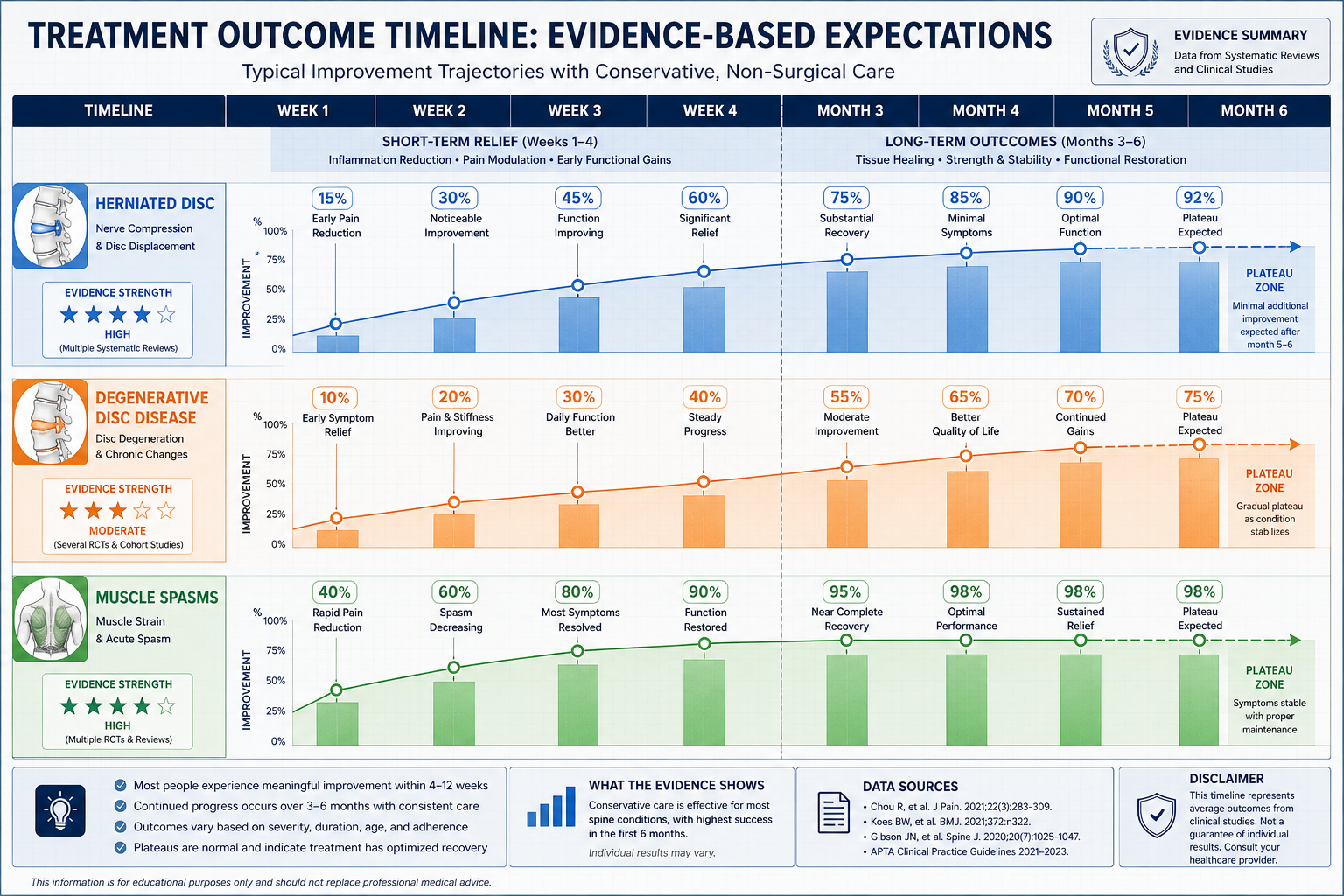
Muscle spasms show the fastest initial response, with 70-85% of users reporting improvement within the first week. Herniated discs demonstrate moderate initial response, with 40-50% experiencing relief by week 3-4. Degenerative disc disease shows the slowest initial response, with only 20-30% reporting meaningful improvement before week 6.
This pattern reflects the underlying pathophysiology. Muscle spasms involve functional rather than structural problems, allowing rapid response to mechanical intervention. Herniated discs require time for inflammation reduction and disc material retraction. Degenerative disc disease involves permanent structural changes that respond slowly to symptomatic management.
Long-Term Outcome Patterns (Months 3-6)
The long-term pattern reverses the short-term hierarchy. Herniated discs maintain the highest sustained improvement rates, with 60-70% of users reporting continued benefit at 6 months. Degenerative disc disease shows moderate sustained benefit, with 40-50% maintaining improvement through consistent ongoing therapy. Muscle spasms demonstrate the lowest sustained benefit, with only 20-30% maintaining improvement without ongoing intervention.
The plateau effect explains why initial improvements often stall after 3-6 months, requiring protocol adjustments to maintain progress.
Factors Influencing Long-Term Success
Several factors determine whether short-term relief translates into long-term benefit. Consistency of use ranks as the primary predictor, with users maintaining regular sessions showing 2-3 times higher sustained improvement rates. Complementary interventions (exercise, posture correction, weight management) increase sustained benefit by 40-60%.
Condition severity significantly impacts long-term outcomes. Mild-to-moderate cases maintain improvement more successfully than severe cases. Acute conditions (less than 3 months duration) respond better than chronic conditions (more than 6 months duration).
Safety Considerations and Contraindications by Diagnosis
Safety profiles vary across different spinal conditions. Herniated discs require careful monitoring for symptom aggravation, particularly during the initial progression phase. Users should discontinue therapy if radicular symptoms worsen or new neurological deficits develop.
Degenerative disc disease patients face increased risk of facet joint irritation with aggressive inversion angles. Advanced DDD with significant bone spur formation may experience increased pain with inversion therapy. Complete medical contraindications must be reviewed before starting therapy.
Muscle spasm patients generally face the lowest risk profile, though users should avoid inversion during acute severe spasm episodes that prevent comfortable positioning. Gradual progression prevents triggering protective muscle guarding responses.
All users must avoid inversion therapy with uncontrolled hypertension, glaucoma, retinal detachment history, pregnancy, or cardiovascular disease. These contraindications apply regardless of the specific spinal diagnosis.
Combining Inversion Therapy with Other Interventions
Inversion therapy produces superior results when combined with complementary interventions rather than used as standalone treatment. The specific combination strategy varies by diagnosis.
Herniated Disc Combination Strategies
Herniated disc patients benefit from combining inversion therapy with McKenzie exercises, which promote centralization of disc material. Anti-inflammatory protocols (ice therapy, NSAIDs, anti-inflammatory nutrition) enhance the decompression effects. Core stabilization exercises prevent recurrence once acute symptoms resolve.
Physical therapy focusing on directional preference movements amplifies inversion benefits. Nutrition strategies that boost results support tissue healing and reduce systemic inflammation.
DDD Combination Strategies
Degenerative disc disease requires comprehensive lifestyle modification alongside inversion therapy. Weight management reduces axial loading on compromised discs. Posture correction minimizes asymmetric disc loading throughout daily activities. Targeted strengthening exercises improve spinal stability and reduce compensatory strain.
Supplementation with glucosamine, chondroitin, and omega-3 fatty acids may support disc health, though evidence remains mixed. Adequate hydration maintains disc hydration status, potentially slowing degeneration progression.
Muscle Spasm Combination Strategies
Muscle spasm patients achieve best results combining inversion therapy with heat therapy, massage, and stretching protocols. Ergonomic modifications address underlying postural stressors that trigger spasm episodes. Stress management techniques reduce tension-related muscle guarding.
Addressing pain beyond back issues helps users develop comprehensive pain management strategies that extend beyond isolated inversion sessions.
When Inversion Therapy Fails: Recognizing Non-Responders
Not all patients respond favorably to inversion therapy. Recognizing non-responders early prevents wasted time and resources on ineffective interventions.
Herniated Disc Non-Responders
Herniated disc patients who show no improvement after 6-8 weeks of consistent therapy likely fall into the non-responder category. Large sequestered fragments that have migrated away from the disc space respond poorly to traction forces. Central canal stenosis with herniation creates mechanical compression that traction cannot adequately address.
Patients experiencing symptom aggravation (increased radicular pain, new numbness, progressive weakness) should discontinue inversion therapy and pursue alternative interventions. These warning signs suggest the herniation requires more aggressive treatment, potentially including epidural injections or surgical consultation.
DDD Non-Responders
Degenerative disc disease patients showing no improvement after 12 weeks of consistent therapy likely require alternative management strategies. Advanced degeneration with complete disc collapse and bone-on-bone contact responds minimally to traction forces. Multi-level DDD often shows poor response compared to single-level involvement.
Users experiencing increased pain with inversion therapy should reduce angles and duration. If symptoms persist despite modifications, alternative interventions (physical therapy, pain management, surgical consultation) warrant consideration.
Muscle Spasm Non-Responders
Muscle spasm patients who show no improvement within 2-3 weeks likely have underlying structural pathology rather than isolated muscle dysfunction. These cases require comprehensive diagnostic evaluation to identify hidden disc herniations, facet joint arthropathy, or other structural causes.
Persistent spasms despite consistent inversion therapy suggest the need for trigger point injections, muscle relaxant medications, or intensive physical therapy rather than continued isolated inversion sessions.
Cost-Benefit Analysis by Diagnosis
The financial investment in inversion therapy equipment varies from $100-$600 for quality home units. Evaluating cost-effectiveness requires considering the likelihood of benefit for each specific diagnosis.
Herniated Disc Cost-Effectiveness
Herniated disc patients demonstrate the highest cost-effectiveness ratio. With 60-70% response rates and potential surgery avoidance, the investment typically pays for itself within 2-3 months compared to ongoing physical therapy costs or surgical intervention expenses.
Quality inversion tables last 5-10 years with proper maintenance, providing long-term value for users managing recurrent herniation episodes or preventing future occurrences.
DDD Cost-Effectiveness
Degenerative disc disease presents moderate cost-effectiveness. The 40-50% response rate and requirement for ongoing long-term use means users must commit to consistent therapy to justify the investment. However, compared to ongoing pain medication costs or repeated physical therapy visits, inversion therapy provides reasonable value for responders.
Non-responders waste the full equipment investment, making a trial period with return option advisable before committing to long-term ownership.
Muscle Spasm Cost-Effectiveness
Muscle spasm patients face the most variable cost-effectiveness profile. Rapid initial response suggests high value, but the high recurrence rate and need for ongoing intervention means users must maintain consistent long-term use to justify the investment.
Alternative interventions (massage therapy, physical therapy, ergonomic modifications) may provide superior long-term value for users unable to maintain consistent inversion therapy schedules.
Practical Implementation: Creating Your Diagnosis-Specific Protocol
Successful inversion therapy requires tailoring protocols to your specific diagnosis rather than following generic recommendations.
Herniated Disc Protocol
Week 1-2: Start at 20 degrees for 2 minutes twice daily. Focus on comfortable positioning without pain aggravation. Week 3-4: Progress to 40 degrees for 5 minutes twice daily. Monitor for centralization of symptoms (pain moving from leg toward spine, indicating improvement). Week 5-8: Advance to 60 degrees for 10 minutes twice daily. Combine with McKenzie extension exercises.
Month 3-6: Maintain 60-90 degrees for 10-15 minutes daily. Reduce frequency to 4-5 times weekly as symptoms improve. Continue core strengthening exercises to prevent recurrence.
DDD Protocol
Week 1-4: Start at 30 degrees for 5 minutes twice daily. Emphasize gentle sustained traction rather than aggressive angles. Week 5-8: Progress to 45 degrees for 8 minutes twice daily. Focus on morning sessions to counteract overnight disc compression. Week 9-12: Advance to 60 degrees for 10 minutes twice daily.
Long-term: Maintain daily sessions indefinitely for symptom management. Adjust angles and duration based on symptom fluctuations. Combine with weight management and posture correction for optimal results.
Muscle Spasm Protocol
Day 1-7: Use 20-30 degrees for 10 minutes twice daily during acute spasm episodes. Combine with heat therapy before inversion sessions. Week 2-4: Progress to 40 degrees for 12 minutes twice daily. Add gentle stretching exercises after inversion sessions.
Maintenance: Reduce to 3-4 sessions weekly once acute symptoms resolve. Maintain moderate angles (30-45 degrees) rather than progressing to extreme angles. Focus on consistency rather than intensity.
Monitoring Progress and Adjusting Your Approach
Objective progress tracking determines whether inversion therapy provides meaningful benefit for your specific diagnosis. Subjective pain ratings alone provide insufficient data for decision-making.
Herniated Disc Progress Markers
Track radicular symptoms (leg pain, numbness, tingling) separately from axial back pain. Successful treatment shows progressive centralization, with symptoms moving from distal leg toward the spine. Measure straight leg raise angle weekly—improvement indicates reduced nerve tension.
Document neurological function (strength, reflexes, sensation) weekly. Any deterioration warrants immediate medical consultation regardless of pain improvement. Understanding when inversion hurts your back helps distinguish normal adaptation soreness from harmful aggravation.
DDD Progress Markers
Track morning stiffness duration and severity using a 0-10 scale. Successful treatment shows gradual reduction in morning symptoms over 8-12 weeks. Measure functional capacity (walking distance, standing tolerance, activity limitations) monthly.
Document medication usage (frequency and dosage of pain relievers). Successful treatment allows gradual medication reduction. Stable symptoms without improvement after 12 weeks suggests non-responder status.
Muscle Spasm Progress Markers
Track spasm frequency, intensity, and duration using a daily log. Successful treatment shows rapid reduction in all three parameters within 1-2 weeks. Measure range of motion (forward flexion, lateral bending, rotation) weekly using objective measurements.
Document trigger activities that provoke spasms. Successful treatment increases tolerance to previously problematic activities. Persistent spasms despite 3-4 weeks of consistent therapy warrant diagnostic evaluation for underlying structural pathology.
The Role of Professional Guidance in Diagnosis-Specific Treatment
While inversion therapy serves as effective home-based treatment, professional guidance optimizes outcomes and prevents complications. The level of professional involvement varies by diagnosis complexity.
When to Seek Professional Guidance
Herniated disc patients benefit from initial physical therapy evaluation to confirm diagnosis, rule out red flags, and establish baseline measurements. Follow-up consultation at 6-8 weeks assesses progress and determines whether continued conservative management remains appropriate.
Degenerative disc disease patients require comprehensive evaluation including imaging studies to assess degeneration severity and identify contraindications. Ongoing monitoring by healthcare providers ensures appropriate progression and identifies complications early.
Muscle spasm patients with isolated symptoms may safely begin inversion therapy without professional guidance. However, persistent or recurrent spasms warrant medical evaluation to identify underlying causes requiring specific treatment.
Conclusion
Inversion Tables for Specific Diagnoses: Herniated Discs, Degenerative Disc Disease, and Muscle Spasms Compared reveals significant variation in evidence quality, response rates, and long-term outcomes across different spinal conditions. Herniated discs demonstrate the strongest evidence base with 60-70% of users achieving substantial relief and potential surgery avoidance. Degenerative disc disease shows moderate benefit as ongoing symptom management rather than curative treatment. Muscle spasms respond most rapidly but require consistent long-term intervention to maintain benefits.
Success requires matching your protocol to your specific diagnosis rather than following generic recommendations. Herniated disc patients should focus on progressive angle advancement with McKenzie exercises. DDD patients benefit from moderate angles with consistent daily sessions and comprehensive lifestyle modification. Muscle spasm patients achieve optimal results with moderate angles, longer duration sessions, and complementary interventions addressing underlying causes.
Set realistic expectations based on your diagnosis. Herniated discs offer the highest probability of substantial improvement and potential long-term resolution. DDD requires accepting inversion therapy as ongoing symptom management rather than cure. Muscle spasms demand consistent intervention and addressing root causes to prevent recurrence.
Take action by implementing a diagnosis-specific protocol today. Start conservatively with appropriate angles and duration for your condition. Track objective progress markers weekly to determine whether inversion therapy provides meaningful benefit. Combine inversion with complementary interventions for superior results. Seek professional guidance when progress stalls or symptoms worsen.
The evidence clearly demonstrates that inversion therapy effectiveness depends entirely on matching the intervention to your specific spinal pathology. Understanding these diagnosis-specific differences empowers you to make informed decisions about whether inversion therapy represents an appropriate investment for your particular condition.
SEO Meta Title: Inversion Tables: Herniated Discs vs DDD vs Muscle Spasms