Zomato CEO Deepinder Goyal has invested $25 million of his personal fortune into a radical theory: standing upright accelerates brain aging by restricting blood flow, and a wearable device called Temple can measure—and potentially reverse—this decline.[3] The Gravity Aging Hypothesis Explained: Can Deepinder Goyal’s Temple Device Actually Reverse Aging? has sparked intense debate between billionaire-backed innovation and established medical science. Think of your brain like a garden on a hillside—gravity naturally drains water downward, leaving the plants at the top struggling for nourishment.
This article examines the scientific foundation, device mechanics, and expert criticism surrounding this controversial aging intervention theory.
Key Takeaways
- The Gravity Aging Hypothesis proposes that upright posture reduces brain blood flow, accelerating cognitive decline over decades
- Temple device measures temporal artery blood flow through a wearable sensor, though experts question its scientific validity
- Inversion therapy claims suggest 10 minutes daily increased brain blood flow by 7% over six weeks, potentially offsetting a decade of aging
- No peer-reviewed research supports the device’s efficacy, and medical experts warn against premature adoption
- Scientific criticism focuses on flawed methodology, unvalidated biomarkers, and lack of clinical trial data
Understanding the Gravity Aging Hypothesis and Its Scientific Foundation
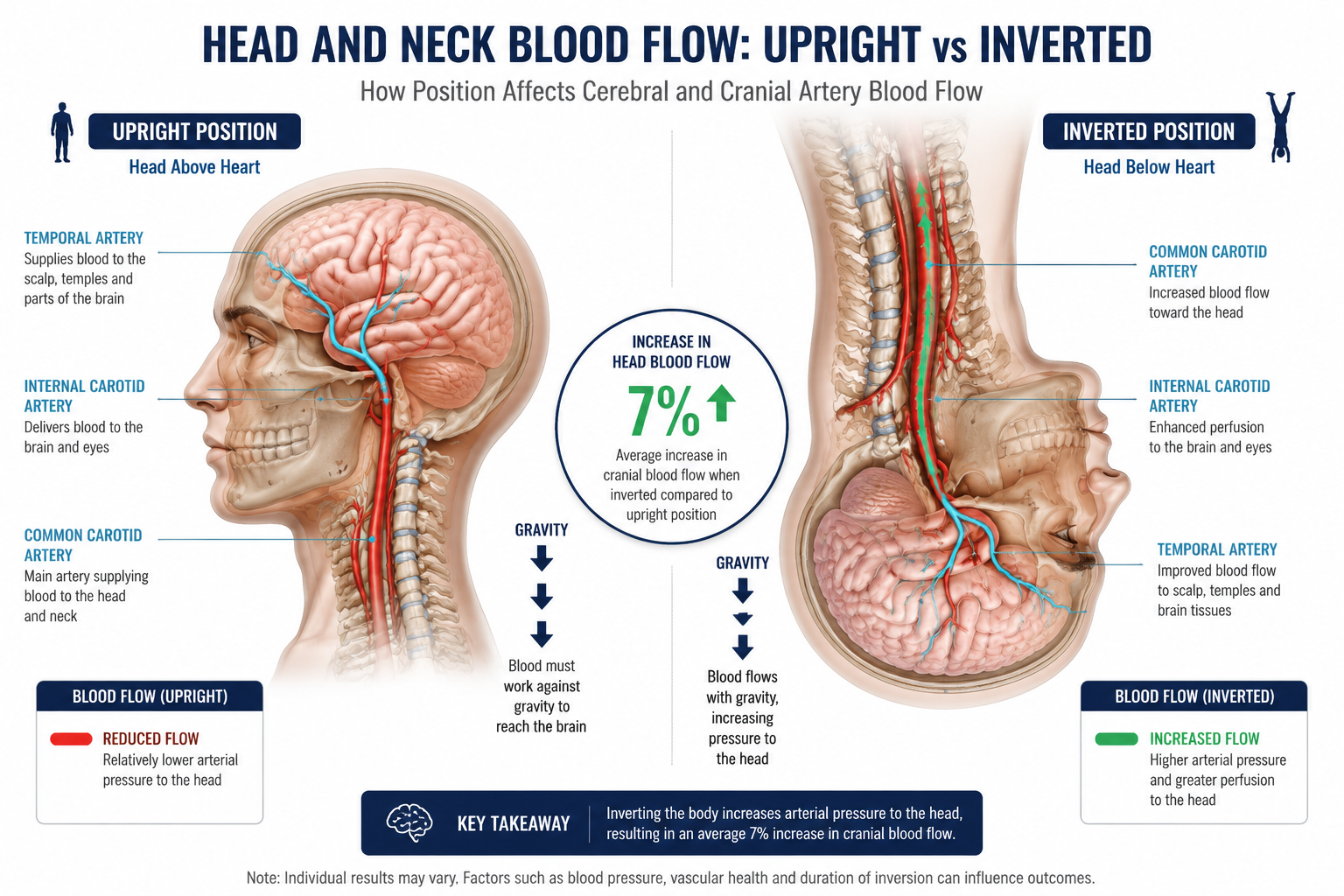
The Gravity Aging Hypothesis presents a straightforward premise: constant gravitational pull on the human body reduces blood flow to the brain when standing upright, potentially accelerating age-related cognitive decline.[1] Deepinder Goyal developed this theory outside traditional academic channels, investing heavily through his Continue Research initiative to test these concepts.
How Gravity Affects Brain Blood Flow
The hypothesis centers on a mechanical understanding of circulation. When humans stand upright, the heart must pump blood against gravity to reach the brain. Over decades, this constant resistance may contribute to reduced cerebral perfusion, particularly as cardiovascular efficiency naturally declines with age.[2]
Goyal’s research team conducted experiments using inversion therapy to test this theory. Participants used inversion tables—devices that tilt users upside down—for 10 minutes daily over six weeks. The team reported approximately a 7% increase in average brain blood flow, which Goyal claims might offset what would typically represent a decade’s worth of age-related decline.[2]
The Temple Device: Design and Function
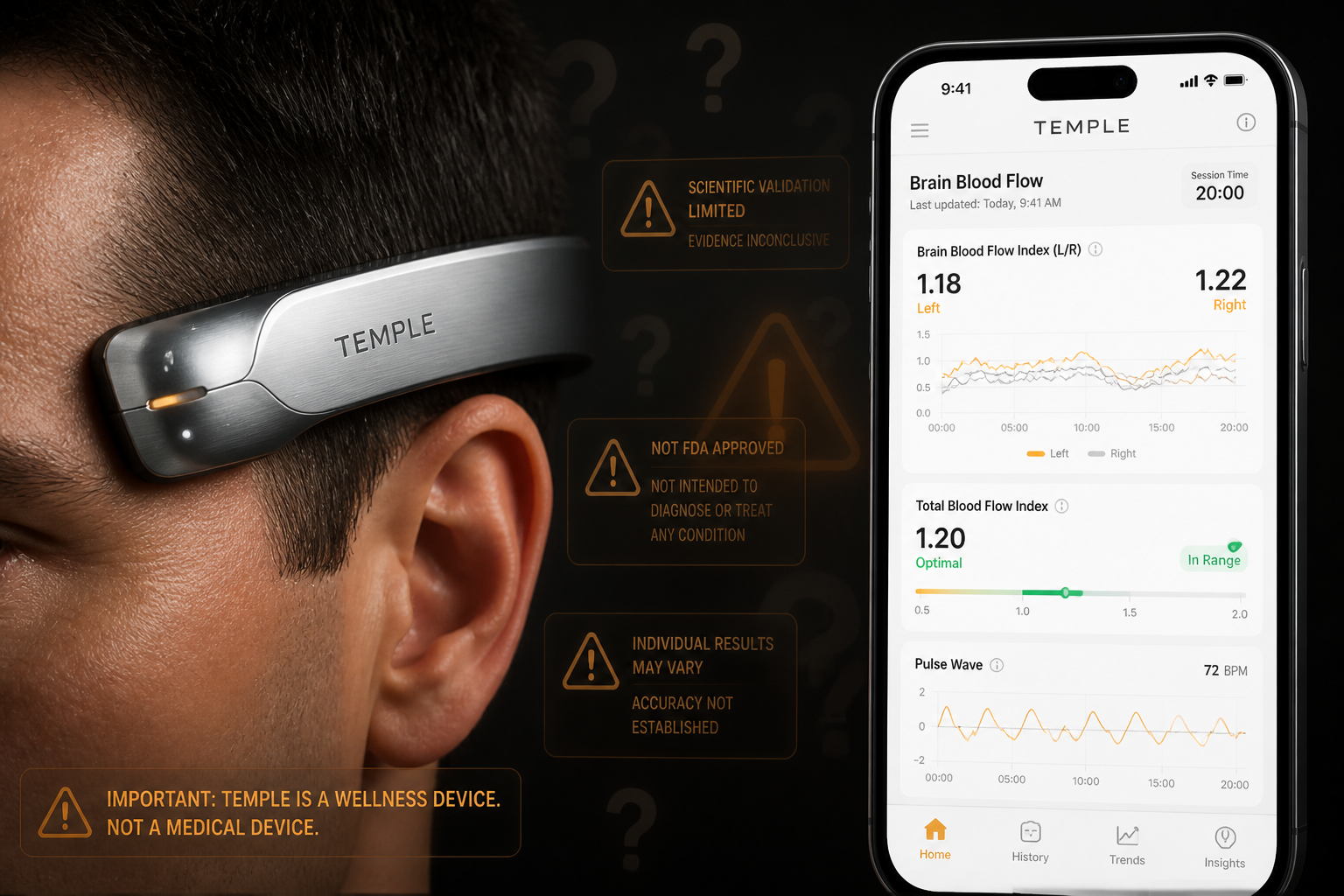
Temple represents Goyal’s attempt to create a consumer-grade monitoring tool for this hypothesis. The device is compact, lightweight, and worn near the temple region of the head.[2] It measures blood flow through the temporal artery, providing users with data about their cerebral circulation patterns.
Goyal announced he had personally used the Temple device for approximately one year as of late 2025.[1] The device aims to track changes in brain blood flow over time, theoretically allowing users to monitor the effectiveness of interventions like inversion therapy.
Connection to Inversion Therapy Benefits
The hypothesis directly connects to established spinal decompression practices. Inversion tables have long been used for back pain relief and spine decompression, but Goyal’s research proposes an additional benefit: enhanced brain blood flow during inversion.
When users position themselves head-below-heart on an inversion table, gravity assists blood flow toward the brain rather than working against it. This temporary reversal of gravitational effects forms the practical intervention component of the hypothesis. Those interested in trying this approach should consult our complete guide to choosing an inversion table and learn how to use an inversion table safely.
Scientific Criticism: Can Deepinder Goyal’s Temple Device Actually Reverse Aging?
The question “Can Deepinder Goyal’s Temple Device Actually Reverse Aging?” faces substantial scientific skepticism. Medical experts have raised serious concerns about methodology, validation, and premature commercialization.
Lack of Peer-Reviewed Research
Goyal has not published peer-reviewed research or clinical trial data supporting the Temple device’s efficacy or safety.[1] This absence of scientific validation represents a critical gap. Peer review serves as medicine’s quality control mechanism, ensuring claims undergo rigorous independent evaluation before reaching consumers.
The scientific community requires reproducible results, controlled studies, and statistical validation before accepting new medical interventions. Temple currently lacks all three elements.
Methodological Flaws in Measurement
Dr. Datta, a cardiovascular expert, emphasized that the only scientifically validated marker for predicting cardiovascular mortality is carotid-femoral pulse wave velocity (cfPWV).[1] Using the temporal artery as a surrogate—as Temple does—introduces confounding factors and lacks accuracy.
The temporal artery provides convenient access for a wearable device, but convenience doesn’t equal validity. Blood flow measurements at this location may not accurately reflect overall cerebral perfusion. Multiple factors influence temporal artery readings, including:
- Local temperature variations
- Skin thickness differences
- Individual anatomical variations
- Device positioning inconsistencies
- External pressure from the wearable
Experts note that accurately measuring brain blood flow through a wearable device presents exceptional technical challenges.[2] Established medical methods use sophisticated imaging technologies like MRI or Doppler ultrasound, not consumer wearables.
Expert Warnings and Pseudoscience Concerns
Dr. Datta issued a direct warning: “Do not waste your hard earned money to buy fancy toys billionaires can afford to waste money on.”[1] This statement reflects broader concern about premature hype surrounding unproven devices.
The hypothesis has been called pseudoscience by experts, particularly because it originated from someone outside the scientific community rather than through established research channels.[3] While outsider innovation occasionally produces breakthroughs, it more often generates unfounded claims that exploit consumer hope.
Safety Considerations for Inversion Therapy
Even if the blood flow claims prove valid, inversion therapy carries significant risks for certain populations. Our guide on who should NOT use an inversion table details important cardiovascular contraindications and medical contraindications.
Individuals with high blood pressure, glaucoma risks, or certain cardiovascular conditions should avoid inversion therapy entirely. The 5 dangers of inversion tables include increased ocular pressure, cardiovascular stress, and potential injury from improper use.
Current Status and Future Availability
As of 2026, Goyal has not announced a launch date, price, availability, or detailed technical specifications for the Temple device.[2] This lack of concrete information raises additional concerns about the project’s viability and timeline.
The $25 million investment demonstrates serious commitment, but financial backing alone doesn’t validate scientific claims. The device remains in development, with no clear path to regulatory approval or commercial distribution.
What This Means for Back Pain Sufferers
For individuals seeking back pain relief, sciatica treatment, or lumbar pain relief, established inversion therapy offers proven benefits unrelated to the aging hypothesis. The results from proper inversion table use for spinal health remain well-documented.
Those interested in maximizing their inversion therapy outcomes should explore how food choices boost inversion table results, focusing on evidence-based approaches rather than unproven anti-aging claims.
Conclusion
The Gravity Aging Hypothesis Explained: Can Deepinder Goyal’s Temple Device Actually Reverse Aging? reveals a fascinating intersection of billionaire-backed innovation and scientific skepticism. While the core concept—that gravity affects brain blood flow—contains logical elements, the Temple device lacks the peer-reviewed research, validated methodology, and clinical evidence required for medical credibility.
Actionable next steps:
- For back pain relief: Focus on established inversion therapy benefits with proven track records
- Before trying inversion: Review safety guidelines and contraindications thoroughly
- For device purchases: Wait for peer-reviewed research before investing in unproven anti-aging technology
- Consult healthcare providers: Discuss any new therapy approach with qualified medical professionals
The Temple device may eventually prove valuable, but current evidence doesn’t support its anti-aging claims. Consumers should prioritize proven spinal health interventions over speculative technology until rigorous scientific validation emerges.
References
[1] Deepinder Goyal Temple Device Scientific Criticism Explained – https://www.thequintint.com/news/breaking-news/deepinder-goyal-temple-device-scientific-criticism-explained
[2] Brain Blood Flow Could Slow Ageing – https://www.biotecnika.org/2025/12/brain-blood-flow-could-slow-ageing/
[3] Watch – https://www.youtube.com/watch?v=WE2n_eJGOP8