Nearly 48% of American adults live with high blood pressure, yet most remain unaware that a popular back pain relief device could trigger dangerous cardiovascular spikes within minutes. Inversion therapy flips your body upside down to decompress the spine—but this same gravity reversal forces blood toward your head and heart, creating measurable pressure increases that hypertension patients cannot ignore.
This complete safety guide addresses the critical gap between inversion therapy’s back pain promises and the cardiovascular risks that medical professionals flag for anyone with elevated blood pressure. Understanding Inversion Tables and Blood Pressure: A Complete Safety Guide for Hypertension Patients empowers you to make informed decisions about whether inversion therapy fits your health profile, or whether alternative treatments offer safer relief.
Key Takeaways
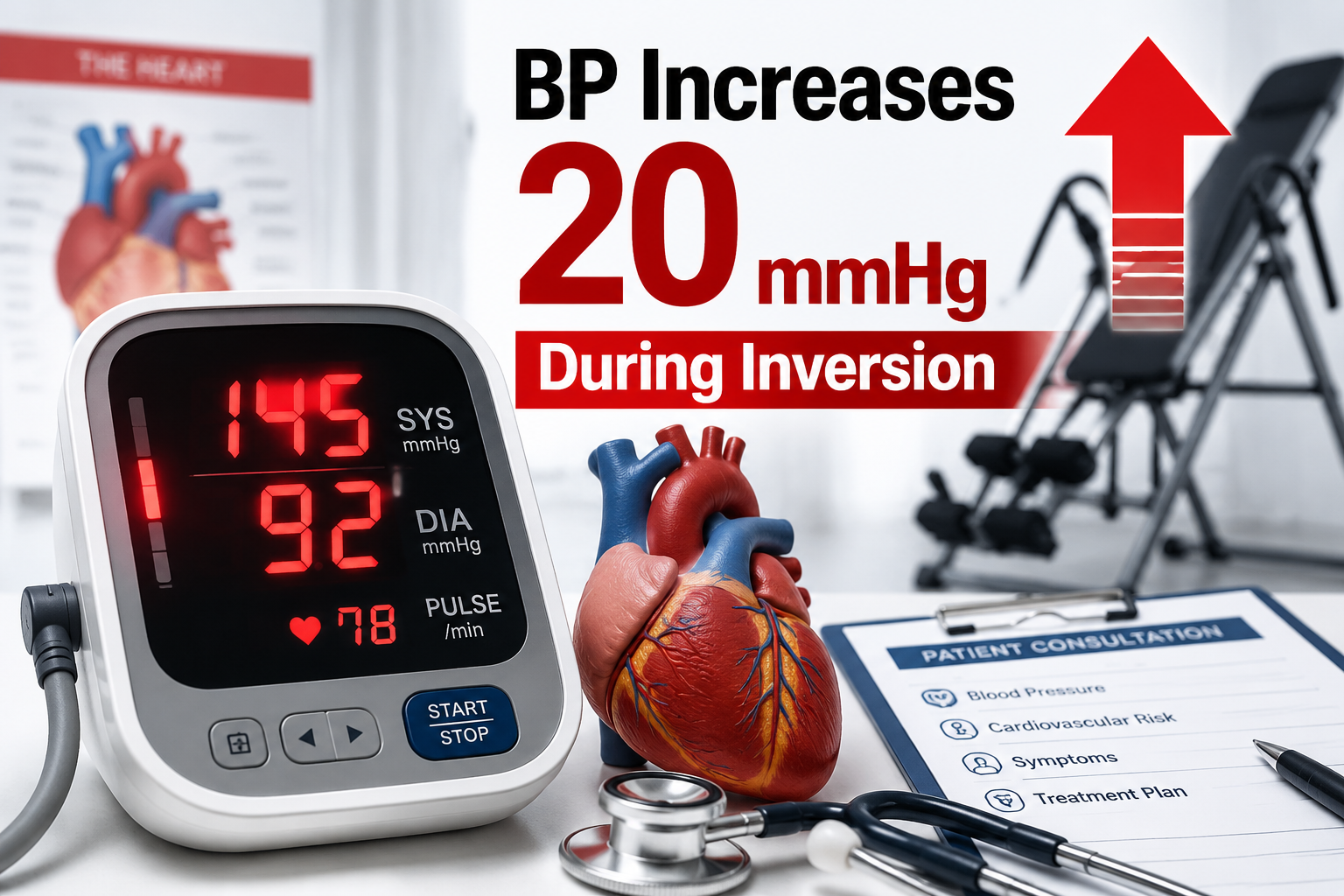
- Inversion therapy raises blood pressure by an average of 20 mm Hg within 7 minutes, making it contraindicated for people with uncontrolled hypertension
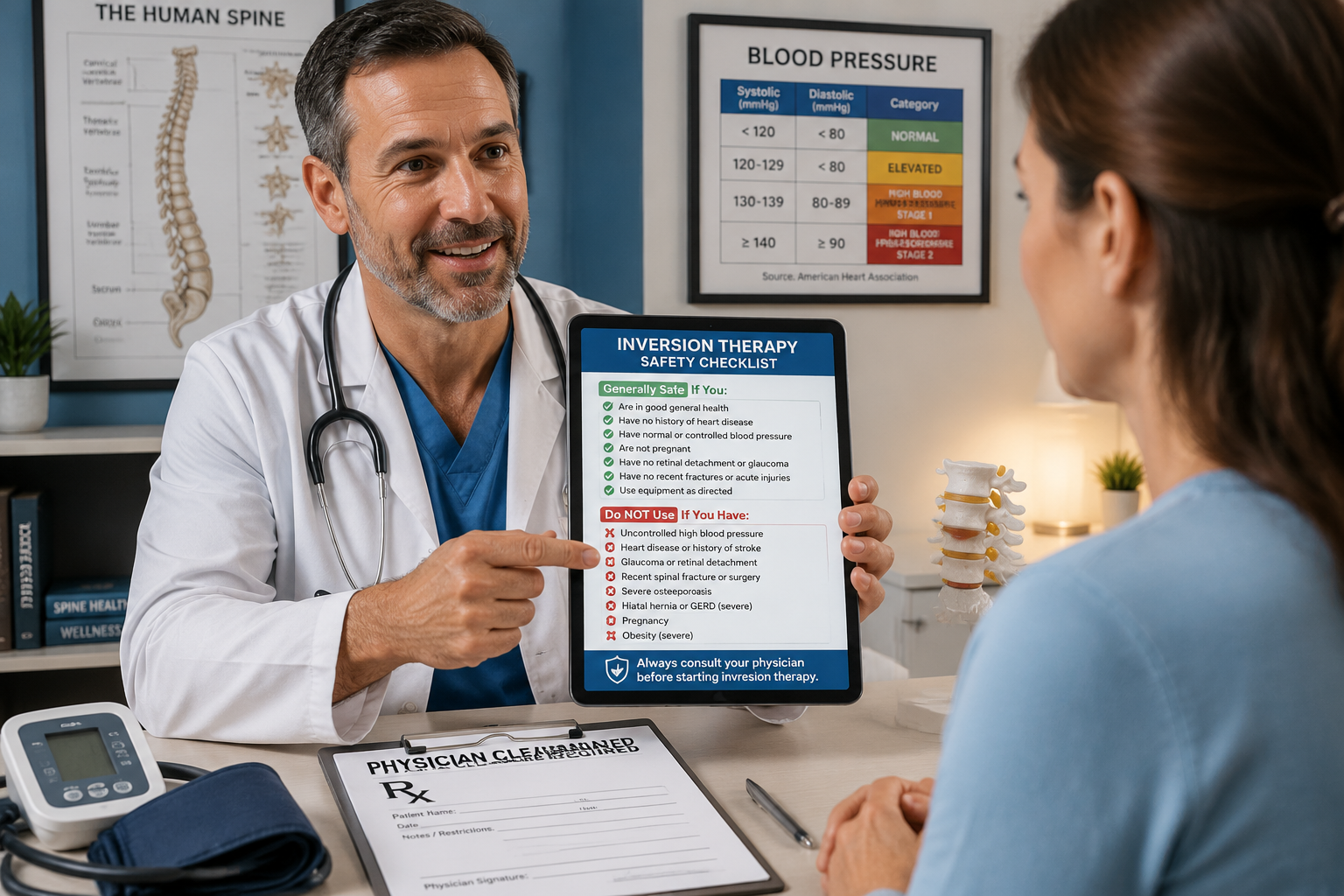
- Uncontrolled high blood pressure, glaucoma, heart disease, and stroke history represent absolute contraindications requiring physician clearance before any inversion use
- The 2025 AHA/ACC hypertension guidelines expand treatment thresholds, meaning more patients now qualify as high-risk and need stricter safety screening
- Progressive protocols starting at 20-30 degrees for 1-2 minutes may reduce cardiovascular stress, but only under medical supervision for hypertension patients
- No clinical evidence supports inversion therapy as a blood pressure treatment—it remains a spinal decompression tool with significant cardiovascular side effects
How Inversion Tables Affect Blood Pressure: The Physiological Reality
Think of your cardiovascular system as a water tower: gravity normally keeps pressure highest at the base (your feet) and lowest at the top (your head). Inversion flips that tower upside down, forcing your heart to pump against a reversed gradient.
The 20 mm Hg Spike: What Research Shows
A study published in the Journal of Orthopaedic & Sports Physical Therapy measured blood pressure changes in 18 healthy adults aged 22-31 during inversion traction. After just 7 minutes inverted, participants experienced an average systolic blood pressure increase of 20 mm Hg. Some individuals maintained elevated readings even after returning upright, depending on the inversion device used.
This 20 mm Hg increase matters significantly for hypertension patients. If your baseline blood pressure reads 140/90 mm Hg (stage 2 hypertension), inversion could push your systolic pressure to 160 mm Hg or higher—a level that substantially increases stroke and heart attack risk.
What Happens Inside Your Body During Inversion
When you tilt backward on an inversion table, several physiological changes occur simultaneously:
- Blood pools in your upper body and head, increasing intracranial pressure
- Your heart rate slows (bradycardia) as baroreceptors detect increased pressure
- Intraocular pressure rises, threatening optic nerve damage in glaucoma patients
- Venous return to the heart increases, forcing the cardiovascular system to work harder
These changes happen within 2-3 minutes of inversion, according to Mayo Clinic-cited research. The longer you remain inverted, the more pronounced these effects become.
Contraindications for Hypertension Patients: When Inversion Becomes Dangerous
Medical guidance consistently identifies specific cardiovascular conditions that make inversion therapy unsafe. The 5 dangers of inversion tables extend beyond back pain concerns to include serious cardiovascular risks.
Absolute Contraindications Requiring Physician Clearance
Uncontrolled high blood pressure tops every safety list. Major inversion table manufacturers, including Teeter, explicitly state that people with uncontrolled hypertension should not use inversion therapy without medical approval. “Uncontrolled” means blood pressure readings consistently above target ranges despite medication.
Additional absolute contraindications include:
- ⚠️ Narrow-angle glaucoma (inversion raises intraocular pressure)
- ⚠️ Heart disease (increased cardiac workload during inversion)
- ⚠️ History of stroke (elevated intracranial pressure poses recurrence risk)
- ⚠️ Blood clots or clotting disorders (inversion may dislodge existing clots)
- ⚠️ Recent cardiovascular surgery (healing tissues cannot withstand pressure changes)
The 2025 AHA/ACC Guidelines: Why More Patients Now Qualify as High-Risk
The American Heart Association and American College of Cardiology released updated hypertension guidelines in 2025, fundamentally changing who receives aggressive blood pressure treatment. The new guidance:
- Adopts the PREVENT risk calculator, which incorporates kidney function, statin use, and social determinants of health
- Recommends medication for stage 1 hypertension (130/80 to 139/89 mm Hg) patients with elevated cardiovascular risk
- Prescribes two blood pressure medications as initial therapy for all adults with stage 2 hypertension (≥140/90 mm Hg)
- Emphasizes resistant hypertension (BP ≥140/90 despite three medications) as requiring advanced interventions like renal denervation
This expanded treatment approach means more Americans now fall into high-risk categories that contraindicate inversion therapy. If your physician recently intensified your blood pressure treatment, that clinical decision signals you should avoid inversion tables until your BP stabilizes.
Safe Inversion Protocols for Controlled Hypertension: A Progressive Approach
If your blood pressure remains consistently controlled (readings below 130/80 mm Hg on medication) and your physician provides explicit clearance, a progressive inversion protocol may minimize cardiovascular stress. This approach requires strict adherence to how to use an inversion table safely.
Week-by-Week Progressive Protocol
Weeks 1-2: Minimal Angle Adaptation
- Start at 20-30 degrees of inversion (not full inversion)
- Limit sessions to 1-2 minutes maximum
- Perform only once daily
- Monitor blood pressure before and after each session
Weeks 3-4: Gradual Angle Increase
- Progress to 40-50 degrees if no adverse symptoms occur
- Extend duration to 3-4 minutes
- Continue once-daily frequency
- Maintain blood pressure monitoring
Week 5+: Individualized Maintenance
- Advance to 60 degrees maximum (avoid full 90-degree inversion)
- Cap sessions at 5-7 minutes as outlined in safe duration guidelines
- Never exceed 2 sessions per day
- Document any blood pressure changes or symptoms
Warning Signs That Require Immediate Cessation
Stop inversion therapy immediately and contact your physician if you experience:
- 🚨 Severe headache or pressure sensation in your head
- 🚨 Vision changes, floaters, or eye pain
- 🚨 Chest pain, palpitations, or irregular heartbeat
- 🚨 Dizziness that persists after returning upright
- 🚨 Nosebleeds or facial flushing
- 🚨 Blood pressure readings elevated above your baseline
Alternative Back Pain Solutions for Hypertension Patients
The American College of Physicians notes a lack of clinical evidence supporting inversion therapy’s effectiveness for back pain. For hypertension patients, this weak evidence base combined with cardiovascular risks makes alternatives worth exploring.
Evidence-Based Alternatives Without Cardiovascular Risk
Physical Therapy and Manual Manipulation
Comparing inversion tables vs chiropractic care reveals that hands-on spinal manipulation offers decompression benefits without the blood pressure spikes. Physical therapists customize treatment to your cardiovascular limitations.
Anti-Inflammatory Nutrition Strategies
Food choices that boost back pain relief work synergistically with any treatment approach. Omega-3 fatty acids, turmeric, and anti-inflammatory diets reduce systemic inflammation without cardiovascular contraindications.
Targeted Exercise Programs
Core strengthening, flexibility training, and low-impact aerobic exercise address multiple causes of back pain while simultaneously improving cardiovascular health—a dual benefit inversion therapy cannot provide.
Heat and Massage Therapy
Therapeutic heat increases blood flow to injured tissues without the cardiovascular stress of inversion. Some patients explore inversion tables with heat and massage features, though the inversion component remains contraindicated for uncontrolled hypertension.
Medical Consultation: Questions to Ask Your Physician
Before considering inversion therapy, schedule a dedicated consultation with your cardiologist or primary care physician. Prepare these specific questions:
“What is my current blood pressure classification under the 2025 AHA/ACC guidelines?”
Understanding whether you have stage 1, stage 2, or resistant hypertension determines your risk level.“Do I have any additional cardiovascular risk factors that contraindicate inversion?”
Ask about glaucoma, retinopathy, carotid artery disease, or other conditions that inversion could worsen.“If my blood pressure is controlled, what monitoring protocol should I follow during inversion therapy?”
Request specific blood pressure thresholds that should trigger immediate cessation.“Are there alternative spinal decompression treatments you recommend instead?”
Your physician may suggest traction therapy, physical therapy, or other approaches with better safety profiles.“Should I adjust my blood pressure medication timing around inversion sessions?”
Some medications create additional dizziness or blood pressure variability that inversion could amplify.
Choosing the Right Equipment If Cleared for Use
If your physician provides explicit clearance for controlled inversion therapy, equipment selection becomes critical. The complete guide to choosing an inversion table emphasizes safety features that matter most for cardiovascular patients.
Essential Safety Features for Hypertension Patients
Precise Angle Control
Look for tables with adjustable angle limiters that lock at specific degrees. This feature prevents accidental full inversion and allows you to maintain the conservative 20-60 degree range appropriate for controlled hypertension.
Easy Return Mechanism
Tables with spring-loaded return systems or easy-reach handles enable quick return to upright position if you experience warning symptoms. Struggling to return upright extends the duration of elevated blood pressure.
Comfortable Restraint System
Ankle locks should secure your body without creating pressure points that could trigger anxiety or discomfort—both of which can spike blood pressure independent of the inversion angle.
Weight Capacity and Stability
Obesity represents an additional cardiovascular risk factor. Choose tables rated well above your body weight to ensure stability throughout the inversion range.
The Bottom Line: Risk vs. Benefit for Hypertension Patients
Inversion Tables and Blood Pressure: A Complete Safety Guide for Hypertension Patients delivers a clear message: the cardiovascular risks of inversion therapy outweigh potential back pain benefits for most people with elevated blood pressure. The 20 mm Hg average pressure increase documented in healthy young adults likely represents a best-case scenario—older adults with existing hypertension may experience even greater spikes.
The 2025 AHA/ACC guidelines’ expanded treatment thresholds mean more Americans now take blood pressure medication and qualify as high-risk for inversion therapy. This clinical reality demands that hypertension patients prioritize physician consultation before attempting any inversion protocol.
For those with uncontrolled hypertension, glaucoma, heart disease, or stroke history, inversion therapy remains contraindicated regardless of back pain severity. Alternative treatments offer safer pathways to relief without the cardiovascular stress that inversion creates.
Conclusion
Inversion tables create measurable blood pressure increases that pose serious risks for hypertension patients. The physiological reality—a 20 mm Hg average systolic spike within 7 minutes—transforms a back pain tool into a potential cardiovascular hazard for millions of Americans living with elevated blood pressure.
The 2025 AHA/ACC hypertension guidelines expand the population considered high-risk, making physician consultation non-negotiable before attempting inversion therapy. Even patients with controlled hypertension require explicit medical clearance, progressive protocols starting at minimal angles, and continuous blood pressure monitoring.
Your next steps:
- Schedule a consultation with your cardiologist or primary care physician to discuss your specific cardiovascular risk profile
- Document your current blood pressure readings over 2-3 weeks to establish your baseline control level
- Explore evidence-based alternatives like physical therapy, anti-inflammatory nutrition, and targeted exercise programs
- If cleared for inversion, follow the progressive protocol outlined in this guide and never exceed conservative angle and duration limits
- Invest in proper equipment with precise angle control and easy return mechanisms if you receive medical approval
Inversion therapy may offer spinal decompression benefits for some patients, but those benefits never justify ignoring cardiovascular contraindications. Your heart health takes precedence over back pain relief—a principle that should guide every treatment decision you make in 2026 and beyond.
SEO Meta Title: Inversion Tables & Blood Pressure: Safety Guide 2026