Approximately 31 million Americans experience back pain at any given time, yet many who turn to inversion tables never complete a proper medical screening first. This oversight transforms a therapeutic device into a potential health hazard. Understanding Inversion Table Safety: The Complete Medical Contraindications Checklist protects users from serious complications ranging from stroke to retinal detachment.
Think of inversion therapy like reversing water flow through a pipe—gravity suddenly pushes blood and fluid in the opposite direction, creating pressure where your body doesn’t expect it. Your cardiovascular system, eyes, and brain must handle this reversal, and certain medical conditions make this shift dangerous.
Key Takeaways
- Cardiovascular conditions including hypertension, heart disease, and blood clots represent absolute contraindications requiring physician clearance before inversion therapy
- Eye diseases such as glaucoma and retinal detachment history create dangerous pressure increases that can cause permanent vision damage
- Bone fragility conditions like osteoporosis, recent fractures, and spinal surgery make inversion mechanically unsafe due to structural weakness
- Pregnancy, recent surgery, and anticoagulant medications require mandatory medical consultation before attempting any inversion therapy
- Stop-immediately symptoms include dizziness, visual changes, one-sided weakness, or stroke-like signs that demand emergency medical evaluation
Understanding Inversion Table Safety: The Complete Medical Contraindications Checklist
The American College of Physicians found insufficient clinical evidence supporting inversion therapy’s effectiveness for back pain in their 2017 guidelines. Despite this, millions of people purchase inversion tables annually. This disconnect between evidence and usage makes proper safety screening critical.
Contraindications fall into two categories: absolute (never use without physician approval) and relative (proceed with extreme caution and medical guidance). The distinction matters because absolute contraindications carry risks of serious injury or death, while relative contraindications may become safe under specific medical supervision.
Cardiovascular Contraindications That Demand Medical Clearance
Your heart and blood vessels face immediate stress during inversion. Blood pressure rises as gravity forces more blood toward your head and chest. This physiological change creates dangerous situations for specific conditions.
High blood pressure (hypertension) tops the contraindication list. Inversion increases blood pressure further, potentially triggering hypertensive crisis, stroke, or heart attack. Even controlled hypertension requires physician evaluation before starting therapy. Learn more about cardiovascular contraindications specific to inversion equipment.
Heart disease in any form—coronary artery disease, heart failure, arrhythmias, or valve disorders—creates risk during inversion. The increased cardiac workload from reversed blood flow can precipitate cardiac events. Recent heart attack survivors face particularly high risk.
Blood clots and clotting disorders present life-threatening complications. Inversion can dislodge existing clots, causing pulmonary embolism or stroke. Patients taking anticoagulants (blood thinners like warfarin, Eliquis, or Xarelto) face increased bleeding risk, particularly intracranial hemorrhage.
Stroke history or transient ischemic attack (TIA) survivors must avoid inversion therapy. The pressure changes can trigger recurrent stroke, especially in patients with compromised cerebrovascular circulation. Even minor stroke-like symptoms during inversion—one-sided weakness, numbness, confusion, or vision changes—require immediate medical attention.
Eye and Neurological Conditions That Create Dangerous Pressure
Inversion dramatically increases intracranial pressure and pressure behind the eyes. This mechanical effect makes certain conditions extremely dangerous.
Glaucoma patients face potential vision loss from inversion. The disease already involves elevated eye pressure damaging the optic nerve. Inversion adds additional pressure that can accelerate damage or trigger acute glaucoma attacks. Even well-controlled glaucoma requires ophthalmologist clearance before attempting inversion.
Retinal detachment history represents an absolute contraindication. The increased eye pressure during inversion can cause re-detachment, leading to permanent blindness. Patients with high myopia (severe nearsightedness) also face elevated retinal detachment risk.
Chronic sinus or ear disease worsens during inversion as fluid accumulates in already congested areas. Severe headaches, particularly migraines or cluster headaches, often intensify with inversion due to increased intracranial pressure.
Brain injury history including concussion, traumatic brain injury, or prior intracranial bleeding makes inversion dangerous. The pressure changes can trigger bleeding, worsen existing damage, or cause new neurological symptoms. For comprehensive guidance on safe usage, review our complete guide to using an inversion table safely.
Bone, Spine, and Structural Contraindications
Inversion creates mechanical stress on your skeletal system. Weakened bones or compromised spinal structures cannot safely handle these forces.
Osteoporosis makes bones fragile and prone to fracture. The gravitational forces during inversion can cause vertebral compression fractures, hip fractures, or other skeletal injuries. Even osteopenia (pre-osteoporosis) requires medical evaluation before inversion therapy.
Recent fractures, sprains, or strains need complete healing before inversion. The mechanical stress can re-injure healing tissue or prevent proper recovery. Most orthopedic surgeons recommend waiting 6-12 months after fracture before considering inversion.
Spinal surgery history including fusion, disc replacement, or instrumentation requires surgeon clearance. Hardware can fail under inversion stress, and surgical sites may not tolerate the forces. Patients with herniated discs compressing nerves should consult specialists before attempting inversion.
Severe scoliosis or spinal curvature creates uneven stress distribution during inversion. This asymmetry can worsen curvature or cause injury. Our guide on inversion tables for scoliosis explains the structural considerations.
Pregnancy, Obesity, and Other Critical Exclusions
Several conditions create unique risks that don’t fit traditional medical categories but remain equally important.
Pregnancy at any stage requires physician approval before inversion. The effects on fetal blood flow, maternal blood pressure, and abdominal pressure remain poorly studied. Most obstetricians recommend avoiding inversion entirely during pregnancy.
Severe obesity creates multiple challenges. Weight limits on inversion tables (typically 250-350 pounds) may be exceeded, causing equipment failure. Obesity also compounds cardiovascular risks and makes safe mounting/dismounting difficult.
Recent surgery of any type requires healing time before inversion. Abdominal surgery, hernia repair, and gallbladder or kidney procedures all face increased complication risk from inversion’s pressure changes.
Severe gastroesophageal reflux disease (GERD) worsens dramatically during inversion as stomach acid flows toward the esophagus. This can cause severe discomfort, aspiration risk, or esophageal damage.
Your Pre-Inversion Medical Screening Checklist
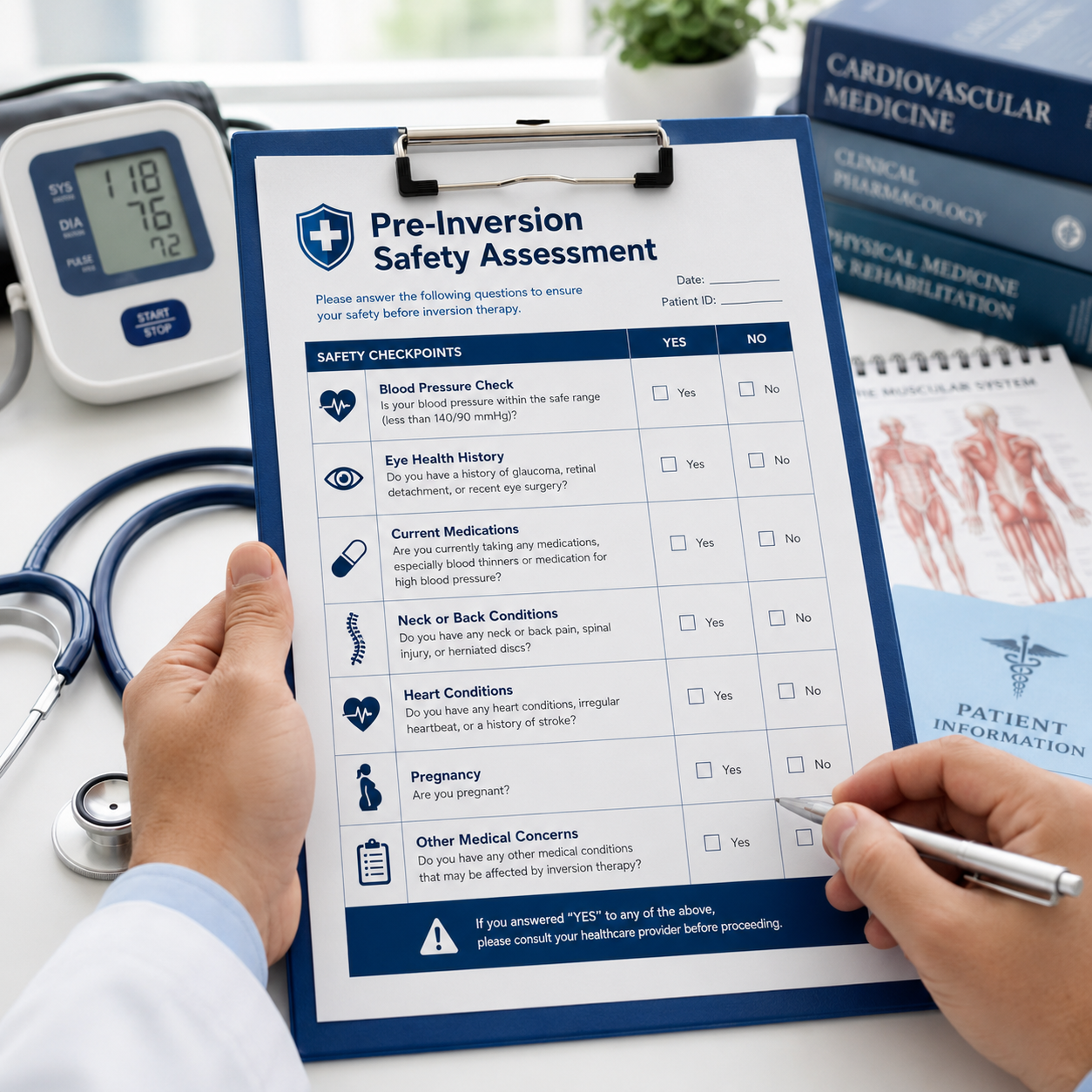
Before purchasing or using an inversion table, complete this comprehensive screening. Answer “yes” to any question means you need physician clearance before proceeding.
Cardiovascular System Check
- ❓ Do you have high blood pressure (hypertension), even if controlled with medication?
- ❓ Have you been diagnosed with any heart disease, including coronary artery disease, heart failure, or arrhythmias?
- ❓ Have you experienced a heart attack, stroke, or TIA (mini-stroke)?
- ❓ Do you have blood clots or a history of clotting disorders?
- ❓ Are you taking blood thinners (anticoagulants) like warfarin, Eliquis, Xarelto, or aspirin therapy?
Eye and Neurological System Check
- ❓ Have you been diagnosed with glaucoma or elevated eye pressure?
- ❓ Do you have a history of retinal detachment or severe nearsightedness?
- ❓ Do you experience severe or frequent headaches, migraines, or cluster headaches?
- ❓ Have you suffered a concussion, traumatic brain injury, or intracranial bleeding?
- ❓ Do you have chronic sinus infections or ear disease?
Bone and Spine System Check
- ❓ Have you been diagnosed with osteoporosis or osteopenia?
- ❓ Do you have any current fractures, sprains, or strains?
- ❓ Have you had spinal surgery, including fusion, disc replacement, or instrumentation?
- ❓ Do you have severe scoliosis or significant spinal curvature?
- ❓ Do you have surgically implanted orthopedic supports or hardware?
General Health and Safety Check
- ❓ Are you currently pregnant or could you be pregnant?
- ❓ Have you had recent surgery (within the past 6 months)?
- ❓ Do you have severe GERD or hiatal hernia?
- ❓ Do you have active gallbladder or kidney disease?
- ❓ Do you take medications that affect balance, alertness, or cognition?
- ❓ Do you have impaired balance or coordination from any cause?
If you answered “yes” to any question, schedule a consultation with your physician before using an inversion table. Bring this checklist to your appointment and discuss your specific risk factors.
Safe Duration and Progression Guidelines
Even without contraindications, proper technique matters. New users should start with minimal inversion angles (20-30 degrees) for short durations (1-2 minutes). Our guide on how long to use an inversion table safely provides detailed progression protocols.
Never exceed 60 degrees of inversion without specific medical guidance. Most therapeutic benefits occur at 40-60 degrees, and steeper angles dramatically increase risk without proportional benefit. The 30-day beginner progression guide helps new users build tolerance safely.
Warning Signs That Demand Immediate Action
Stop inversion immediately and seek medical evaluation if you experience:
- 🚨 Dizziness or lightheadedness that doesn’t resolve within seconds of returning upright
- 🚨 Visual changes including blurred vision, double vision, or seeing spots
- 🚨 Severe headache or pressure sensation in the head or eyes
- 🚨 Nosebleeds or blood spots in the eyes
- 🚨 Chest pain or irregular heartbeat
- 🚨 One-sided weakness or numbness (potential stroke symptoms)
- 🚨 Sudden confusion or difficulty speaking
- 🚨 Nausea or vomiting during or after inversion
These symptoms may indicate serious complications including stroke, retinal damage, or cardiovascular events. Don’t dismiss them as “normal adjustment” to inversion therapy.
Choosing Equipment With Safety Features
When selecting an inversion table, prioritize safety features that reduce risk. Look for:
- Adjustable angle control that locks at specific degrees
- Sturdy construction with weight capacity exceeding your body weight by 50+ pounds
- Easy-return mechanisms allowing quick return to upright position
- Ankle support systems that secure without excessive pressure
- Non-slip surfaces on footrests and backrest
Our inversion table buying guide evaluates safety features across major brands. For those comparing treatment options, our analysis of inversion tables versus physical therapy helps contextualize when professional treatment better serves your needs.
Debunking Common Safety Myths
Several dangerous myths circulate about inversion table safety. Our comprehensive guide on inversion table myths addresses these misconceptions, but key safety myths include:
Myth: “If I feel fine, I don’t need medical clearance.”
Reality: Many contraindicated conditions cause no symptoms until inversion triggers a serious event. Undiagnosed hypertension or early glaucoma won’t warn you before causing damage.
Myth: “Short sessions eliminate all risk.”
Reality: Duration affects risk level, but even brief inversion can trigger stroke, retinal detachment, or cardiac events in susceptible individuals.
Myth: “Expensive tables are safer for people with health conditions.”
Reality: Equipment quality matters for mechanical safety, but no table design eliminates medical contraindications. A $2,000 table poses the same cardiovascular risks as a $200 model for someone with hypertension.
Conclusion: Your Action Plan for Safe Inversion Therapy
Inversion Table Safety: The Complete Medical Contraindications Checklist protects you from preventable complications. The evidence shows inversion therapy lacks strong clinical support for back pain relief, yet carries real risks for specific populations. This makes thorough screening essential before starting therapy.
Take these action steps now:
- Complete the screening checklist above honestly and thoroughly
- Schedule a physician consultation if you answered “yes” to any screening question
- Bring this article to your medical appointment for reference
- Start conservatively with minimal angles and short durations if cleared for use
- Monitor for warning signs during every session and stop immediately if they occur
The right approach balances potential benefits against real risks. For many people with contraindications, alternative treatments like physical therapy or chiropractic care offer safer options for back pain relief.
Your health deserves thorough evaluation, not assumptions. Complete your medical screening before your first inversion session—your cardiovascular system, eyes, and spine will thank you.